

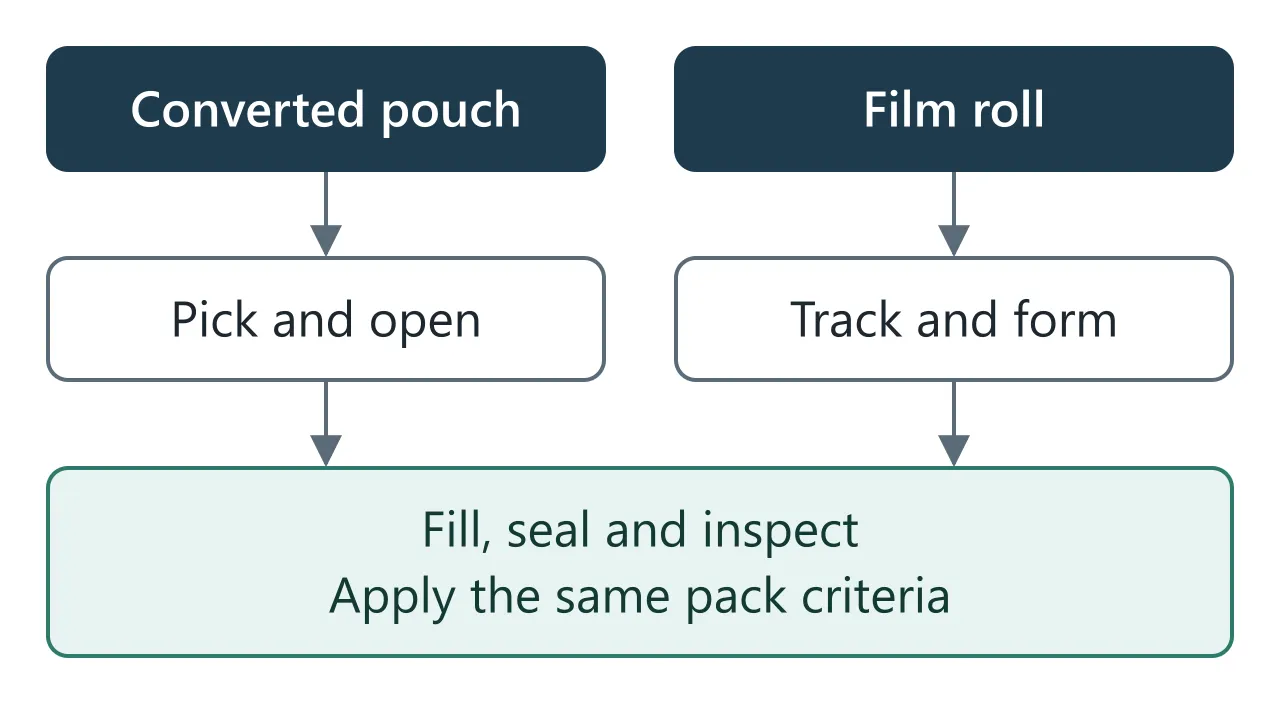
Give both machine vendors the same finished-pack drawing before asking which line runs faster. A premade-pouch line receives a converted pouch and must pick and open it reliably. A rollstock line makes the pouch from a film web, so it must also control web tracking, forming, seal position and cut registration. Both routes must meet the same fill and closure requirements. The purchase decision changes when the drawing, material or required rate changes.
Put the conversion boundary on the quotation
With a rotary premade-pouch line, the pouch converter delivers the bag geometry, pre-existing seams and the specified opening features. Ask which pouch tolerances the machine needs at the pickup and opening points, which samples represent normal variation, and which condition triggers a no-fill reject. Verify the supplied pouch lot in the trial. A good-looking sample from a different lot tells you little about feeding consistency.
With a horizontal roll-film line, the trial starts with a roll. Specify the laminate and sealant side, web width, winding direction, print repeat or registration mark where applicable, and the roll and core sizes. Agree how startup, a splice and a film change are assessed. A successful trial on blank stock leaves print-to-cut alignment untested when the production pack uses registered artwork. The Viking Masek equipment guide describes the different forming and filling architectures.
Compare usable packs on the same basis
Measure accepted packs per minute across the same agreed interval. A twin-pack cycle, a completed seal and a pack that passes inspection are different units of work. Define how a joined twin pack is counted when it is sold as one unit. For each route, keep a record of attempted units, passed units, rejects and stoppages. Count each rejected unit once in the output reconciliation, then code the primary cause so a pickup fault does not get counted a second time at sealing.
| Trial record | Premade pouch | Rollstock |
|---|---|---|
| Incoming material | Drawing, opening and pouch tolerances, trial lot | Laminate, print repeat, winding and roll dimensions |
| Feed and format failures | Missed picks, double feeds, incomplete openings | Web wander, failed forming, cut or register errors |
| Shared pack acceptance | Net fill, agreed seal and leak checks, pack appearance | Same fill, seal, leak and appearance criteria |
| Transition losses | Time and rejects during pouch and tooling changes | Time and rejects during roll change, splice or forming adjustments |
Report steady production and transition periods separately, then apply the same expected SKU mix to both offers. Net fill is a separate measurement. The gravimetric filling guide explains how to distinguish mass and dosing variation from the package-format question.
Ask for a trial your team can repeat
Send the drawing, samples or rolls from the intended supplier, actual product, fill target, challenging SKUs and expected changeovers. Agree how long the run lasts, who checks pack quality, how rejects are classified and whether utilities or tooling are included in the quote. Ask the supplier to identify the offered filling module and list anything still to be proven on your material. Bring those details to the equipment enquiry so the quote and acceptance protocol cover the same configuration.