
Fertilizer granulation
Ammonium sulfate, urea, potassium chloride, potassium sulfate, ammonium chloride, ammonium nitrate, salts and compound fertilizers.
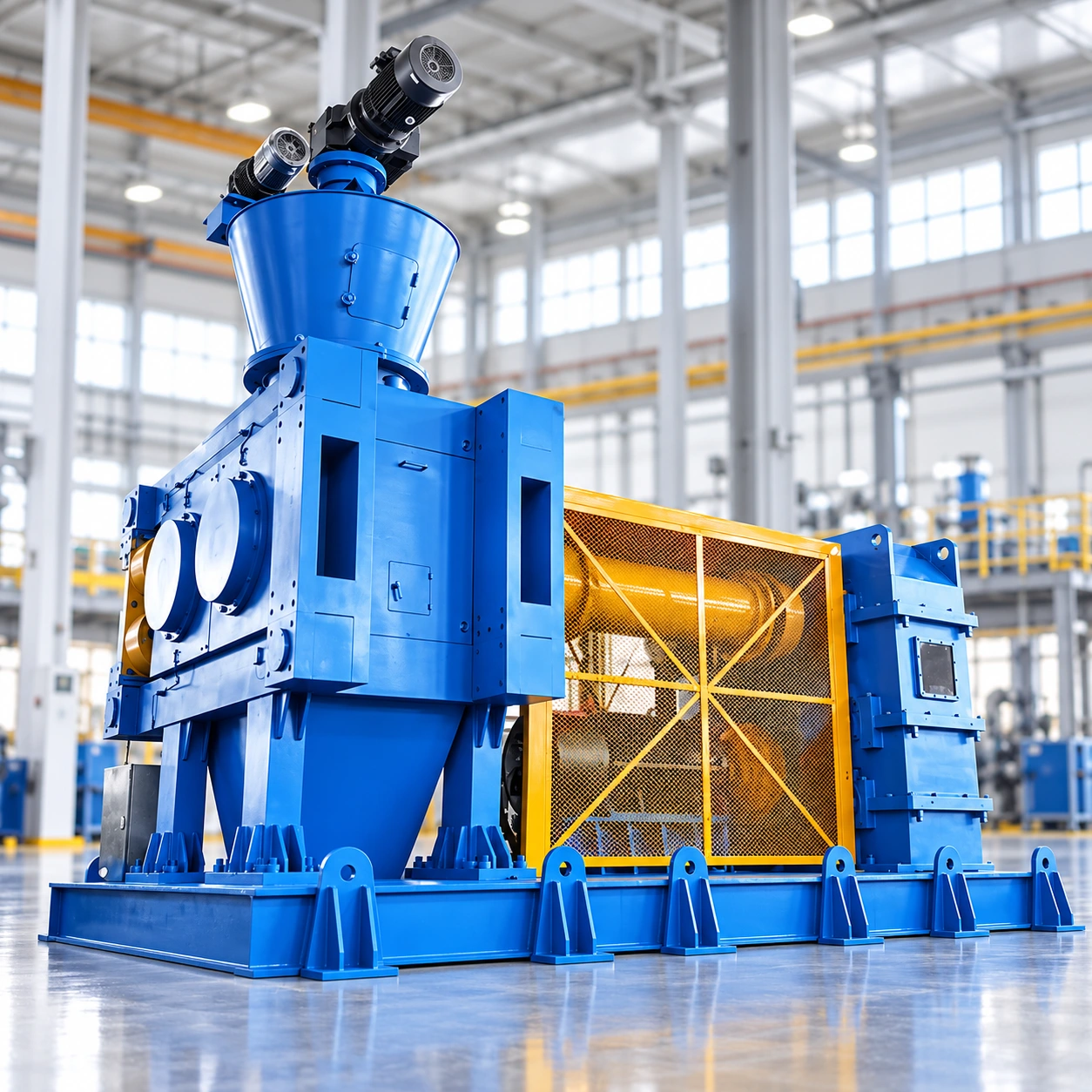
Double-Roll Dry Granulator
A versatile ambient-temperature dry granulation system for single-pass production of irregular granules, oblate granules and flake products from fertilizer, pharmaceutical and chemical powders. Designed and manufactured for fertilizer granulation and specialty compound fertilizers. Review the working principle, performance features and available configuration details below when specifying your industrial project.
Product Essentials
Select a topic from the directory. The content stays in one focused workspace for faster comparison.
Technical Data
Listed values apply to the identified configuration. Confirm material conditions, utilities and optional equipment before selection.
| Parameter | Motor power: 15 kW | Motor power: 30 kW |
|---|---|---|
| Motor power | 15 kW | 30 kW |
| Hourly output — oblate granules | 900–1,300 kg/h | 1,600–2,100 kg/h |
| Hourly output — irregular granules | 300–700 kg/h | 900–1,600 kg/h |
| Gear reducer | Dedicated hardened-gear reducer | Dedicated hardened-gear reducer |
| Compaction rolls | Forged alloy steel; specially heat-treated; optional hard-chrome plating for rust and wear resistance | Forged alloy steel; specially heat-treated; optional hard-chrome plating for rust and wear resistance |
| Finished-product yield — oblate granules | 60–90% | 60–90% |
| Finished-product yield — irregular granules | 30–60% | 30–60% |
| Available granule diameters | 3.5 / 4.2 / 4.8 / 5.5 / 6.0 / 6.5 / 8 / 10 mm | 3.5 / 4.2 / 4.8 / 5.5 / 6.0 / 6.5 / 8 / 10 mm |
| Product forms | Oblate / irregular / strip / flake | Oblate / irregular / strip / flake |
| Feed moisture — inorganic materials | 2–5% | 2–5% |
| Feed moisture — organic materials | Approx. 6–12% | Approx. 6–12% |
| Operating temperature | Ambient | Ambient |
| Typical process materials | Ammonium bicarbonate, ammonium chloride, ammonium sulfate, urea, ammonium phosphate, superphosphate, calcium magnesium phosphate, potassium chloride, potassium sulfate, potassium magnesium fertilizer, humic acid and organic materials | Ammonium bicarbonate, ammonium chloride, ammonium sulfate, urea, ammonium phosphate, superphosphate, calcium magnesium phosphate, potassium chloride, potassium sulfate, potassium magnesium fertilizer, humic acid and organic materials |
Published output and yield are reference values. Actual performance depends on feed composition, moisture, flowability, required granule form and operating conditions; final selection is subject to material testing and engineering confirmation.
Applications
Applications include fertilizer granulation and specialty compound fertilizers. Confirm material properties and process conditions before selecting the equipment configuration.
Ammonium sulfate, urea, potassium chloride, potassium sulfate, ammonium chloride, ammonium nitrate, salts and compound fertilizers.
Production of purpose-formulated compound fertilizers at different nutrient concentrations.
Compatible pharmaceutical powder formulations after compaction and material-safety evaluation.
Suitable inorganic, organic and formulated chemical powders requiring dry shaping without a liquid binder.
Working Principle
The process route is selected around the material and product targets.
Raw materials are mixed thoroughly to obtain a uniform feed composition.
The prepared powder is distributed continuously and uniformly into the adjustable gap between the rolls.
One roll is fixed and the other is adjustable; as both rolls rotate toward the nip, the powder is progressively gripped, compressed and formed at ambient temperature.
Compacted sheets or briquettes pass to the crushing section and are reduced to the required granule form.
A screen separates qualified granules from fines and other off-specification material.
Fines and nonconforming granules return to the process for regranulation, while qualified product proceeds downstream.
Performance Highlights
Final performance remains dependent on feed properties and engineering confirmation.
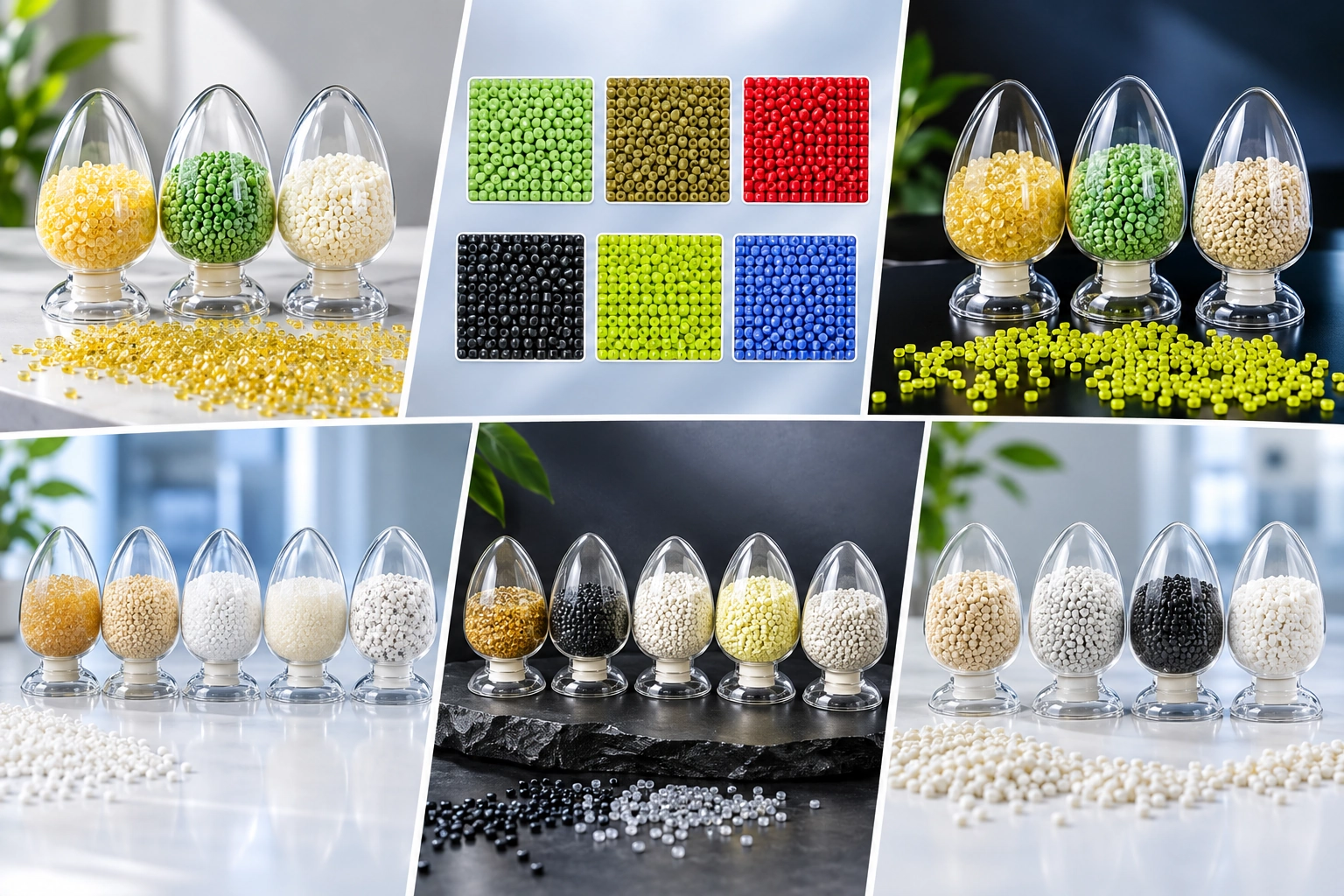
Counter-rotating rolls compact the material directly at ambient temperature for one-pass forming without a wet granulation step.
The machine can produce 2–6 mm irregular granules, Φ2–Φ10 mm oblate granules and a range of flake products.
A practical, compact arrangement simplifies integration with continuous mixing, conveying, screening, polishing and packaging equipment.
The published process forms the product at normal ambient temperature.
The granulator can serve as the core of a mechanized continuous line from raw-material preparation through finished-product packaging.
The dry, direct-forming process is intended to reduce energy demand in fertilizer and powder-granulation applications.
One roll is fixed while the second can be adjusted to tune compaction and forming conditions.
Screened fines and off-specification granules can be returned for another granulation pass.
System Configuration
Core equipment and auxiliary systems are selected around the process duty.
Includes the motor, belt drive, dedicated hardened-gear reducer, coupling, transmission wheels, bearing housings, bearings and rolls.
Counter-rotating alloy-steel rolls perform compaction; the roll gap is adjustable to match material and product requirements.
Reduces compacted sheets or briquettes into the required granule size.
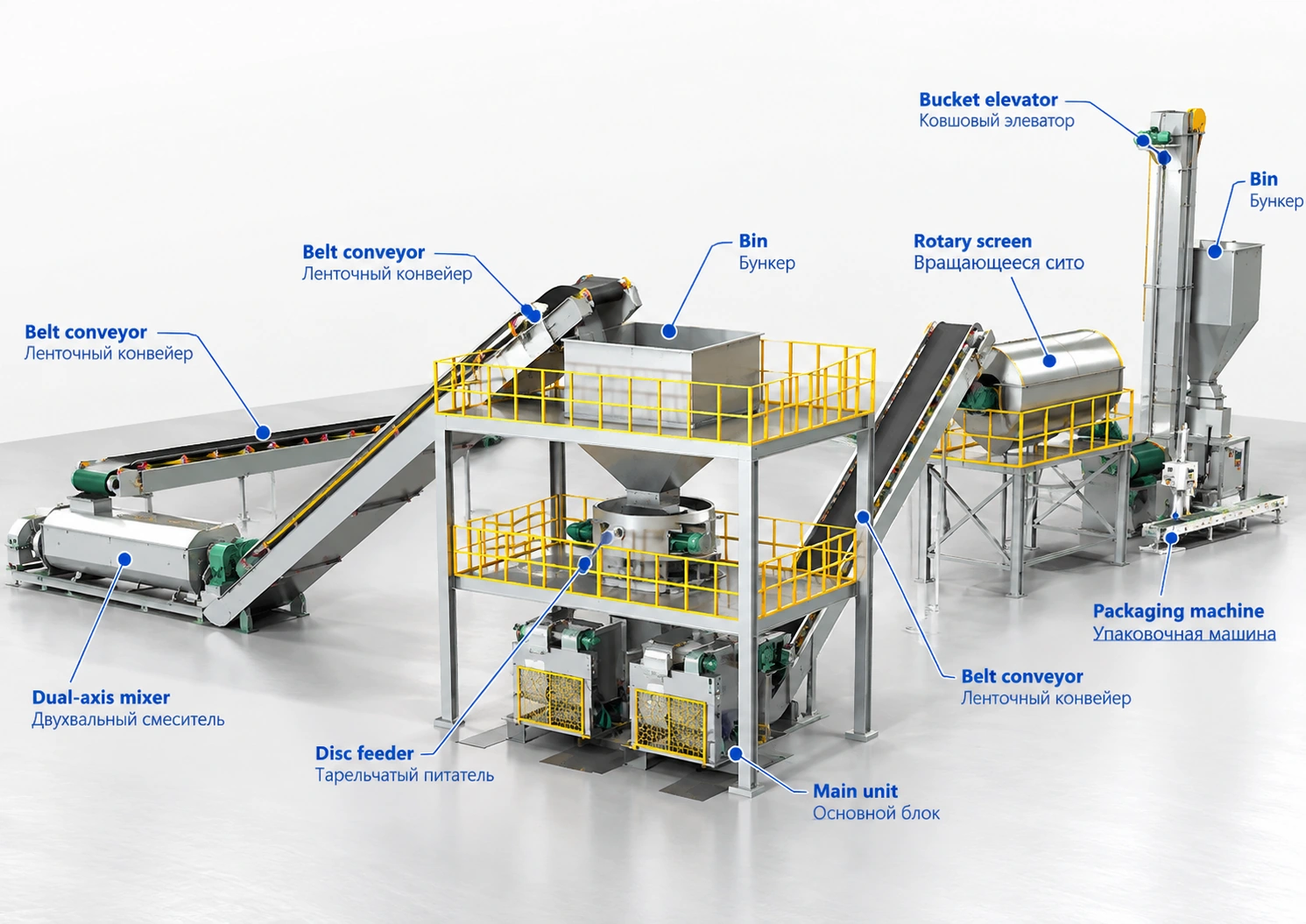
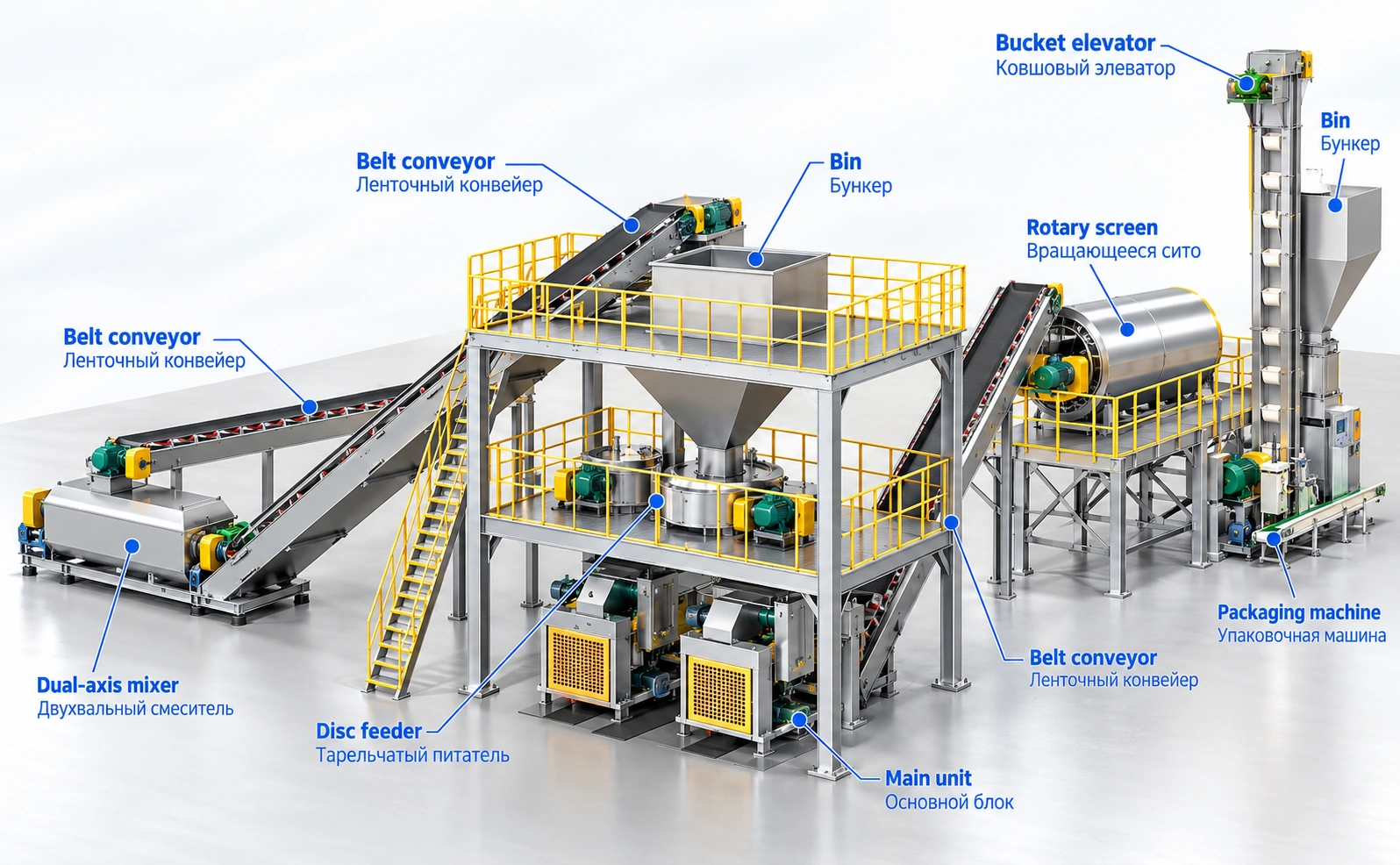
A typical compact route comprises mixing, granulation, screening, polishing and packaging.
A disc mixer homogenizes raw materials before conveying and uniform distribution to the granulator.
Qualified granules proceed downstream while rejected material returns to mixing and granulation.
Polishing improves surface smoothness, fullness and finished-product appearance.
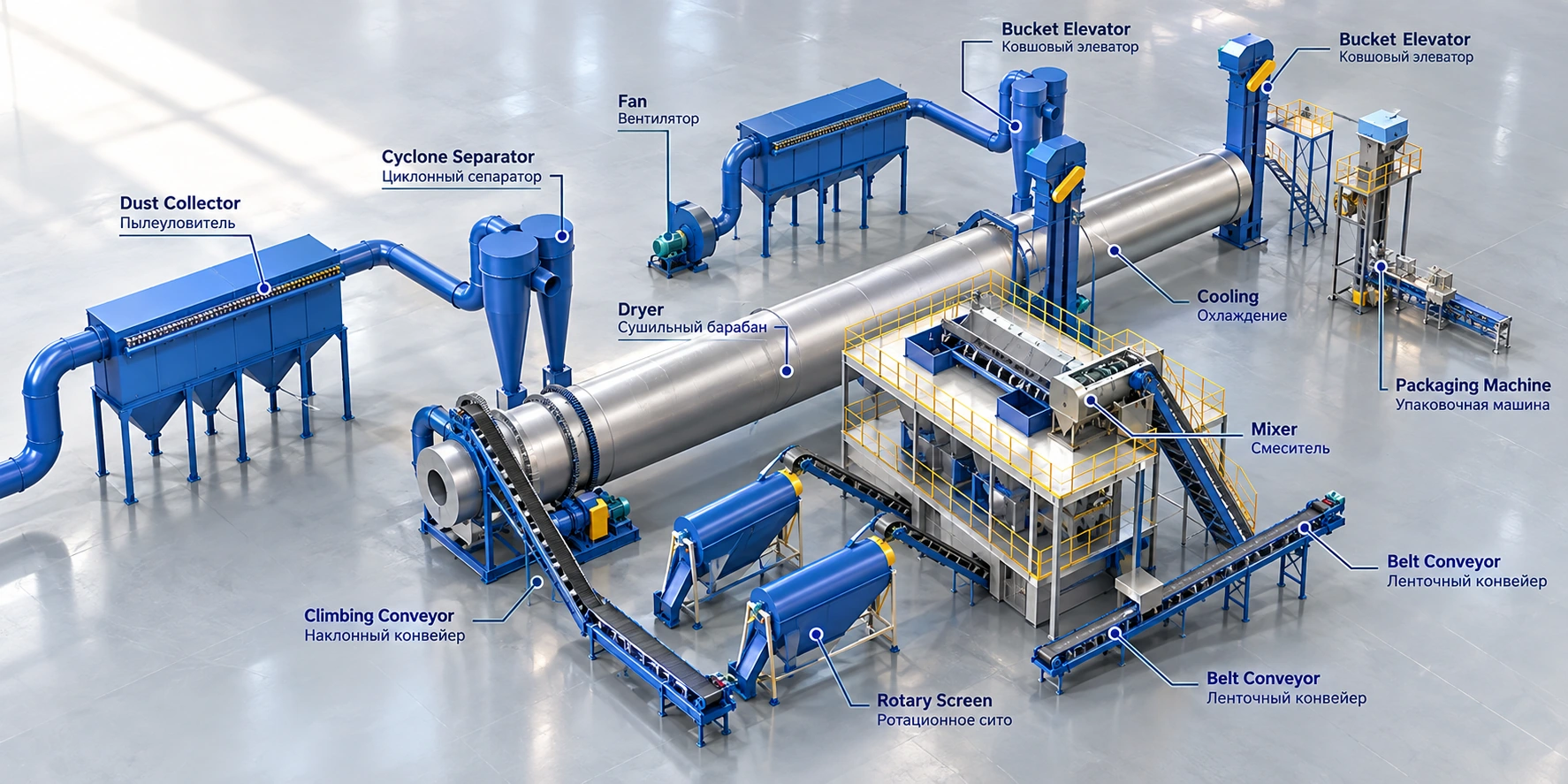
A larger plant may include raw-material treatment, mixing, conveying, granulation, screening, drying, cooling, rounding or coating, weighing, packaging and automatic control.
Optional downstream conditioning develops the specified hardness and strength; the source gives a typical granule-strength reference of 28 N.
A coating unit can apply the specified material to qualified granules before weighing and packaging.
A cyclone provides primary separation with a stated dust-removal reference of approximately 70%, followed by bag filtration; the published overall efficiency is up to 99.5%.
The control cabinet, variable-frequency drives and related electrical components support centralized monitoring, operation and production management.
Selection Support
Share the following feed, product and project data so roll configuration, output and auxiliary equipment can be confirmed.