
Rubber and plastics additives
Compatible rubber auxiliaries and plastics additives requiring dust-controlled cylindrical granulation.
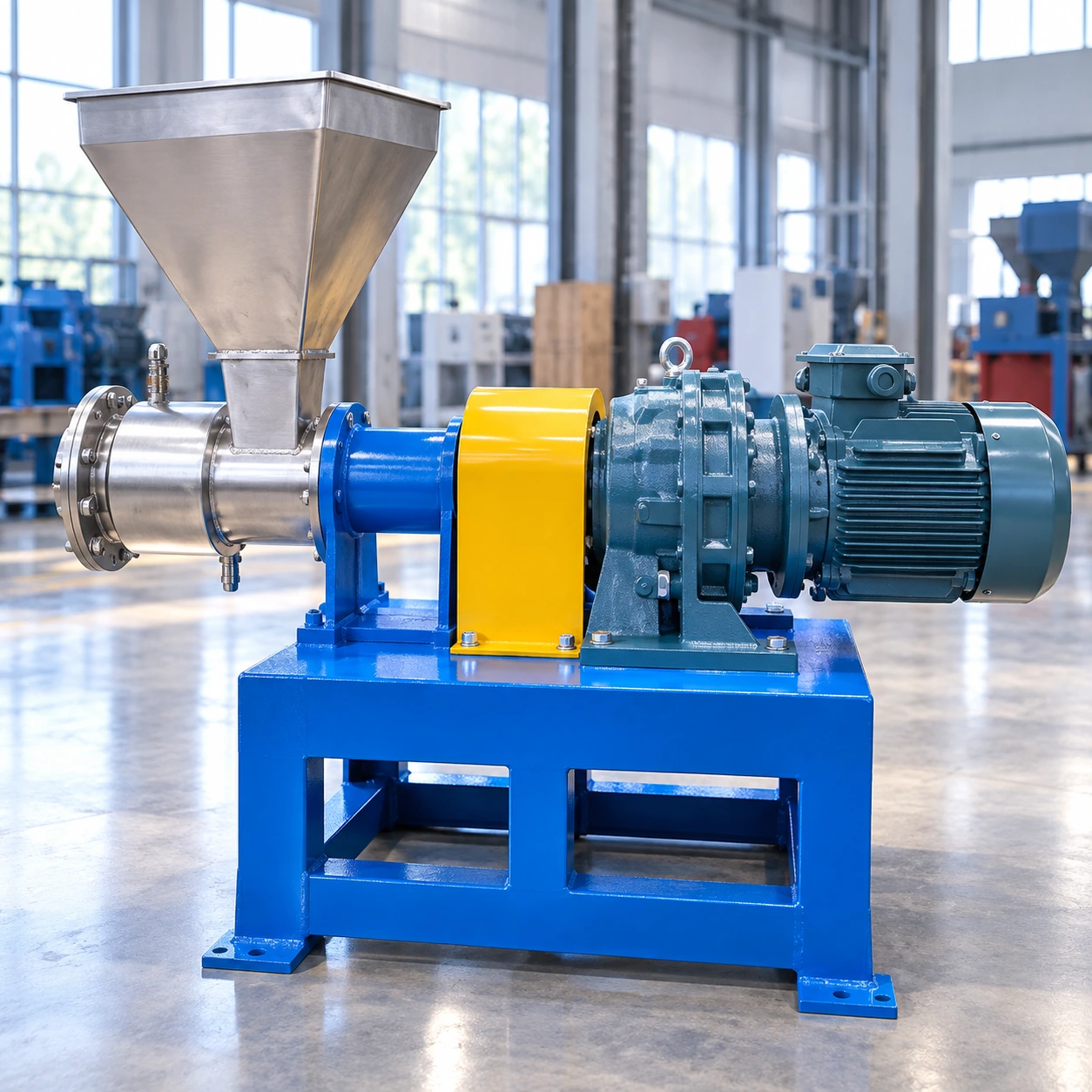
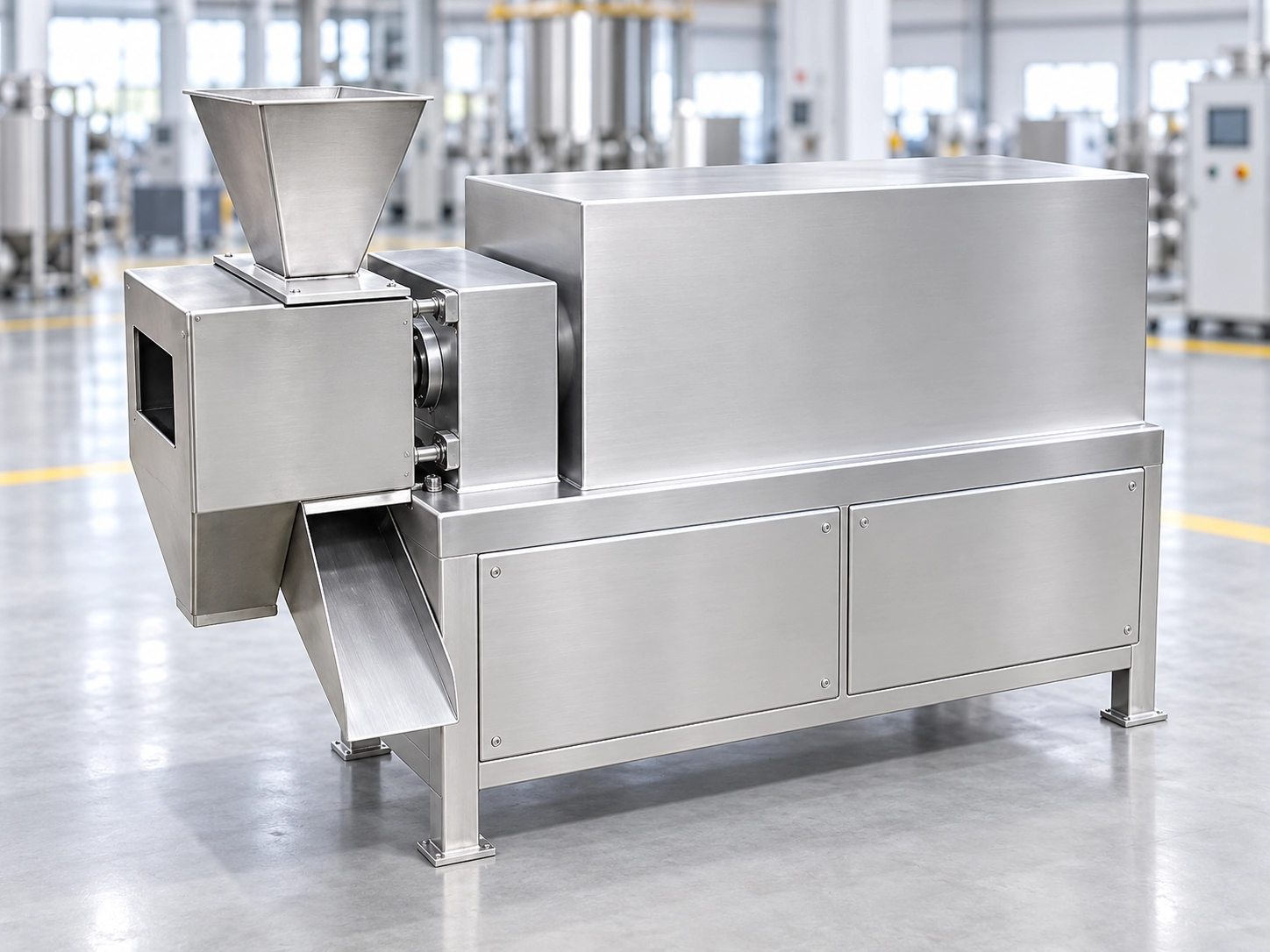
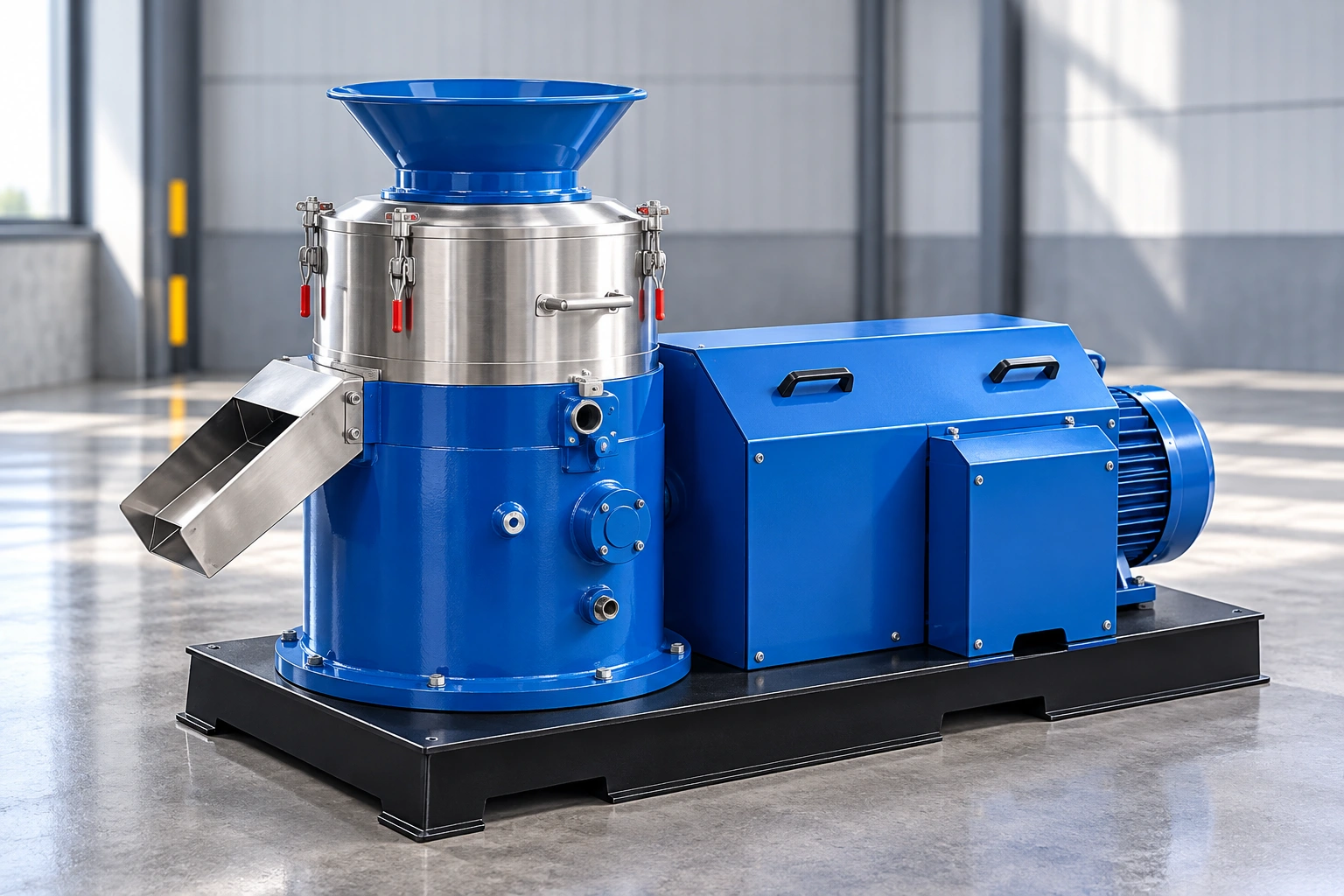
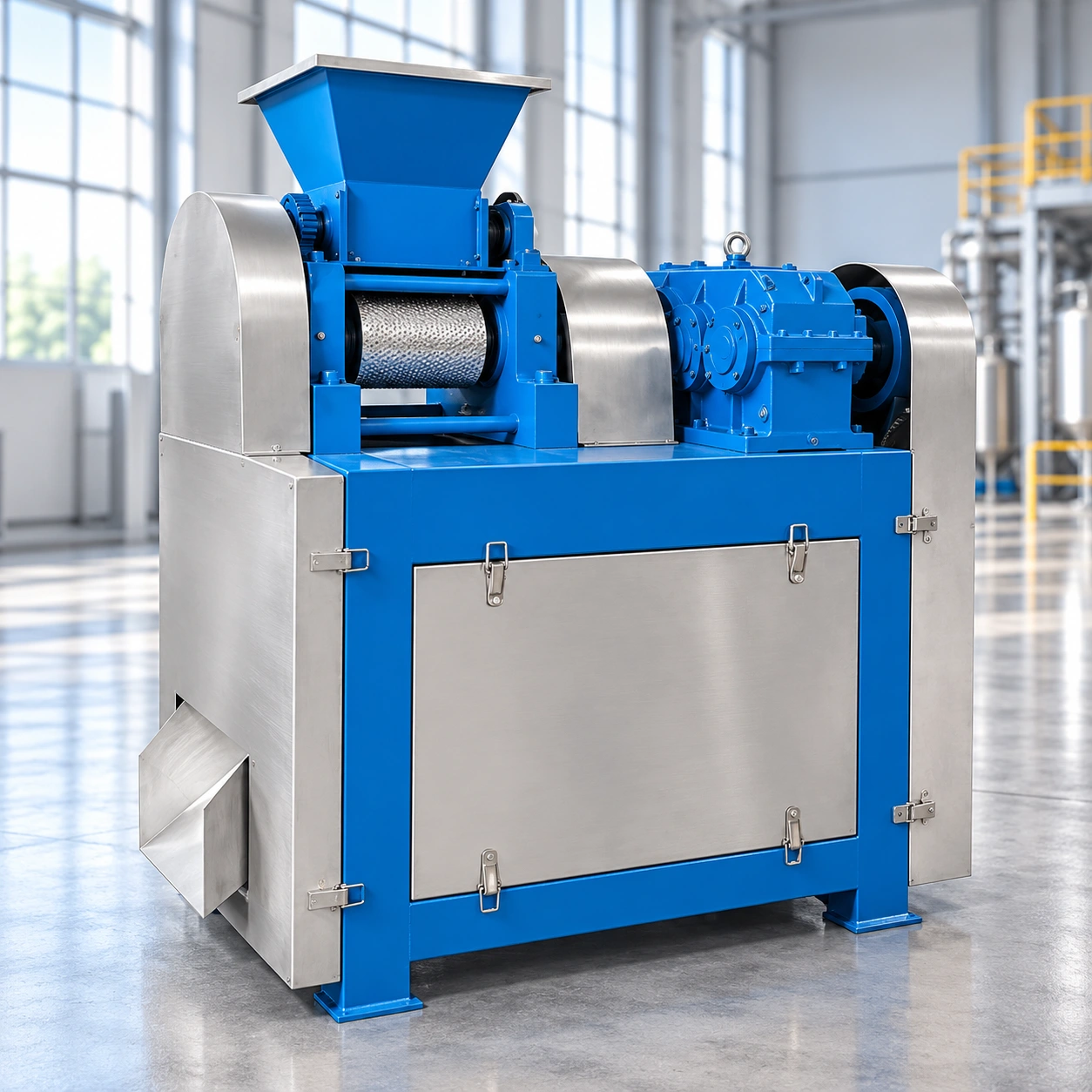
Screw Extrusion Granulator
A configurable wet extrusion system for mixed and kneaded wet feed or low-softening-point materials, available as single-screw or twin-screw machines with front or side discharge. Designed and manufactured for rubber and plastics additives and food additives. Review the working principle, performance features and available configuration details below when specifying your industrial project.
Product Essentials
Select a topic from the directory. The content stays in one focused workspace for faster comparison.
Technical Data
Reference values for the model configurations shown below. Confirm material conditions, utilities and optional equipment before final selection.
| Model | Screw configuration | Screw diameter (mm) | Drive power (kW) |
|---|---|---|---|
| Model 1 | Double-screw system | 60 | 3.7 |
| Model 2 | Double-screw system | 100 | 7.5 |
| Model 3 | Double-screw system | 140 | 15 |
| Model 4 | Double-screw system | 180 | 30 |
| Model 5 | Single-screw system | 100 | 7.5 |
| Model 6 | Single-screw system | 120 | 15 |
| Model 7 | Single-screw system | 160 | 22 |
| Model 8 | Single-screw system | 180 | 30 |
Granule size, yield and throughput depend on feed formulation, moisture, binder, die geometry and operating conditions. Final selection is subject to material testing and engineering confirmation.
Applications
Applications include rubber and plastics additives and food additives. Confirm material properties and process conditions before selecting the equipment configuration.
Compatible rubber auxiliaries and plastics additives requiring dust-controlled cylindrical granulation.
Suitable food-grade formulations subject to hygienic design, contact-material and cleaning confirmation.
Shaped catalyst products requiring controlled cylindrical diameter and mechanical integrity.
Compatible pesticide formulations processed under wet granulation conditions.
Conditioned colorant powders where granulation improves handling and limits airborne dust.
Suitable formulations after product-specific extrusion, hygiene and process evaluation.
Working Principle
The process route is selected around the material and product targets.
Powders, liquid and binder where required are mixed and kneaded to establish the moisture, cohesion and consistency needed for extrusion.
The prepared wet feed enters the barrel and is transported continuously by the selected single- or twin-screw system.
Progressive screw pressure compacts the material and develops a stable flow toward the die head.
The material passes through calibrated die openings; die-hole diameter and discharge geometry determine the nominal extrudate size.
Fresh cylindrical extrudate is stabilized by the drying or cooling process selected for the formulation.
Uniform cylindrical granules proceed to screening, collection or packaging.
Performance Highlights
Final performance remains dependent on feed properties and engineering confirmation.
Select the single-screw or twin-screw arrangement according to feed rheology, mixing demand and extrusion resistance.
Side and front discharge accommodate different granule-diameter ranges and line layouts.
Changing or modifying the die-hole diameter controls the nominal cylindrical granule diameter.
Continuous die extrusion converts conditioned powder into comparatively uniform cylindrical granules.
The source specifies a granule yield of at least 95% under suitable material and operating conditions.
Wet-state granulation is stated to reduce workplace dust dispersion by more than 90% in typical applications and improves handling in subsequent drying and packaging.
Granulation reduces caking, bridging and pulsating flow, while helping limit secondary dust contamination during use.
Densified granules reduce the volume required for transportation, storage and packaging.
Converting blended multicomponent powders into granules helps preserve formulation uniformity and improve composite-product consistency.
System Configuration
Core equipment and auxiliary systems are selected around the process duty.
Provides continuous transport and extrusion for general wet-granulation and low-softening-point material duties.
Uses two screws for enhanced conveying, mixing and pressure development where the formulation requires more intensive processing.
Forms typical cylindrical granule diameters from 0.7 to 2.0 mm.
Forms typical cylindrical granule diameters from 1.5 to 12 mm.
Changing the perforation diameter adjusts the nominal finished-granule size.
Transfers fresh extrudate to the downstream stabilization process required by the material.
Optional classification removes off-specification particles before finished-product collection or packaging.
Selection Support
Share the following material and product requirements so the screw arrangement, discharge direction and finishing process can be confirmed.
Related Products