
Vacuum mixing of viscous materials
Vacuum Z-Blade Kneader Mixer for High-Viscosity Materials
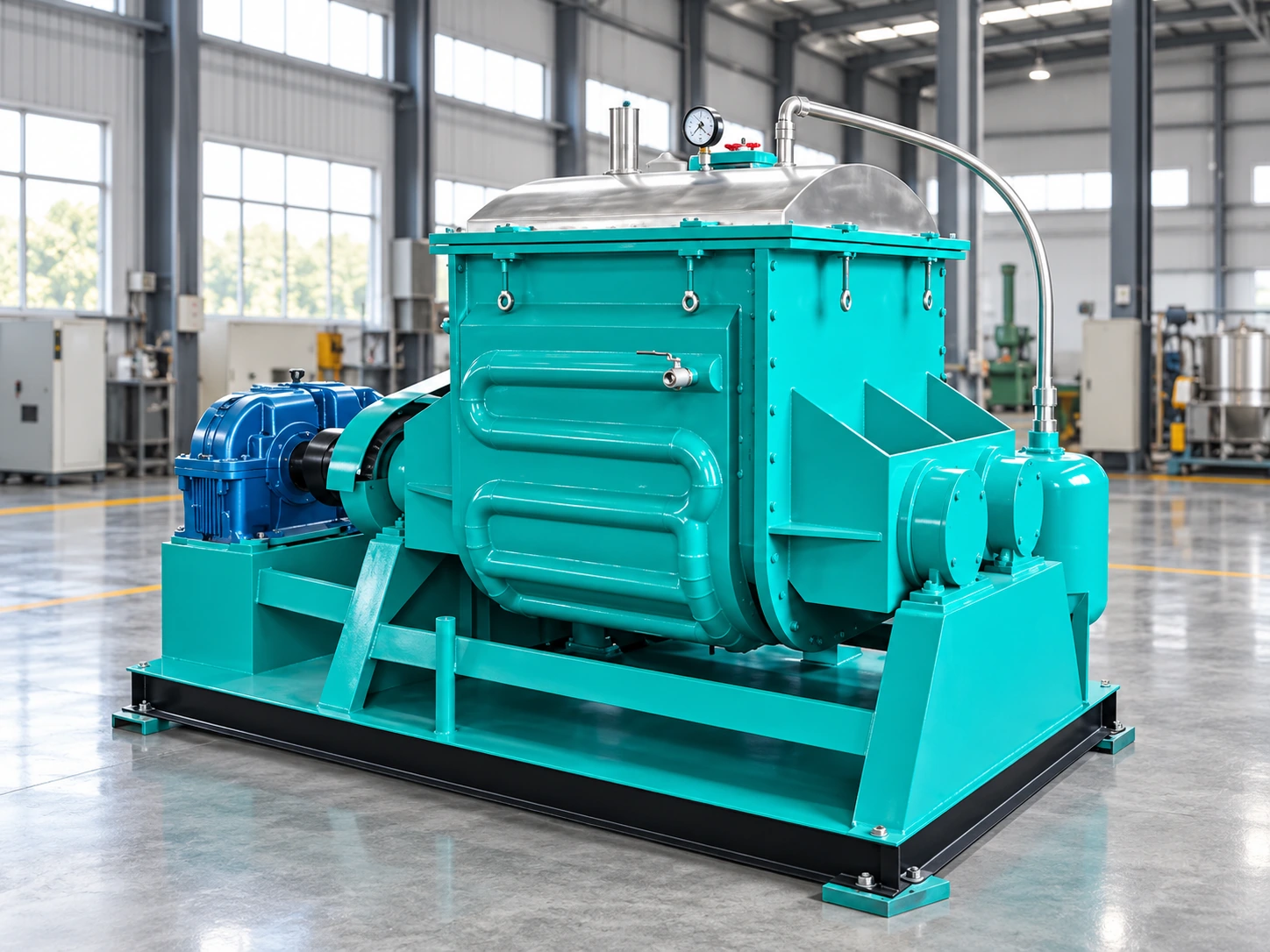
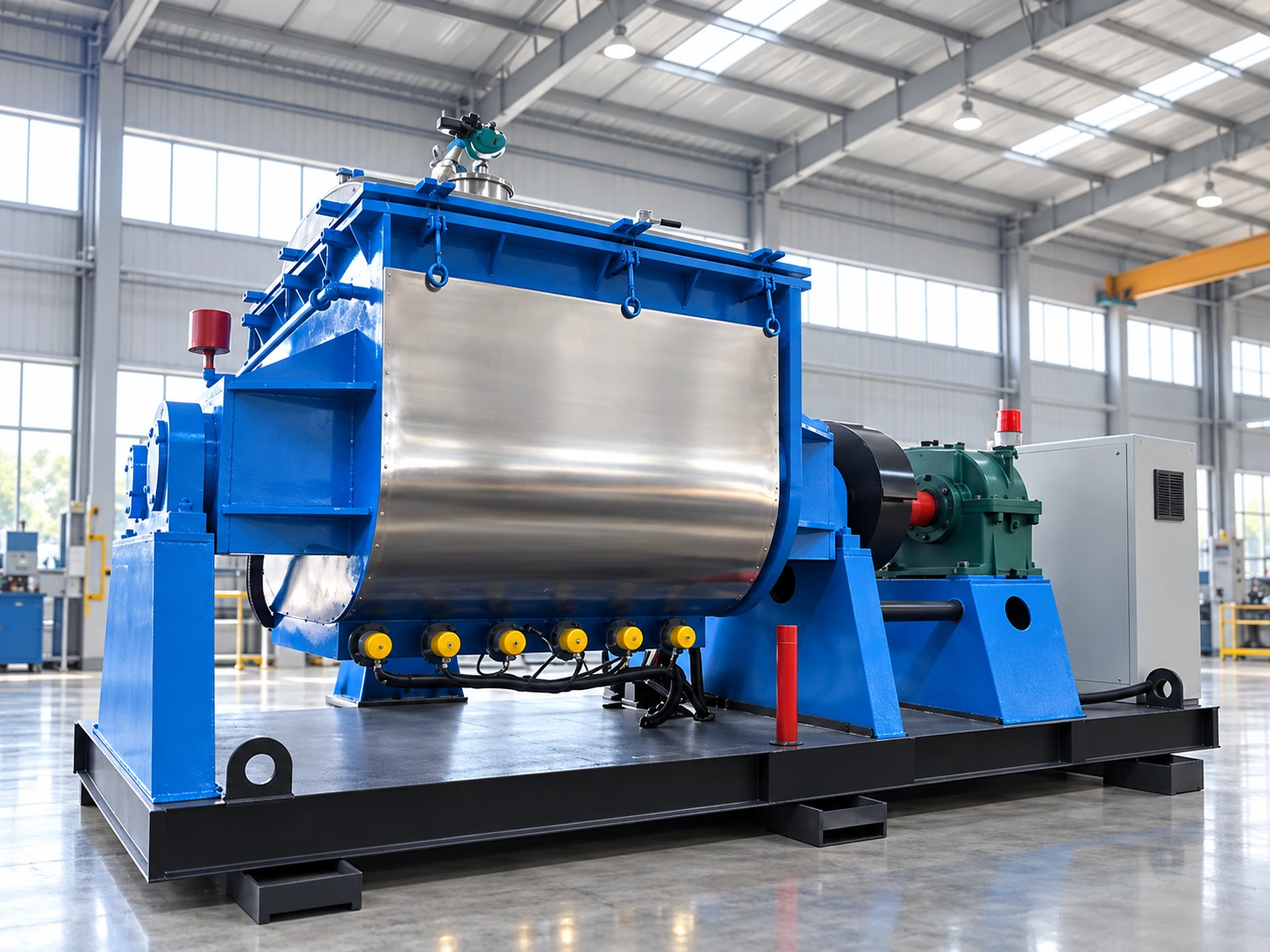
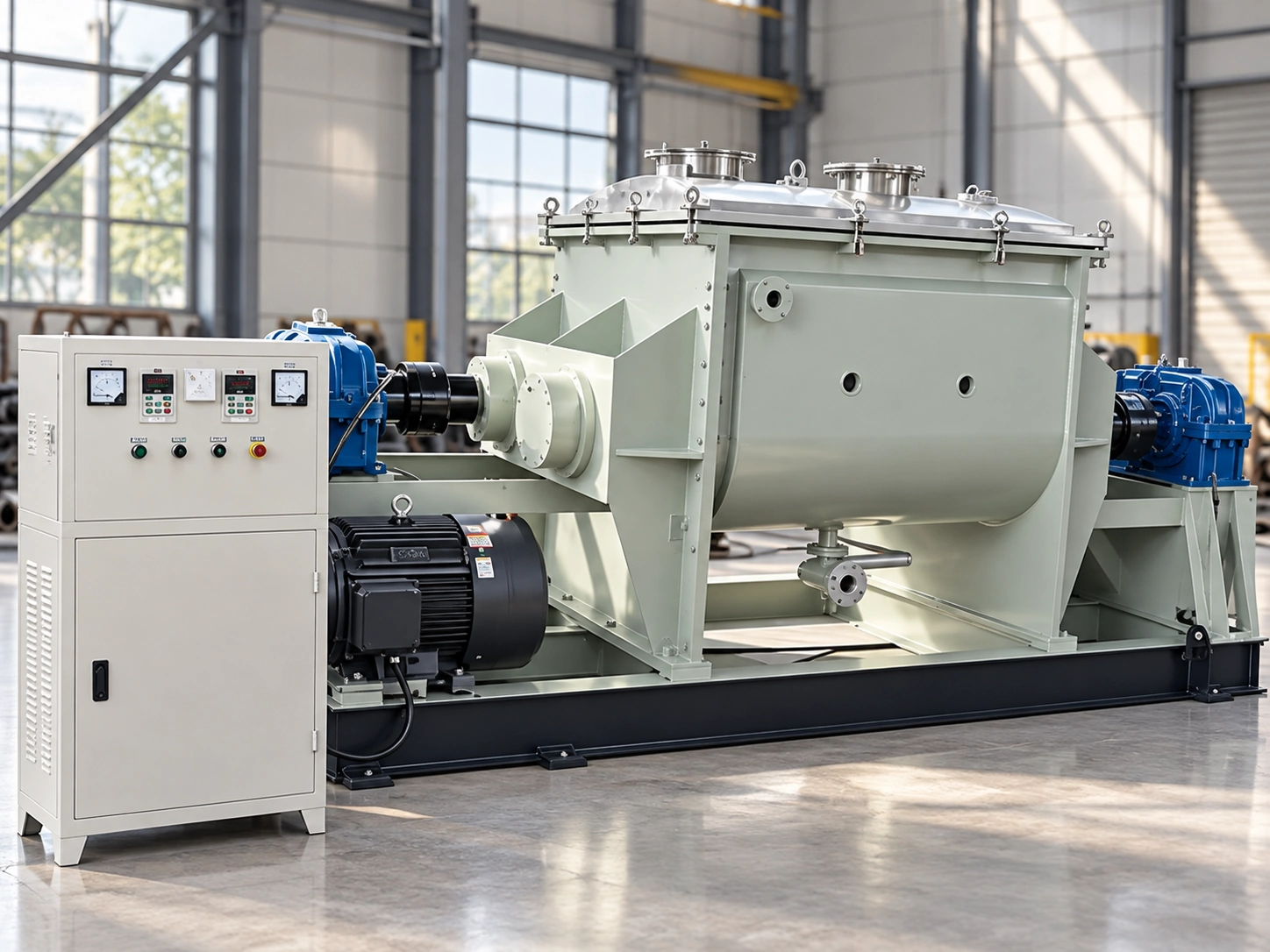
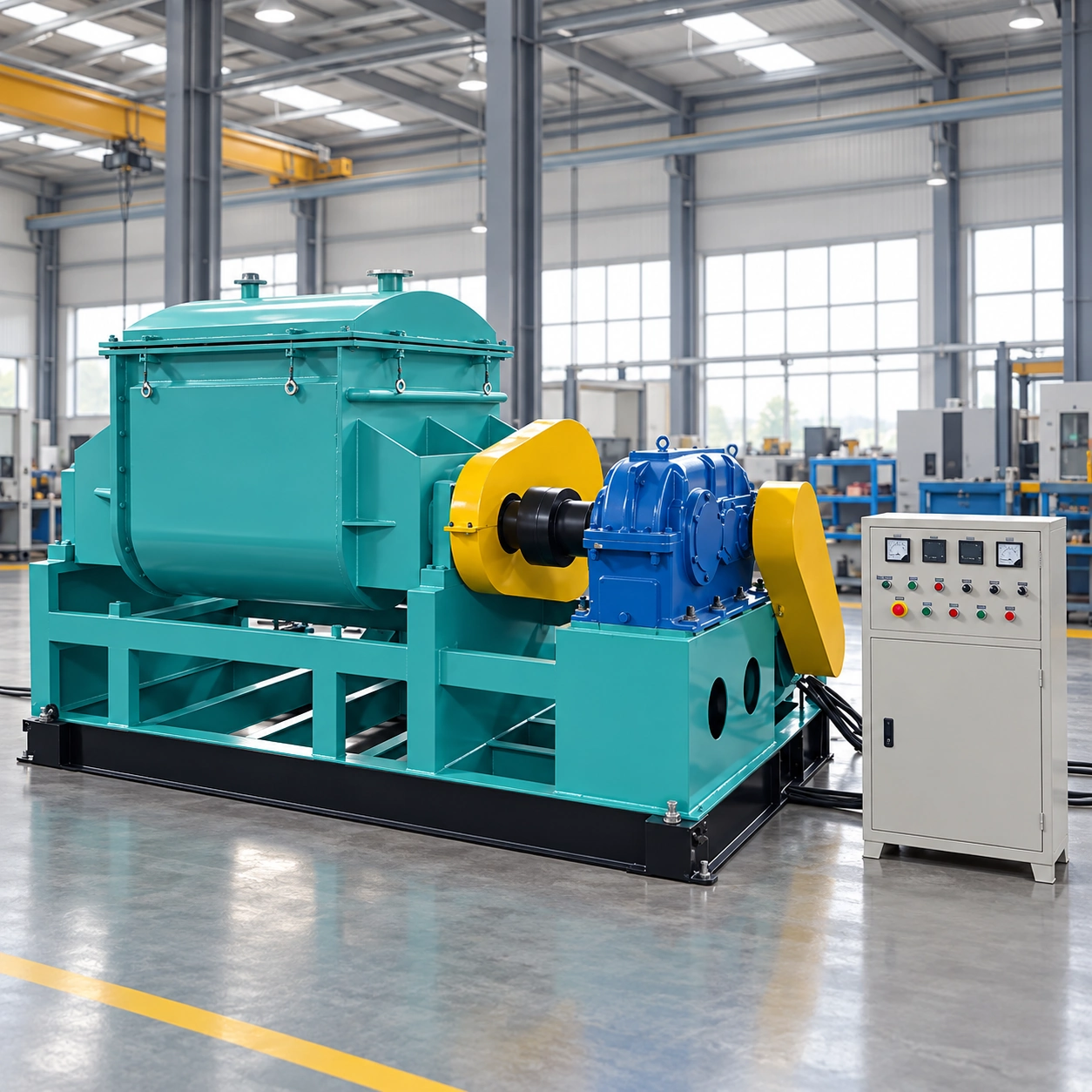
The vacuum Z-blade kneader mixer shears, compresses and blends high-viscosity compounds while vacuum operation helps reduce large bubbles formed during kneading. Repeated blade action redistributes the material for formulations where entrained bubbles matter.
- Z-shaped blades shear, compress and knead viscous materials.
- A gear reducer and gears transmit motion to the driving and driven blades.
- Vacuum operation helps reduce large bubbles; the source states a vacuum degree up to 0.094 MPa.
- Mixing tools
- Double Z-blade system
- Operation
- Batch processing
- Process focus
- Vacuum mixing of viscous materials
- Selection basis
- Formulation and batch size
Product Essentials
Product Details
Technical Specifications
| Specification / Volume | 5 L | 10 L | 100 L | 300 L | 500 L | 1000 L | 2000 L |
|---|---|---|---|---|---|---|---|
| Capacity (L) | 5 | 10 | 100 | 300 | 500 | 1000 | 2000 |
| Blade speed (rpm) | 33 / 23 | 33 / 23 | 35 / 22 | 37 / 21 | 37 / 21 | 35 / 25 | 30 / 16 |
| Main motor power (kW) | 0.75 | 1.1 | 3–7.5 | 11–30 | 15–37 | 22–90 | 30–110 |
| Steam pressure (MPa) | 0.3 | 0.3 | 0.3 | 0.3 | 0.3 | 0.3 | 0.3 |
| Electric heating power (kW) | 1 | 1 | 4 | 9 | 16.2 | 27 | 40 |
| Vacuum (MPa, vacuum configuration) | −0.094 | −0.094 | −0.094 | −0.094 | −0.094 | −0.094 | −0.094 |
| Pressure (MPa, pressure configuration) | 0.45 | 0.45 | 0.45 | 0.45 | 0.35 | 0.35 | 0.35 |
| Approximate weight (kg) | ~300 | ~400 | ~1250 | ~1600 | ~3000 | ~4500 | ~6500 |
The supplied technical sheet covers the complete 5–2000 L series. Columns describe separate sizes; vacuum and pressure values apply to the corresponding configurations. Usable batch volume depends on the material and configuration.
The size in the product name identifies the catalogue selection. Usable working volume and operating ratings are established for the quoted configuration.
Z-Blade Mixing Principle
The motor drives the driving blade through a gear reducer, while gears transmit motion to the driven blade. Axial and radial compression, together with regions of differing motion, repeatedly separate, knead and recombine the material to distribute its components.
Axial and radial compression and zones of differing motion subject the material to repeated separation, kneading and recombination. This distributes the ingredients and can assist the associated physical and chemical processes.
Vacuum Z-Blade Kneader Mixer for High-Viscosity Materials
Vacuum operation helps reduce large bubbles formed during mixing and kneading. The source specifies a vacuum degree of up to 0.094 MPa; this retains the original vacuum-degree wording and is not an absolute-pressure rating.
The twin blades and vacuum function have complementary roles: blade motion shears and redistributes the material, while vacuum operation helps reduce large bubbles. Confirm the vacuum equipment and final configuration for the material and process.
Applications
Listed materials include sealants, silicone rubber, glazing sealants, inks, pigments, resins, plastics, rubber and other high-viscosity compounds.
Vacuum operation may be considered when mixing introduces large bubbles into a formulation. The source does not specify bubble size, a removal percentage or processing time, so no numerical deaeration result is implied.