

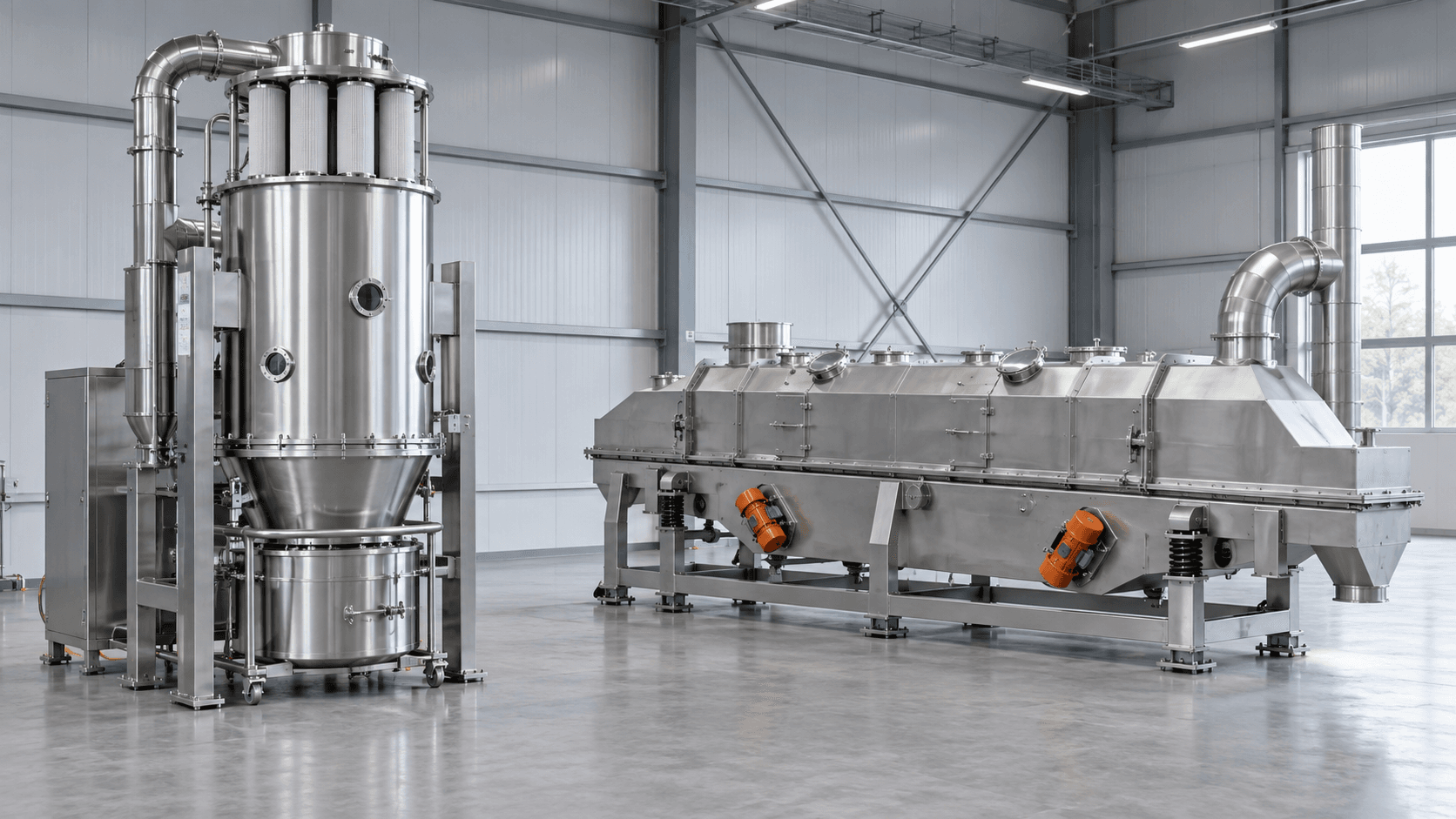
Select batch or continuous fluid-bed drying around the material and production schedule, not a capacity number alone. A variable recipe campaign needs different operating and acceptance checks from a stable feed stream. MOS lists a continuous vibrating fluid-bed dryer and cooler and a separate batch fluidized-bed dryer. These are equipment routes to evaluate with the supplier; neither is automatically better for every powder or granule.
Start with the campaign and the feed, not the nominal model size
For a batch route, define the material charged per lot, recipe changes, handling time and cleaning between products. For a continuous route, define the feed-rate range, upstream interruptions and how startup and shutdown material will be handled. Frequent changes can make cleanout and changeover decisive. A stable campaign can justify continuous evaluation, but only after feed behavior and product acceptance are demonstrated. Neither route guarantees lower energy use or higher quality without a comparable duty and trial.
| Decision input | Batch route | Continuous route | Trial or RFQ evidence |
|---|---|---|---|
| Production pattern | Named lots and recipe/changeover schedule | Feed range and campaign stability | Annual schedule, upstream interruptions and product changes |
| Moisture acceptance | Agreed lot sampling and endpoint | Startup, stable operation and shutdown sampling | Same moisture test basis and accepted variability |
| Material behavior | Observe fluidization and discharge for the charged lot | Observe fluidization, conveying and fines under changing feed | Particle size, bulk density, moisture and representative material |
| Cleaning and segregation | Confirm cleanout between lots | Confirm transition and carryover handling | Contact material, cleaning method and residue criteria |
Make the drying duty comparable
State inlet moisture and target outlet moisture with the same wet-basis or dry-basis convention and test method. Give the supplier the feed rate or batch mass, material temperature constraint and expected variability. A model’s nominal capacity does not define the water-removal duty for another material. An unusually wet or variable feed can change the task substantially. Ask for the proposed configuration, utilities and trial-supported operating window rather than treating a catalogue row as a throughput promise.
Particle distribution, bulk density, fines, stickiness and moisture affect whether the material can be handled in the proposed fluid bed. If the feed contains solvents, combustible dust or other hazards, identify them before design and require a configuration-specific engineering assessment. The presence of a dryer Product page does not establish solvent compatibility, explosion protection or a certified sanitary configuration.
Use an acceptance plan that fits the operating mode
Supply representative production material, including the normal variation that the line must handle. Agree the moisture method, sampling locations, allowable variability and handling of off-spec material. For batch trials, record the lot and endpoint samples. For continuous trials, distinguish startup from stable-operation samples and test the relevant feed changes. Also record fines carryover, discharge behavior and cleanout observations. A successful trial on one sample does not guarantee the same result for every recipe or a larger proposed installation.
Request the actual dryer configuration
Send the continuous dryer/cooler enquiry when evaluating a continuous line, or use the batch dryer Product route for a lot-based process. Include material identity, particle distribution, bulk density, inlet/outlet moisture and test basis, feed rate or batch size, temperature constraints, available utilities, contact material, cleaning/changeover requirements, hazards, acceptance criteria and destination. Request the proposed drawing and a material trial where necessary. Do not infer granulation, coating or another processing capability from the fluid-bed dryer name; confirm each required operation explicitly.
Dryer selection FAQ
Is continuous fluid-bed drying always more economical?
No. Compare the same material, drying duty, campaign and utility conditions; changeover and feed interruptions can alter the comparison.
Can nominal capacities be compared without moisture data?
No. Provide inlet/outlet moisture on a stated basis and the actual feed or batch requirement before comparing proposed capacity.
Does a fluid-bed dryer also guarantee granulation or coating?
No. Those operations require an appropriate configuration and explicit supplier confirmation. They are not inferred from the dryer name.
What should the first equipment RFQ include?
Include representative material data, moisture duty, production mode, utilities, temperature and cleaning constraints, hazards, trial acceptance and destination.