
Typical Industries
Chemical, pharmaceutical, food processing, dehydrated vegetable, grain processing and mineral industries.
Product Overview
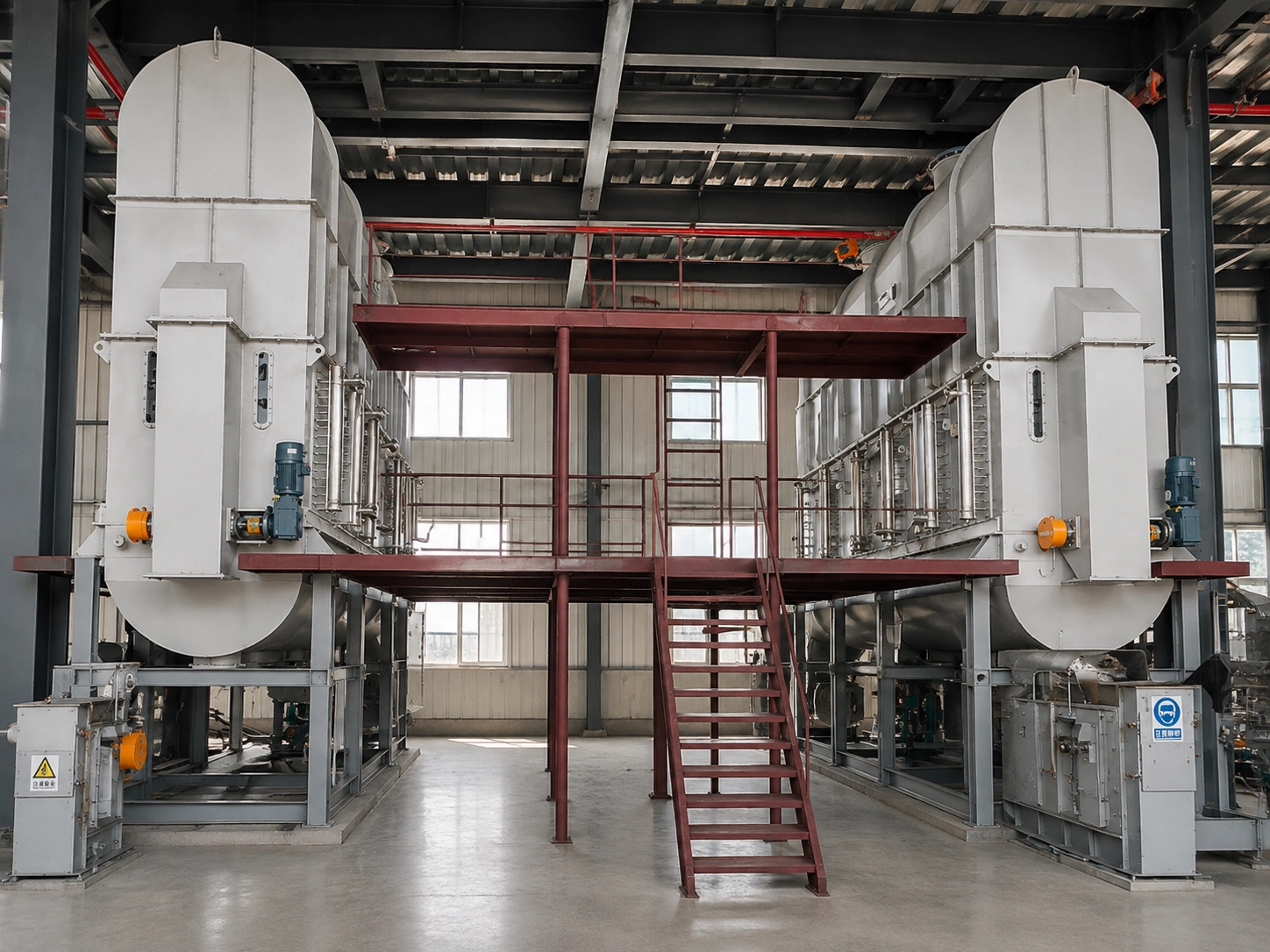
Continuous drying or cooling of powdered and granular materials through vibration-assisted fluidization and controlled conveying. Designed and manufactured for powder and granular materials requiring continuous drying or cooling in typical process industries. Review the working principle, performance features and available configuration details below when specifying your industrial project.
Product Essentials
Select a topic from the directory. The content stays in one focused workspace for faster comparison.
Interactive Equipment View
Drag the interactive model to rotate, scroll or pinch to zoom, and use the preset views for a quick engineering review.
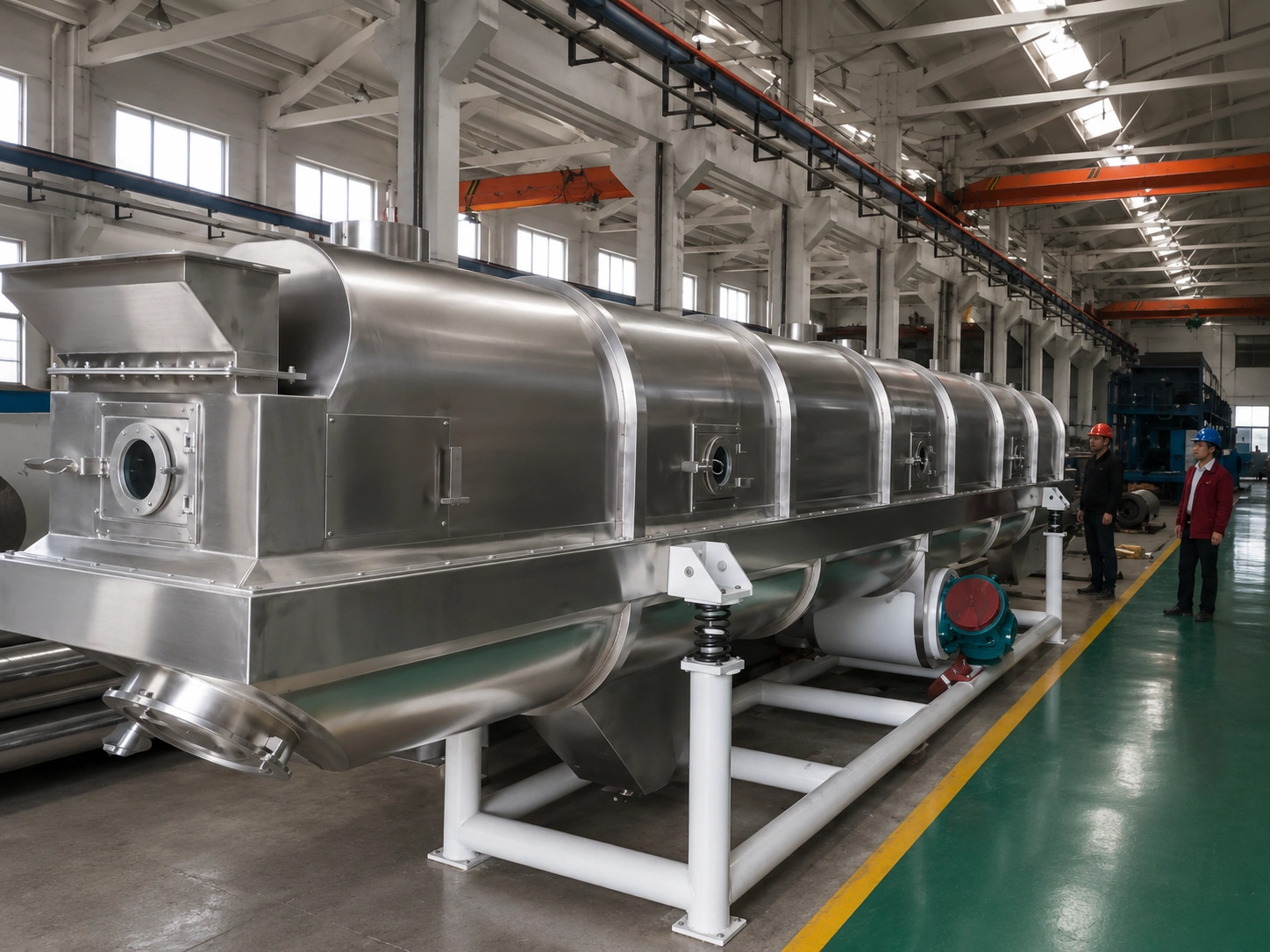
Interactive preview unavailable. Please contact us for equipment details.
Drag to rotate · Scroll or pinch to zoom
Technical Specifications
Listed values apply to the identified configuration. Confirm material conditions, utilities and optional equipment before selection.
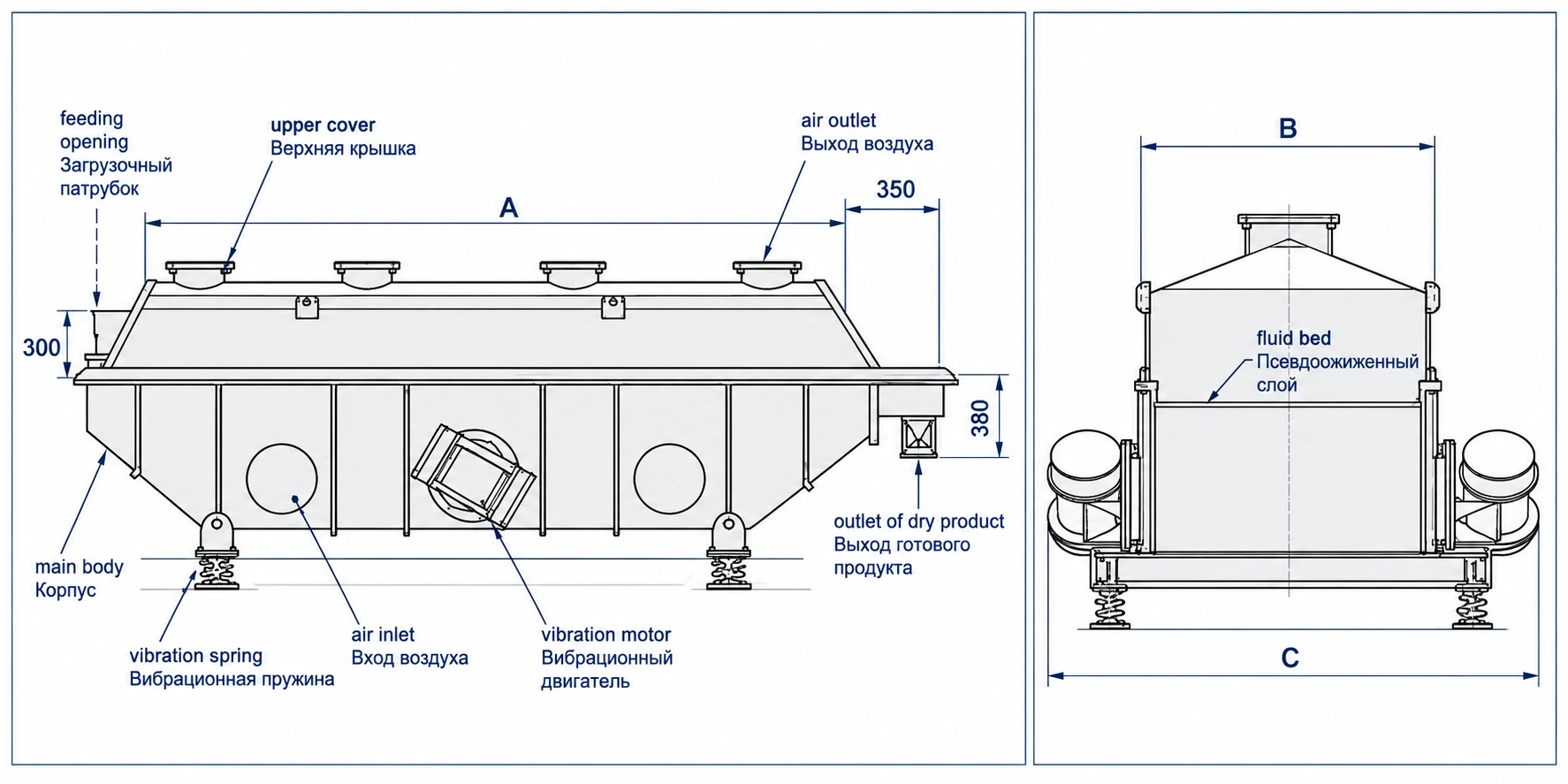
| Model | Bed Width (mm) | Bed Length (mm) | A (mm) | B (mm) | C (mm) | Vibration Motor Power | Weight |
|---|---|---|---|---|---|---|---|
| Model 1 | 300 | 3000 | 3505 | 450 | 1050 | 0.37 × 2 kW | 1240 kg |
| Model 2 | 300 | 4500 | 5005 | 450 | 1050 | 0.75 × 2 kW | 1570 kg |
| Model 3 | 600 | 4500 | 5005 | 750 | 1350 | 1.1 × 2 kW | 1967 kg |
| Model 4 | 600 | 6000 | 6510 | 750 | 1350 | 1.1 × 2 kW | 2743 kg |
| Model 5 | 600 | 7500 | 8010 | 750 | 1750 | 1.5 × 2 kW | 2886 kg |
| Model 6 | 900 | 6000 | 6510 | 1050 | 1750 | 1.5 × 2 kW | 3540 kg |
| Model 7 | 900 | 7500 | 8010 | 1050 | 1750 | 2.2 × 2 kW | 4219 kg |
| Model 8 | 1200 | 7500 | 8010 | 1400 | 2200 | 3 × 2 kW | 5223 kg |
| Model 9 | 1500 | 7500 | 8010 | 1700 | 2500 | 4 × 2 kW | 6426 kg |
| Model 10 | 1800 | 8000 | 8520 | 2000 | 2800 | 4 × 2 kW | 8600 kg |
The dimensions above follow the published reference table. Final dimensions and configuration must be confirmed for the selected model and project.
Applications
Applications include powder and granular materials requiring continuous drying or cooling in typical process industries. Confirm material properties and process conditions before selecting the equipment configuration.
Chemical, pharmaceutical, food processing, dehydrated vegetable, grain processing and mineral industries.
Citric acid, monosodium glutamate, borax, ammonium sulfate, compound fertilizer, dehydrated radish, soybean meal, distillers’ grains, seeds, mineral slag and granulated sugar.
Equipment selection is based on the material properties and required drying or cooling duty.
Working Principle
Wet feed enters the dryer and moves forward under vibration. Process air passes upward through the bed, creating fluidization and supporting uniform heat and mass transfer. Bed thickness, conveying speed and vibration amplitude can be adjusted around the required duty.
Wet powder or granular feed is introduced into the inlet of the vibrating bed.
Vibration motors move the material steadily along the processing chamber.
Process air passes through the bed and brings the particles into a controlled fluidized state.
Airflow and vibration maintain contact between the process gas and the moving material.
The material is dried or cooled according to the selected temperature and airflow conditions.
Processed material leaves the opposite end of the bed in continuous operation.
Key Features
The final equipment arrangement is matched to the material, drying or cooling duty and production requirements.
Vibration motors provide the conveying force with stable operation, low noise and convenient maintenance.
Airflow and vibration support even material distribution and consistent drying or cooling across the bed.
Bed thickness, conveying speed and vibration amplitude can be adjusted to suit the required residence time and product condition.
The combined conveying action is suitable for fragile materials and can accommodate selected irregular particle shapes.
The enclosed process chamber supports controlled handling and helps limit dust release into the production area.
Direct contact between the fluidizing air and material provides effective heat and mass transfer.
Selection Support
Provide the following material, product, utility and site data for preliminary process evaluation and model sizing.
The final model and configuration are evaluated according to material characteristics and process requirements.