
Pharmaceutical Industry
Organic solvent-containing pharmaceutical materials, pharmaceutical intermediates and biochemical materials.
Product Overview
Controlled-atmosphere drying and solvent recovery for pharmaceutical, biochemical and chemical materials. Designed and manufactured for solvent-containing materials requiring controlled-atmosphere drying and solvent recovery in pharmaceutical applications. Review the working principle, performance features and available configuration details below when specifying your industrial project.
Product Essentials
Select a topic from the directory. The content stays in one focused workspace for faster comparison.
Applications
Applications include solvent-containing materials requiring controlled-atmosphere drying and solvent recovery in pharmaceutical applications. Confirm material properties and process conditions before selecting the equipment configuration.
Organic solvent-containing pharmaceutical materials, pharmaceutical intermediates and biochemical materials.
Solvent-based chemical materials, fine chemical products and organic compounds.
Biological materials requiring controlled-atmosphere drying.
Granular materials, wet mixed particles, powder-containing materials and materials containing organic solvents.
Working Principle
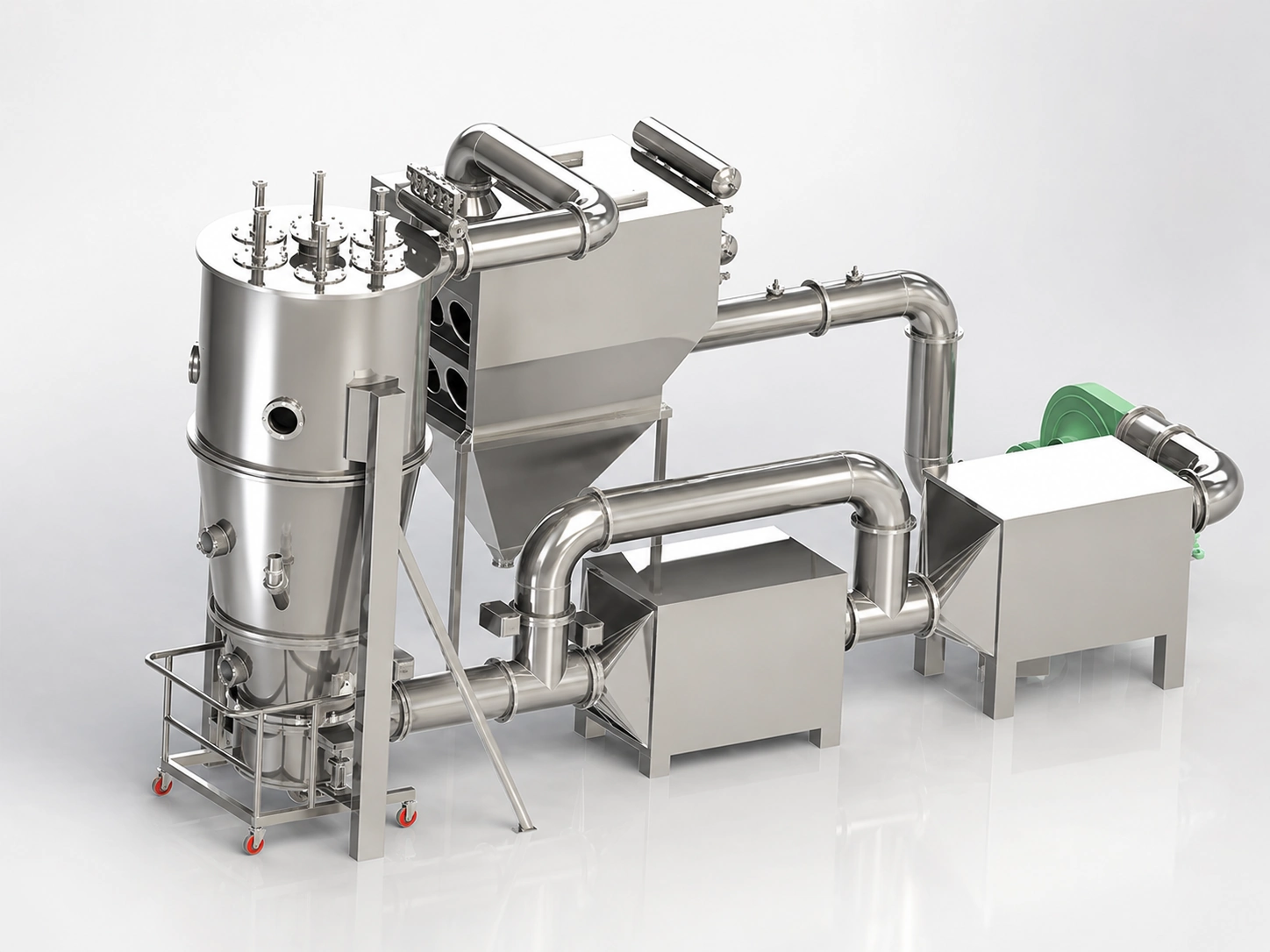
The nitrogen drying medium transfers heat to the fluidized material, carries evaporated solvent to the recovery section and returns to the heater after condensation.
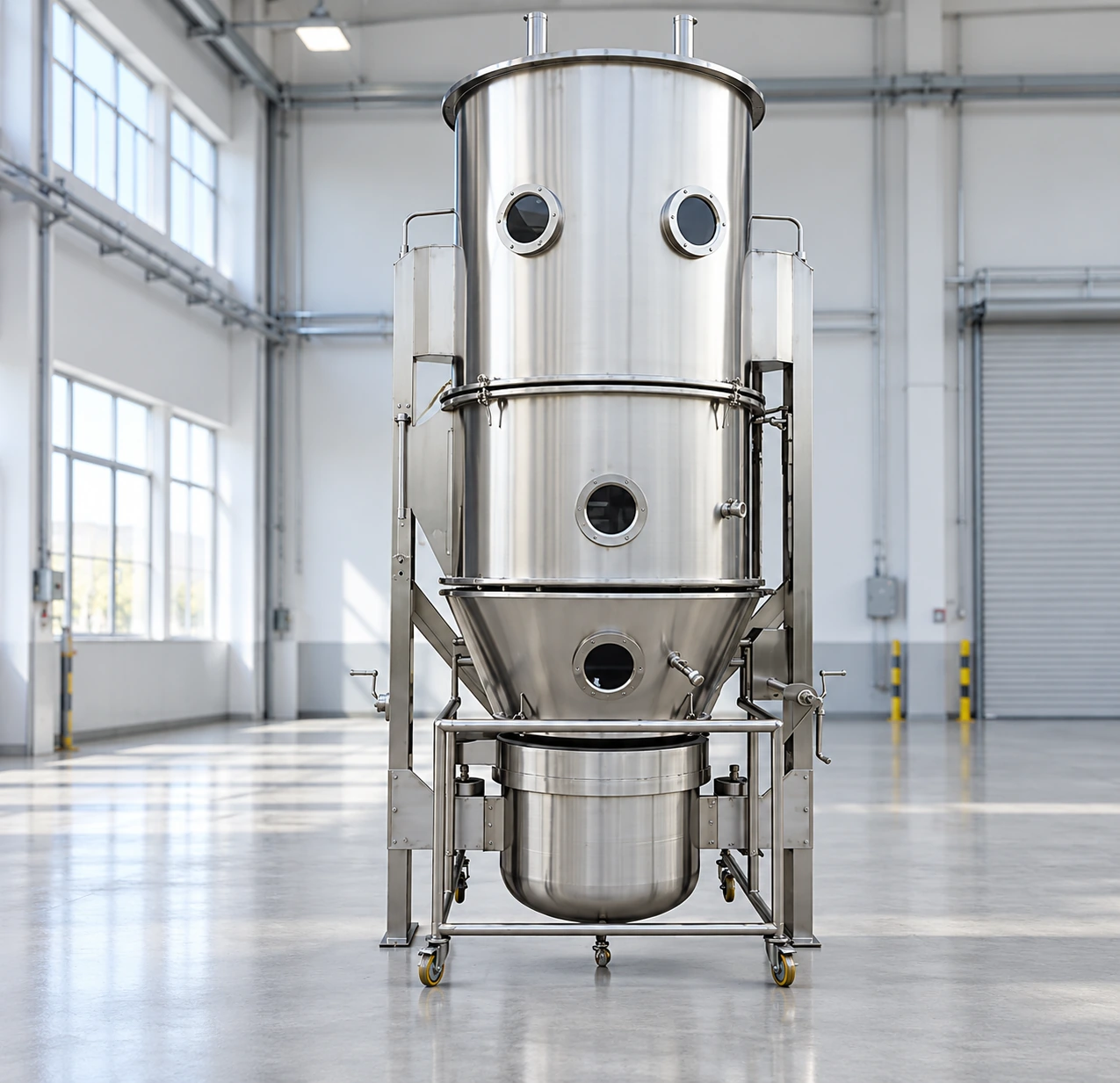
Heated nitrogen enters the sealed fluidized-bed chamber and transfers heat to the material without direct contact with ambient air.
Hot circulating nitrogen contacts the material while solvents such as ethanol, acetone or methanol evaporate into the gas stream.
Fine particles are removed before solvent vapor enters the condenser, where it is cooled, condensed and recovered.
After condensation and separation, the nitrogen returns to the heating system and circulates back into the dryer.
Process Flow
The process maintains a sealed gas route from nitrogen heating through condensation and return heating.
Solvent-containing material is introduced into the closed fluidized-bed system.
Circulating nitrogen is heated to the required process temperature.
Heated nitrogen fluidizes the material and provides drying energy.
Organic solvent evaporates from the material into the circulating gas.
Entrained product fines are removed from the solvent-containing gas.
The condenser cools solvent vapor for collection and reuse.
Separated nitrogen returns to the heater.
The reheated gas re-enters the dryer to complete the closed loop.
Key Features
Final performance and safety configuration depend on the solvent system, material properties and site requirements.
The enclosed structure limits direct contact between solvent-containing process gas and the external environment.
Evaporated solvent is condensed and recovered during circulation, supporting reuse and reduced emissions.
Nitrogen provides a controlled atmosphere for oxygen-sensitive materials and solvent-processing duties.
Fluidized gas-to-particle contact supports intensive heat and mass transfer.
Closed gas circulation reduces heat loss and limits solvent discharge from the process.
The configured control system can monitor oxygen concentration, pressure balance, nitrogen supply and circulation conditions.
Safety Design
Safety setpoints, instruments and protection levels are confirmed for the solvent, process conditions and applicable project requirements.
Online oxygen monitoring supports automatic adjustment of nitrogen supply when oxygen concentration exceeds the configured safety limit.
Pressure-balance monitoring and relief protection respond to abnormal pressure conditions within the circulation system.
Explosion-proof electrical and protective provisions reduce risks associated with faults or abnormal operating conditions.
Technical Specifications
Listed values apply to the identified configuration. Confirm material conditions, utilities and optional equipment before selection.
| Model | Drying Capacity (kg/h) | Bed Area (m²) | Fan Power (kW) | Inlet Air Temperature (°C) | Heat Transfer Medium | Solvent Recovery Rate (%) |
|---|---|---|---|---|---|---|
| Model 1 | 5–20 | 0.25 | 7.5 | Room Temperature–300 | Nitrogen | 95–99 |
| Model 2 | 10–40 | 0.5 | 11 | Room Temperature–300 | Nitrogen | 95–99 |
| Model 3 | 20–80 | 1 | 15 | Room Temperature–300 | Nitrogen | 95–99 |
| Model 4 | 40–160 | 2 | 30 | Room Temperature–300 | Nitrogen | 95–99 |
| Model 5 | 60–240 | 3 | 75 | Room Temperature–300 | Nitrogen | 95–99 |
| Model 6 | 80–320 | 4 | 90 | Room Temperature–300 | Nitrogen | 95–99 |
| Parameter | Specification |
|---|---|
| Drying Medium | Nitrogen |
| System Type | Closed-Loop Circulation |
| Application | Solvent-containing material drying |
| Solvent Recovery Rate | 95–99% |
| Inlet Temperature Range | Room Temperature–300°C |
| Operation Mode | Continuous circulation |
| Safety Features | Oxygen monitoring, pressure protection and explosion protection |
Selection Support
Provide the following solvent, material, production and safety data for preliminary sizing and configuration review.