
Typical Industries
Pharmaceutical, chemical, food processing, grain processing and feed production.
Product Overview
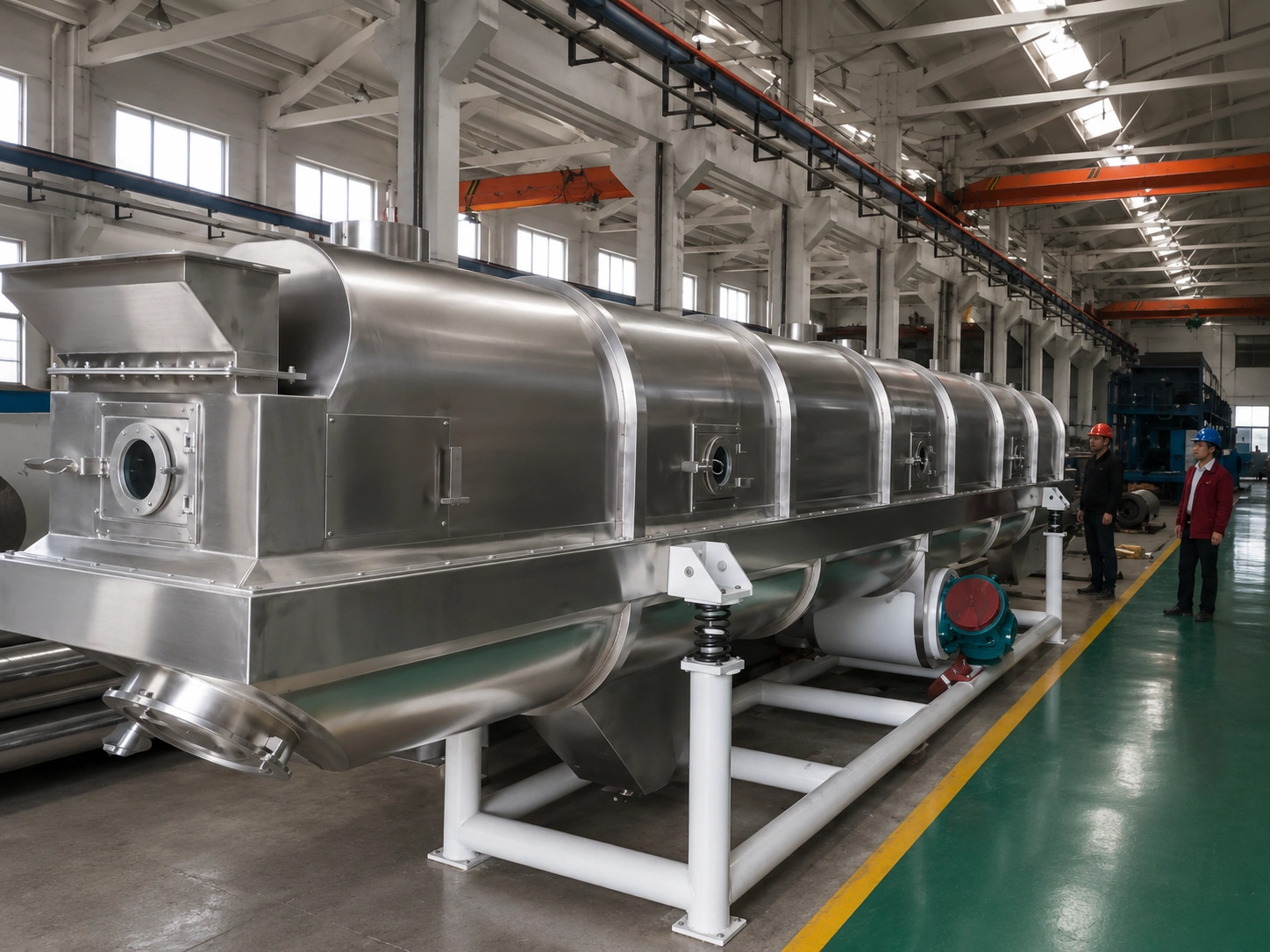
Continuous or batch fluidized-bed drying for granular and selected powder materials across pharmaceutical, chemical, food and agricultural processing. Designed and manufactured for suitable powder and granular materials, including sodium gluconate subject to material testing. Review the working principle, performance features and available configuration details below when specifying your industrial project.
Product Essentials
Select a topic from the directory. The content stays in one focused workspace for faster comparison.
Interactive Equipment View
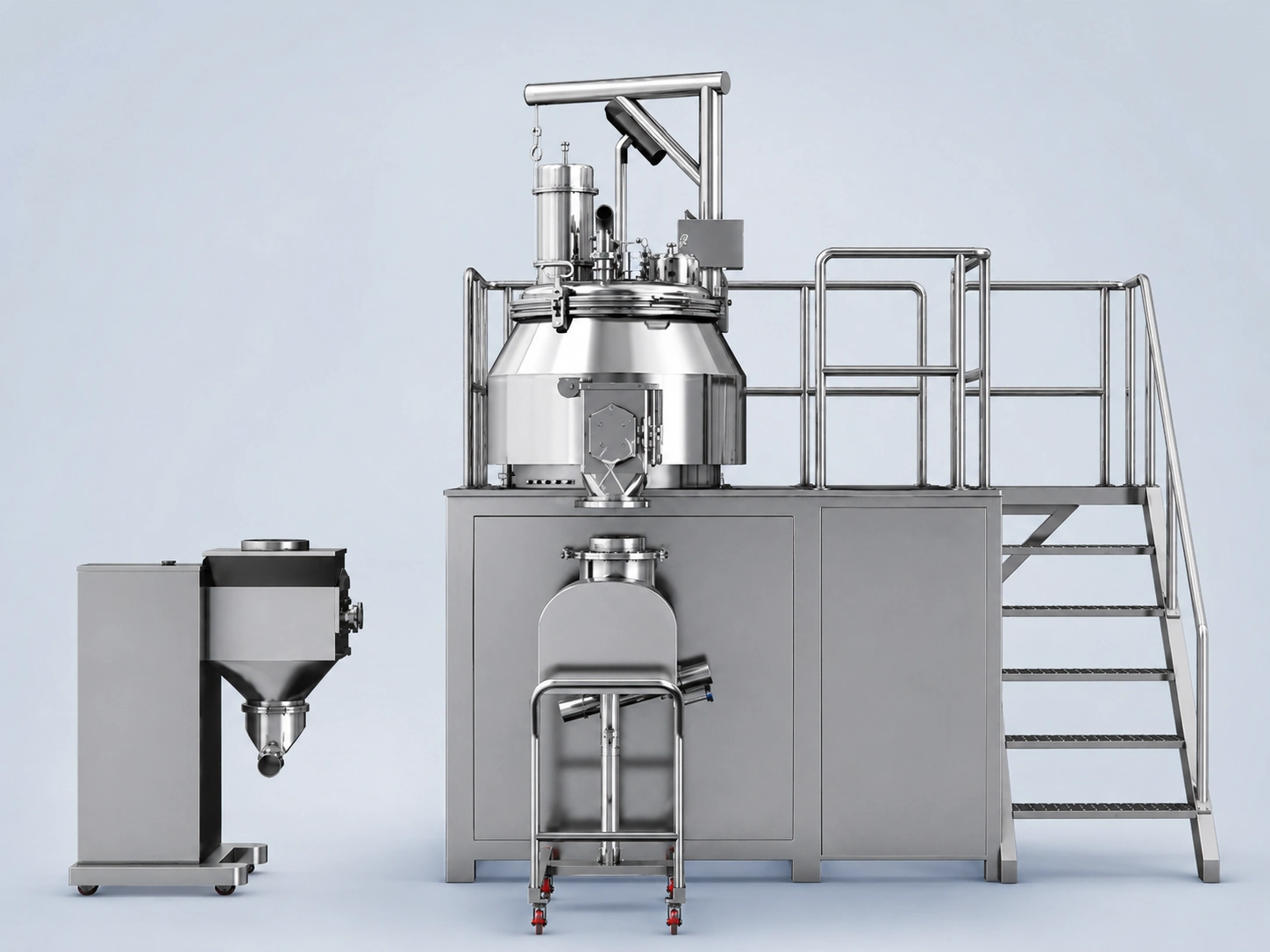
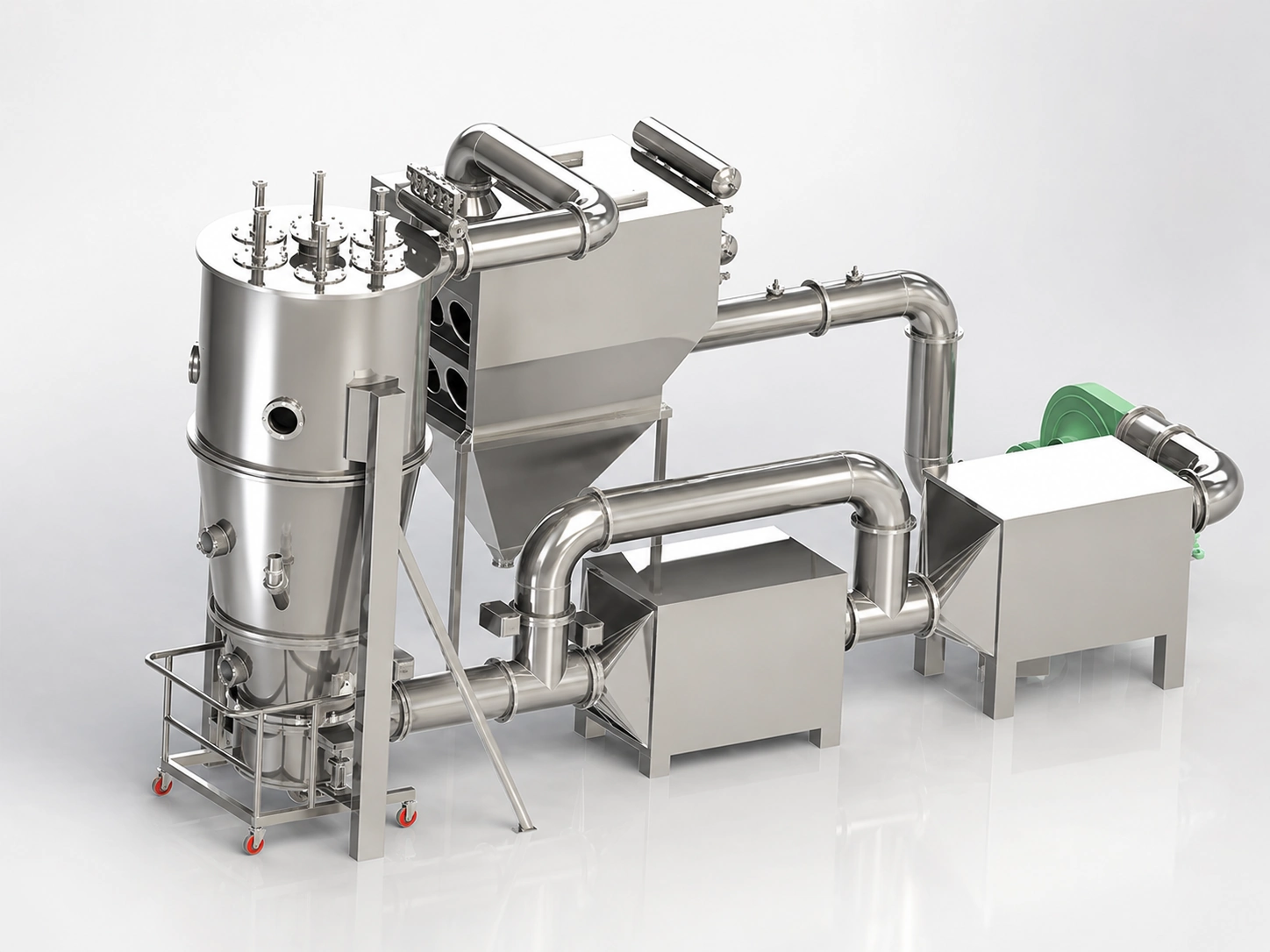
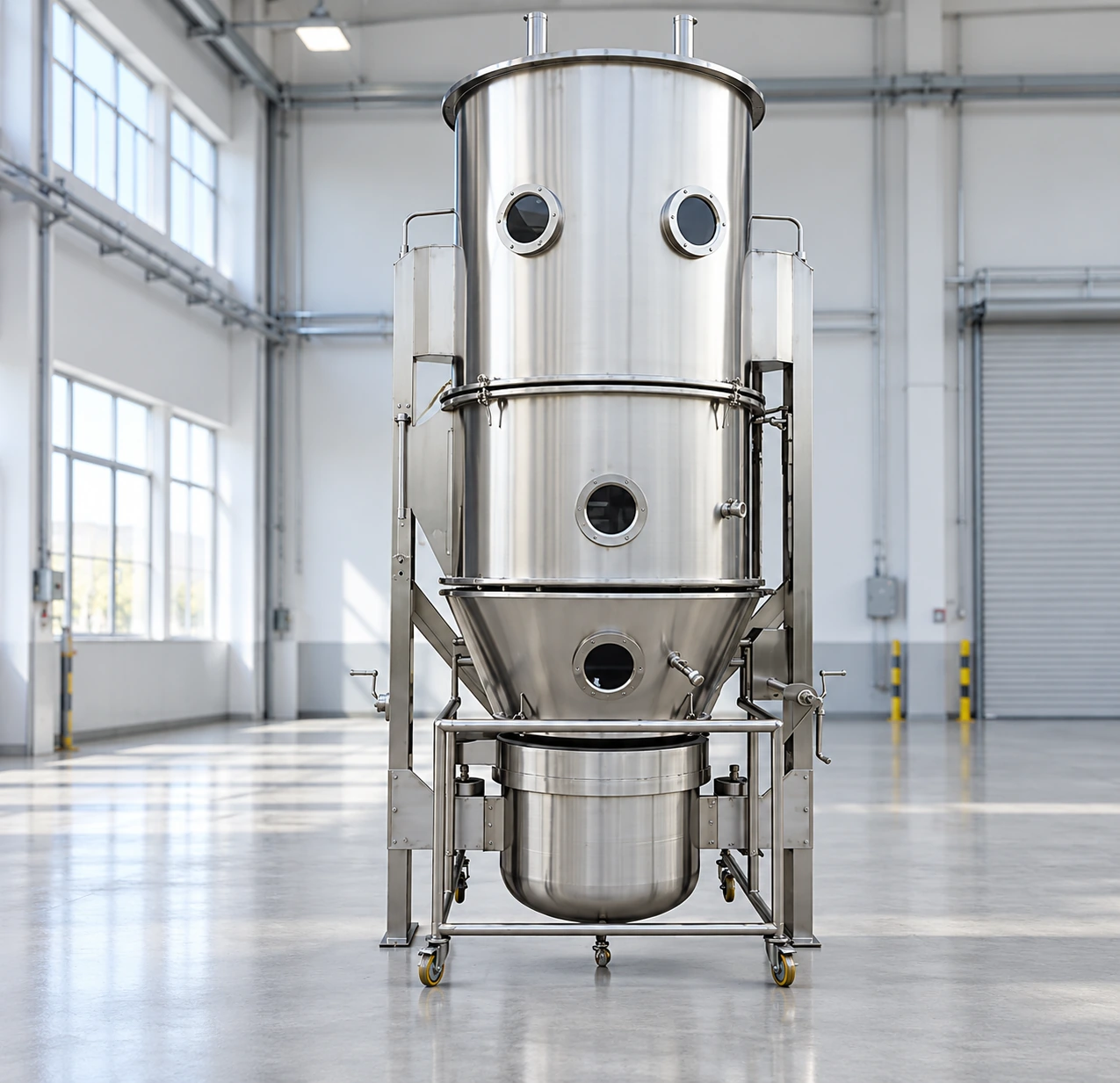
Drag the 3D model to rotate and use the equipment photographs for a quick real-world reference.
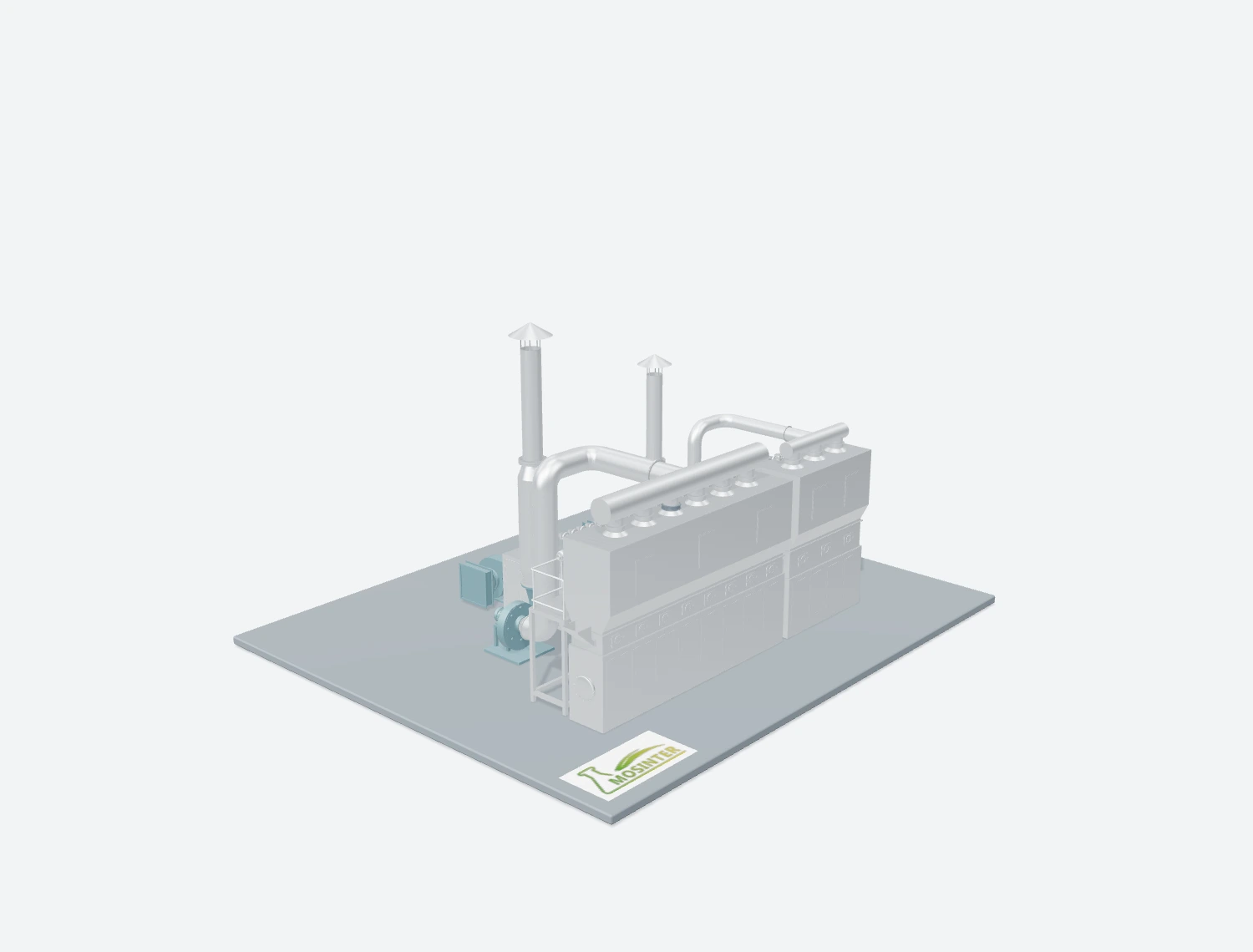
Interactive preview unavailable. Please contact us for equipment details.
Drag to rotate · Scroll or pinch to zoom
Technical Specifications
Listed values apply to the identified configuration. Confirm material conditions, utilities and optional equipment before selection.
| Model | Reference Drying Capacity (kg/h) | Fan Power (kW) | Fan Pressure (Pa) | Air Volume (m³/h) | Inlet Air Temp. (°C) | Feeding Method |
|---|---|---|---|---|---|---|
| Model 1 | 10–15 | 7.5 | 5.5×10³ | 1500 | 60–200 | Star feeder / Pneumatic conveying |
| Model 2 | 20–25 | 11 | 5.8×10³ | 2000 | 60–200 | Star feeder / Pneumatic conveying |
| Model 3 | 30–40 | 15 | 7.1×10³ | 3850 | 60–200 | Star feeder / Pneumatic conveying |
| Model 4 | 50–80 | 30 | 8.5×10³ | 7000 | 60–200 | Star feeder / Pneumatic conveying |
The capacities are reference test values for sour-plum crystals at 20% initial moisture, 5% final moisture and 130°C inlet air. These values are not guaranteed sodium gluconate throughput. Actual capacity depends on the feed and operating conditions and requires a separate material test.
Model-specific capacity, inlet temperature, fan power, dimensions and utility consumption must be confirmed against the material and final equipment configuration.
Applications
Confirm material properties and process conditions before selecting the equipment configuration.
Pharmaceutical, chemical, food processing, grain processing and feed production.
Pharmaceutical raw materials, tablet granules, traditional Chinese medicine granules, health-food granules, beverage powders, corn germ, animal feed, plastic resins, citric acid and other suitable granular or powder materials.
The horizontal fluid bed dryer can be evaluated for sodium gluconate drying as a material application of the equipment family. Selection depends on feed moisture, target final moisture, particle size, fluidization behavior and the inlet-air temperature suitable for the material.
Actual throughput depends on the incoming feed and operating conditions. A pilot or material test is recommended to confirm stable fluidization, drying performance and final product quality before sizing the equipment. The sour-plum crystal reference capacities in the model table are not a sodium gluconate production guarantee.
| Parameter | Range |
|---|---|
| Applicable Particle Size | 0.1–6 mm |
| Preferred Particle Size | 0.5–3 mm |
Working Principle
Clean heated air enters through the bottom distributor. Upward airflow suspends the material, promotes heat and mass transfer and maintains the dryer under normally negative pressure.
Wet material is introduced continuously or intermittently according to the selected operating mode.
Filtered heated air is distributed uniformly through the lower air-distribution section.
Upward airflow suspends the particles and maintains the material in a fluidized state.
Intensive air-to-material contact supports rapid transfer of heat and moisture.
For continuous operation, material remains in the drying zone for seconds to several minutes, depending on process conditions.
Dried material is discharged automatically from the opposite end of the horizontal bed.
Entrained fines pass through the selected cyclone, bag filter or combined collection system.
The centrifugal fan maintains airflow and negative pressure before the cleaned exhaust air is discharged.
Key Features
Final performance depends on material properties, operating mode and the selected air, feeding and dust-collection configuration.
Intensive contact between heated air and fluidized material promotes efficient heat and mass transfer.
The system can be configured for continuous or batch processing according to production requirements.
In continuous operation, material can pass through the drying zone within seconds to several minutes, depending on material and process conditions.
Cyclone separation, bag filtration or a combination can be selected according to particle size, bulk density and dust characteristics.
Normal negative-pressure operation supports controlled airflow and dust management.
The feeding arrangement can be adapted to material properties and production requirements.
Steam, electricity or a hot-air furnace can be configured according to project requirements.
System Configuration
Cyclone separation and bag filtration are selected according to material density, particle size and dust-loading conditions; neither is automatically treated as standard for every project.
| System Section | Function |
|---|---|
| Air Filter | Filters incoming process air |
| Air Heater | Heats the drying air |
| Fluid Bed Dryer | Main fluidization and drying chamber |
| Feed System | Introduces wet material into the dryer |
| Cyclone Separator | Separates entrained solids where suitable for the selected material |
| Bag Filter | Provides additional fine-particle collection where required |
| Centrifugal Fan | Maintains airflow and negative-pressure operation |
| Discharge System | Removes dried material from the dryer |
| Control System | Controls and monitors the drying process |
Selection Support
Provide the following material, product, utility and site data for preliminary process evaluation and equipment sizing.