
Pharmaceutical Industry
Organic solvent-containing pharmaceutical materials, active pharmaceutical ingredients and pharmaceutical intermediates.
Closed-Loop Fluidized Bed Dryer
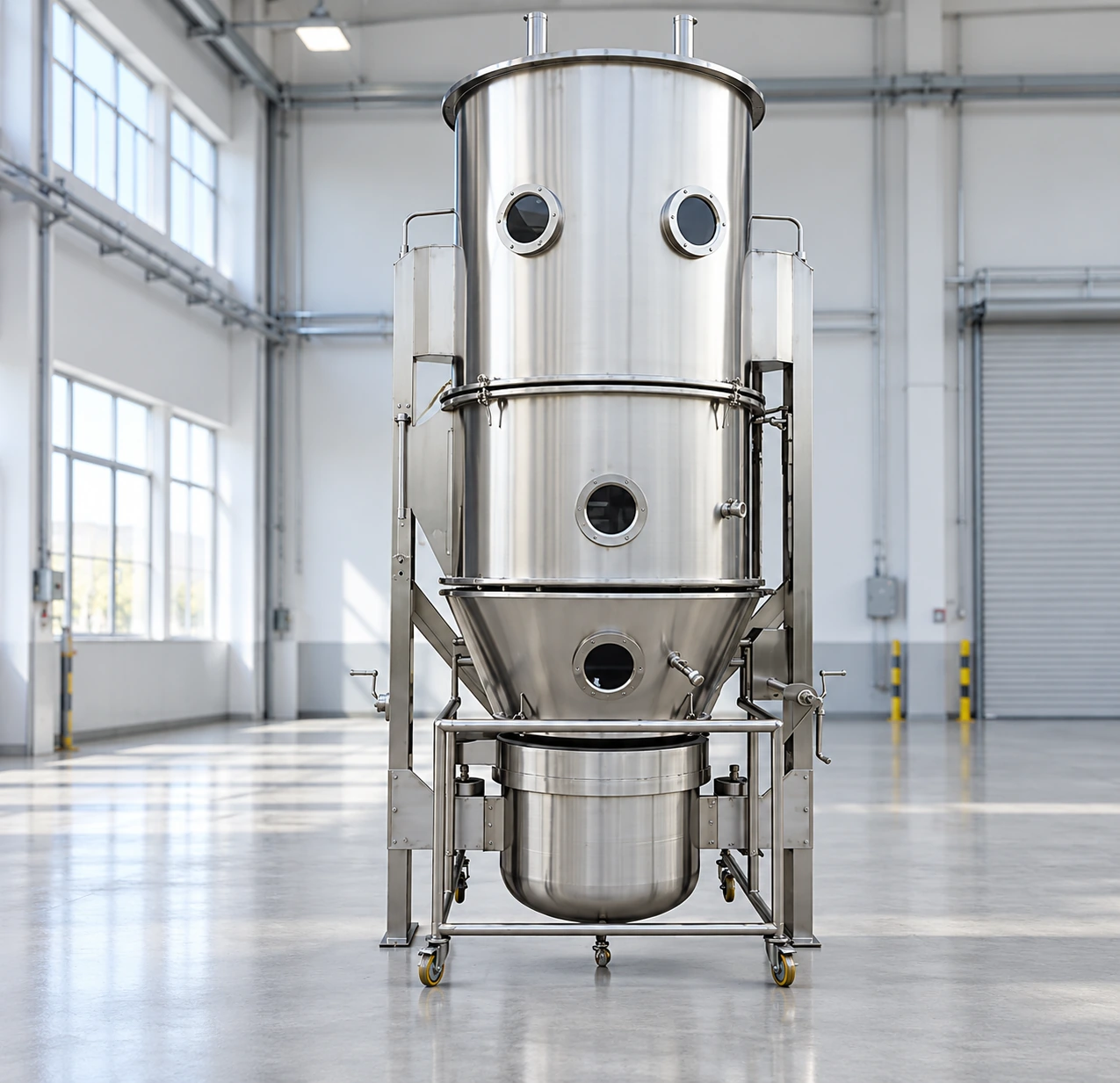
Designed for low-oxygen drying of solvent-containing materials with nitrogen recirculation and solvent recovery. Designed and manufactured for solvent-containing and oxygen-sensitive materials requiring enclosed fluidized drying in pharmaceutical applications. Review the working principle, performance features and available configuration details below when specifying your industrial project.
Product Essentials
Select a topic from the directory. The content stays in one focused workspace for faster comparison.
Interactive Equipment View
Review the drying chamber, circulation fan, filtration route and connected process modules in one interactive engineering view.
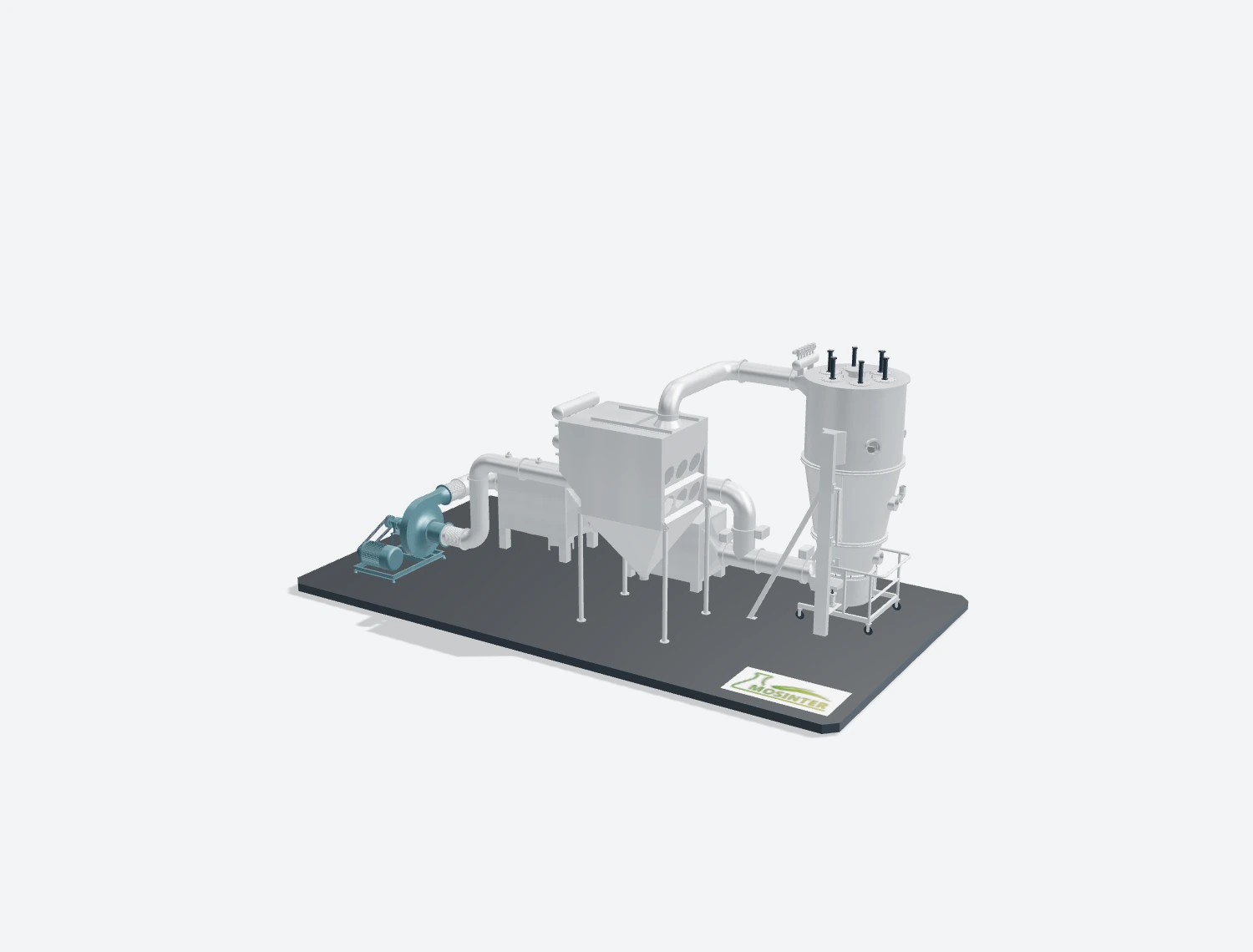
Interactive preview unavailable. Please contact us for equipment details.
Drag to rotate · Scroll or pinch to zoom
Technical Specifications
Listed values apply to the identified configuration. Confirm material conditions, utilities and optional equipment before selection.
| Parameter / Vessel volume (L) | 11 | 38 | 120 | 340 | 450 | 670 | 1000 | 1700 |
|---|---|---|---|---|---|---|---|---|
| Total vessel volume (L) | 11 | 38 | 120 | 340 | 450 | 670 | 1000 | 1700 |
| Vessel diameter (mm) | Ø400 | Ø600 | Ø800 | Ø1100 | Ø1300 | Ø1500 | Ø1600 | Ø1800 |
| Capacity (kg/batch) | 3–5 | 5–10 | 18–30 | 40–60 | 80–120 | 150–200 | 250–300 | 350–500 |
| Closed-loop fan power (kW) | 4.0 | 5.5 | 11 | 15 | 18.5 | 30 | 45 | 55 |
| Steam pressure (MPa) | 0.2–0.4 | — | — | — | — | — | — | — |
| Steam consumption (kg/h) | 15 | 35 | 70 | 120 | 190 | 220 | 330 | 445 |
| Compressed air consumption (m³/min) | 0.3 | 0.4 | 0.5 | 0.6 | 0.8 | 1.0 | 1.0 | 1.5 |
| Compressed air pressure (MPa) | 0.4–0.6 | — | — | — | — | — | — | — |
| Nitrogen pressure (MPa) | 0.4–0.6 | — | — | — | — | — | — | — |
| Nitrogen consumption (m³/min) | 0.15 | 0.20 | 0.25 | 0.30 | 0.35 | 0.40 | 0.50 | 0.70 |
| Coolant pressure (MPa) | 0.2–0.4 | — | — | — | — | — | — | — |
| Circulating coolant consumption (t/h) | 3.5 | 5.5 | 7.5 | 12.5 | 14.5 | 20 | 28 | 40 |
A dash indicates that no value is listed for that size in the supplied data. Pressure values retain their original column positions; other sizes require confirmation. Capacity is a reference batch range.
Recovery rate, capacity and utility consumption are reference values. Final equipment selection must be confirmed against the solvent system, feed properties and project safety requirements.
Applications
Applications include solvent-containing and oxygen-sensitive materials requiring enclosed fluidized drying in pharmaceutical applications. Confirm material properties and process conditions before selecting the equipment configuration.
Organic solvent-containing pharmaceutical materials, active pharmaceutical ingredients and pharmaceutical intermediates.
Biochemical materials requiring controlled-atmosphere drying and solvent handling.
Organic solvent-containing chemical products and fine chemicals.
Biological materials requiring low-oxygen drying conditions.
Granules, powders, wet mixed particles, solvent-containing materials and oxygen-sensitive materials.
Working Principle
The sealed process circulates nitrogen through heating, fluidization, filtration, condensation, dehumidification and reheating.
The system is sealed and the exhaust route removes internal air until the required oxygen concentration can be established.
Nitrogen is introduced through the controlled supply system. Make-up is adjusted automatically when the target low-oxygen condition is reached.
The circulation fan moves nitrogen through the heater before the conditioned gas enters the fluidized drying chamber.
Hot nitrogen passes through the material support plate, fluidizes the material and evaporates moisture and organic solvents.
Fine particles entrained in the circulating gas are removed by the pulse-cleaned filtration system.
Solvent-bearing gas enters the condenser, where vapor is cooled into liquid for collection and potential reuse.
After condensation, the circulating gas is conditioned to remove recovered vapor and residual moisture.
The dry nitrogen returns to the heater and continues through the closed-loop drying cycle.
Key Features
Performance depends on the selected solvent, material properties, batch loading and confirmed process conditions.
Condensation recovers evaporated organic solvent, reducing solvent loss and process emissions.
Nitrogen circulation maintains a low-oxygen drying environment for suitable flammable or oxygen-sensitive materials.
Recycling conditioned nitrogen limits continuous hot-gas discharge compared with an open exhaust route.
Positive-pressure hot nitrogen passes through the material support plate to provide direct gas-particle contact with reduced airflow requirements.
Selected filter media provide a smooth surface, large filtration area, high collection efficiency and low resistance to reduce powder adhesion.
The system can be configured for solvent-containing material drying, solvent recovery, combined drying and cooling duties.
Safety & Process Control
Final interlocks and explosion-protection measures are configured according to the solvent, site classification and applicable project requirements.
The system continuously monitors oxygen concentration and activates nitrogen make-up when the preset value is exceeded.
Internal pressure is monitored continuously. The pressure-relief system operates when the configured limit is exceeded.
The control system monitors nitrogen supply condition and adjusts replenishment during purging and drying.
Explosion-protection measures are integrated according to solvent hazards, electrical requirements and project safety review.
Pulse back-blowing maintains filter performance and limits fine-powder accumulation in the circulating gas route.
Recovered liquid solvent is separated from the gas loop and directed to the configured collection system.
Selection Support
Provide the following material, solvent, production, utility and safety data for preliminary model evaluation.