

A small Z-blade kneader can produce an acceptable paste in the lab, yet the first production run may heat faster, distribute filler unevenly or leave too much material in the trough. The useful output of the lab trial is a documented process window and a product endpoint. Carry those into the equipment specification before anyone converts the lab's speed and time into production settings.
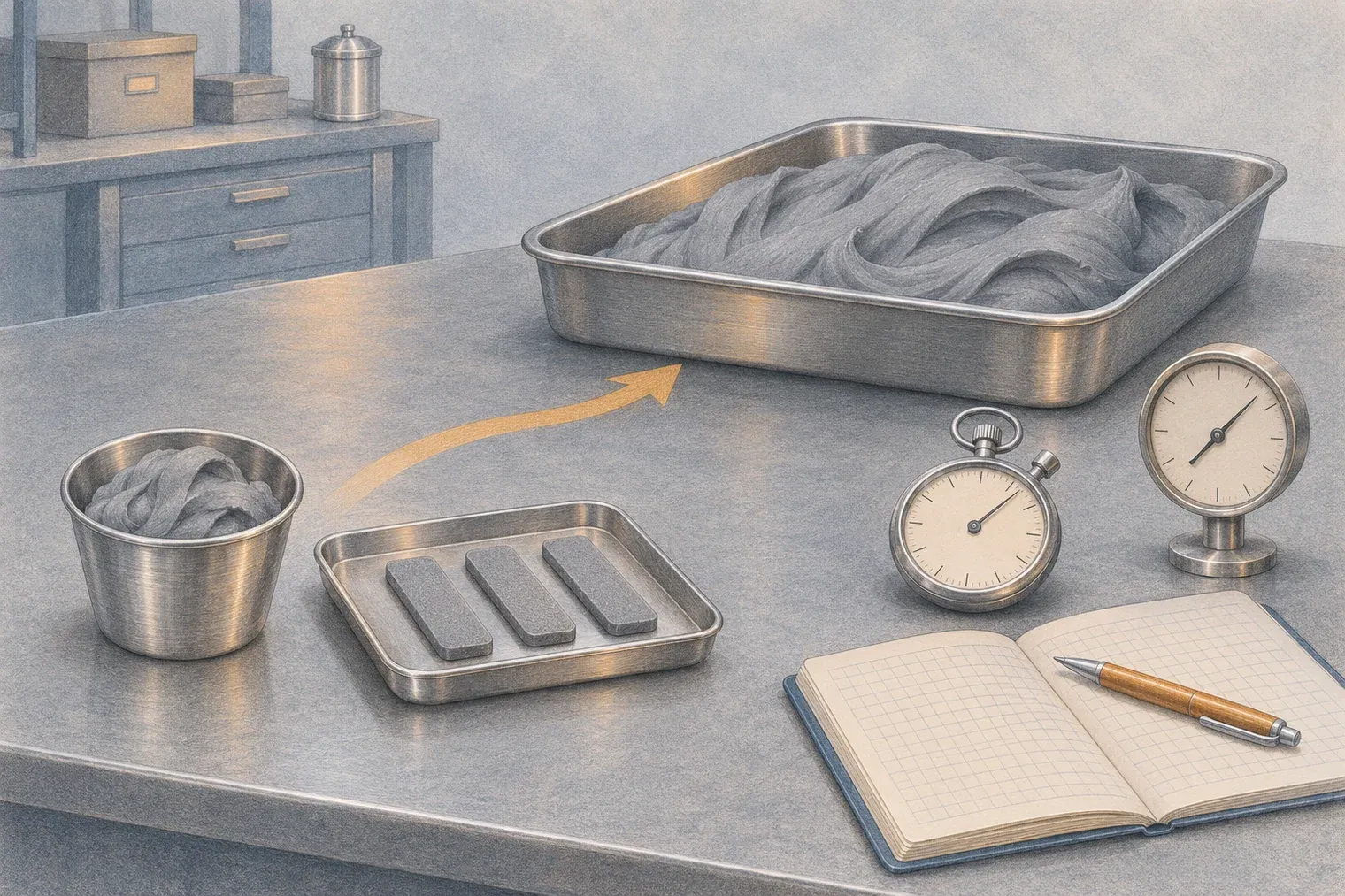
AI-generated illustration of samples at two scales. It depicts neither a named machine nor a measured trial.
Specify the batch range in kilograms and litres
Ask the supplier to identify the gross trough volume and the minimum and maximum working loads for the intended product. Report the batch mass and the basis for converting it to a volume. The loose bulk density of a powder charge can differ substantially from the density of the finished paste. A blend charging sequence can therefore reach its largest occupied volume before it reaches its final homogeneous state.
At the low end, check that both blades engage and turn over the material. At the high end, check for stagnant material above the working zone and whether the motor can handle the loading and restart sequence. Record the actual mixing and discharge configuration at each end of the proposed batch range. A successful nominal-size batch gives no direct evidence of a successful partial load.
Follow the peaks and the product temperature
ROSS's engineering note on scale-up discusses blade speed, available power and working volume among the factors that change. A larger blade at the same rotational speed has higher tip speed. This alone cannot establish comparable mixing across changes in blade shape, clearance, speed ratio or fill. Record both shaft speeds. Ask the supplier how the paired speeds, drive rating and any short-term load limits were selected for the actual recipe.
Keep a synchronized record of ingredient additions, shaft load and product temperature. Cover the period of highest resistance, which may occur during filler incorporation, a cool restart or the early part of discharge. Use the supplier's supported torque or drive indication and agree how to interpret it. If you use motor current as a diagnostic, specify the drive and speed conditions. A low average current can hide a brief overload. Record the probe position and the jacket settings, since a stable jacket temperature can coexist with a drifting product temperature.
Accept the material at the outlet
The discharge is part of the test. A screw-equipped unit can combine kneading and discharge in one machine. A production screw or tilting trough can change the time, residual hold-up and temperature seen by material at delivery. A sample near the lid may say little about the first or last material delivered to downstream equipment.
| Trial record | What the buyer should agree before the run |
|---|---|
| Feed condition | Batch mass, initial material temperature, lot or representative feed specification, and order and timing of additions. |
| Mixing endpoint | Agreed viscosity test conditions, dispersion or homogeneity test, product temperature and acceptable range against the lab reference. |
| Discharge profile | How to sample the first, middle and last usable portions and distinguish purge or retained material from acceptable output. |
| Repeatability | Which working loads require repeat trials and how product changes and abnormal events will be recorded. |
For sticky material, weigh the usable discharged mass as well as any recoverable residue. State the boundary for scrap and samples in the yield calculation. If a laboratory batch is taken out by hand but the production machine will feed a downstream process directly, include that discharge arrangement in the trial plan. Use the manufacturer's approved access and sampling procedure.
What to send with the request for quotation
The laboratory Z-blade kneader and the screw-discharge configuration describe two equipment configurations for different stages. Send the intended batch range, feed and product data, batch log, planned discharge destination and trial acceptance criteria. If the specification includes vacuum, agree the pressure reference and measuring location separately in the vacuum kneader pressure guide. Ask for a trial summary that shows which end of the batch range and which process stage limits the offer.