
Environmental and wastewater
Industrial and municipal wastewater separation, drilling mud treatment and continuous sludge dewatering.
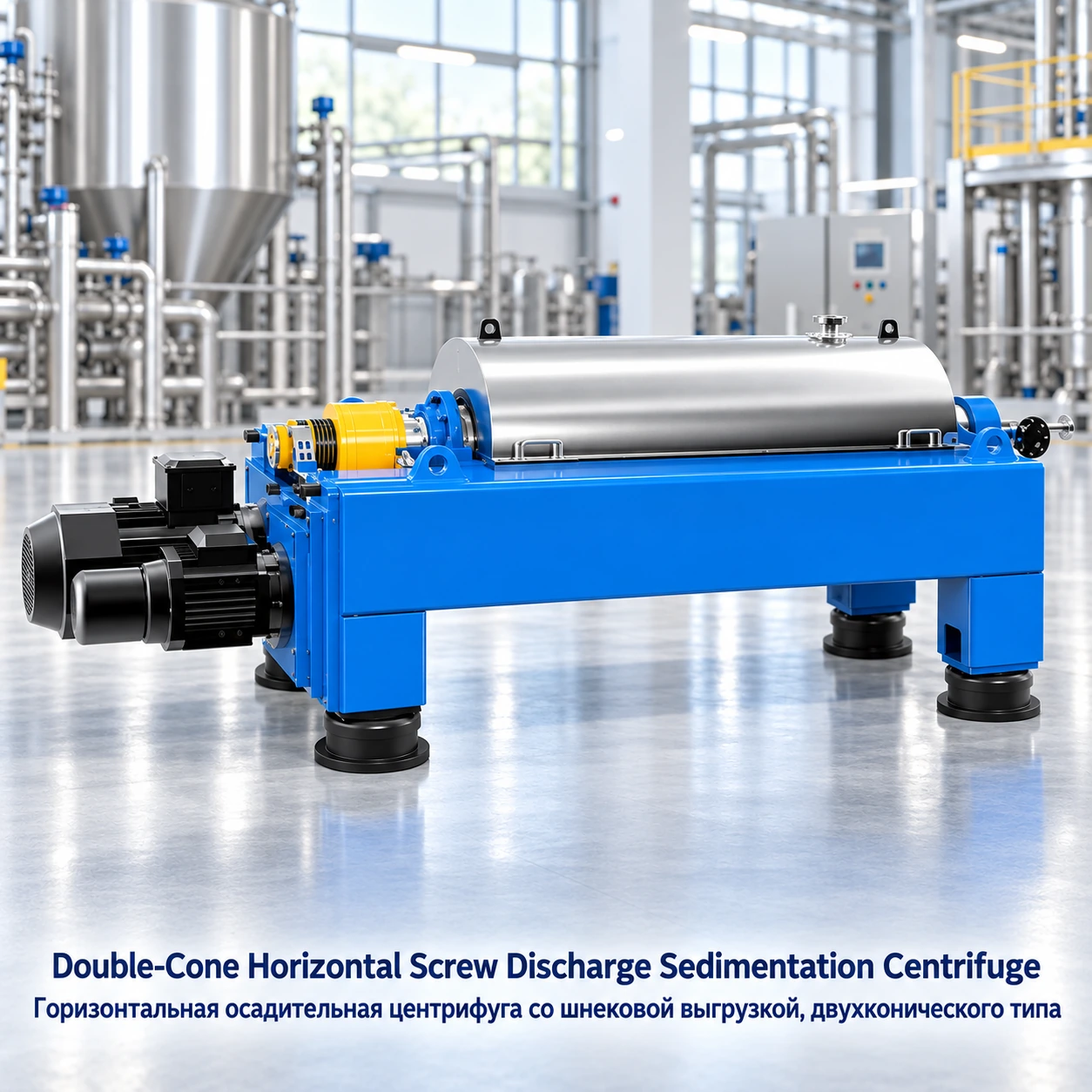
Continuous horizontal decanter
Continuous sedimentation, clarification, classification, concentration and dewatering with automatic scroll discharge. Designed and manufactured for environmental and wastewater and chemical and mineral processing. Review the working principle, performance features and available configuration details below when specifying your industrial project.
Product Essentials
Select a topic from the directory. The content stays in one focused workspace for faster comparison.
Continuous Horizontal Decanter Centrifuge Technical Data
Reference performance values for the twelve continuous horizontal decanter centrifuge configurations with scroll discharge. Confirm material conditions and final configuration before selection.
| Model | Bowl diameter (mm) | L/D | Bowl speed (r/min) | Separation factor | Main motor power (kW) | Auxiliary motor power (kW) | Machine weight (kg) | Overall dimensions (mm) |
|---|---|---|---|---|---|---|---|---|
| Model 1 | 220 | 4 | 4800–5200 | 2840–3325 | 11 | 5.5 | 1100 | 2660 × 740 × 780 |
| Model 2 | 300 | 4.3 | 4400 | 3250 | 15 | 5.5 | 1700 | 3250 × 960 × 1000 |
| Model 3 | 350 | 4.17 | 4000 | 3130 | 22–30 | 7.5–11 | 2450 | 3550 × 1010 × 1030 |
| Model 4 | 450 | 4 | 2800–3200 | 1575–2580 | 30–37 | 11–15 | 4300 | 4150 × 1090 × 1250 |
| Model 5 | 450 | 4.5 | 3200–3600 | 2575–3260 | 30–37 | 11–15 | 4400 | 4350 × 1090 × 1250 |
| Model 6 | 530 | 4 | 2800–3200 | 2330–3040 | 45–55 | 15–22 | 5300 | 4850 × 1230 × 1450 |
| Model 7 | 530 | 5 | 2500 | 1850 | 55 | 22 | 6000 | 5400 × 1230 × 1450 |
| Model 8 | 630 | 3.65 | 2500 | 2205 | 75 | 22–37 | 8000 | 5250 × 1440 × 1750 |
| Model 9 | 650 | 4.3 | 2500–3100 | 2275–3498 | 90–132 | 45–55 | 12000 | 5400 × 1750 × 1600 |
| Model 10 | 750 | 3.7 | 2400 | 1610 | 110–132 | 45–55 | 15600 | 6050 × 2050 × 1800 |
| Model 11 | 850 | 4 | 2000 | 1900 | 160 | 55–75 | 16000 | 6750 × 2280 × 1900 |
| Model 12 | 1000 | 3 | 1500 | 1260 | 132–160 | 55–75 | 16000 | 5200 × 2500 × 2000 |
Source reference values. Ranges indicate available operating or drive configurations; final dimensions, materials and performance are confirmed during engineering.
Applications
Applications include environmental and wastewater and chemical and mineral processing. Confirm material properties and process conditions before selecting the equipment configuration.
Industrial and municipal wastewater separation, drilling mud treatment and continuous sludge dewatering.
Dye and pigment classification, flotation-cleaned coal and coal-slurry dewatering, ore-slurry classification, kaolin and graphite sizing, and coal-tar separation.
Starch washing and dewatering, soybean and wheat protein dewatering, juice clarification, pulp-fiber dewatering, fish meal and fish processing, distillers-grain dewatering, and animal or vegetable oil clarification.
Separation of mycelial solids from antibiotic fermentation broth and similar bioprocess suspensions.
Working Principle
The process route is selected around the material and product targets.
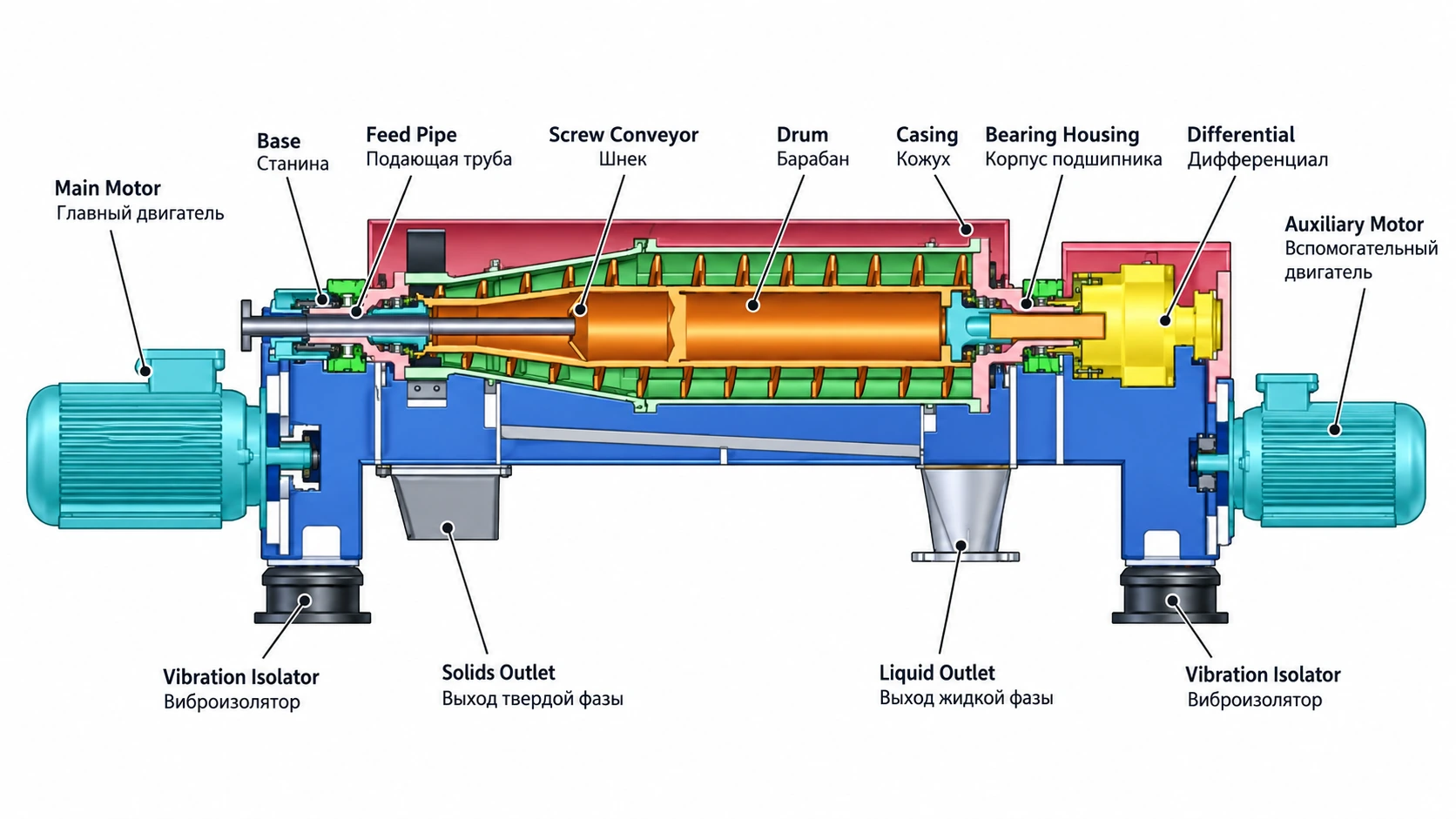
Suspension enters through the feed pipe and is distributed into the central region of the rotating bowl.
The density difference between phases causes heavier solids to settle rapidly against the bowl wall while the liquid forms an inner layer.
A differential-speed scroll transports the settled solids from the cylindrical clarification zone toward the conical dewatering zone.
As the solids travel up the cone, additional liquid drains from the sediment before continuous discharge through the small-end solids ports.
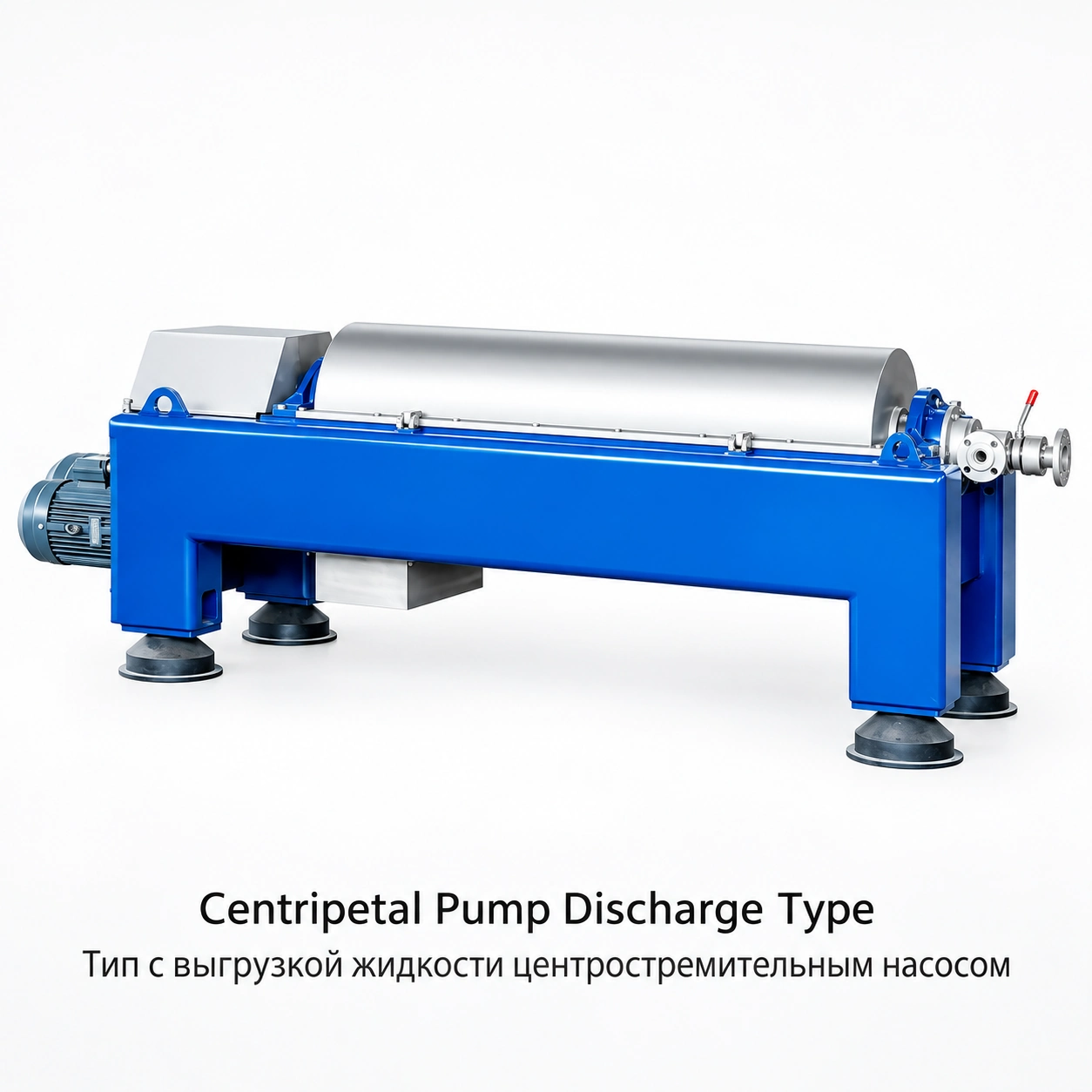
Clarified liquid flows toward the large end and leaves through adjustable overflow weirs or, where specified, a paring-disc pump.
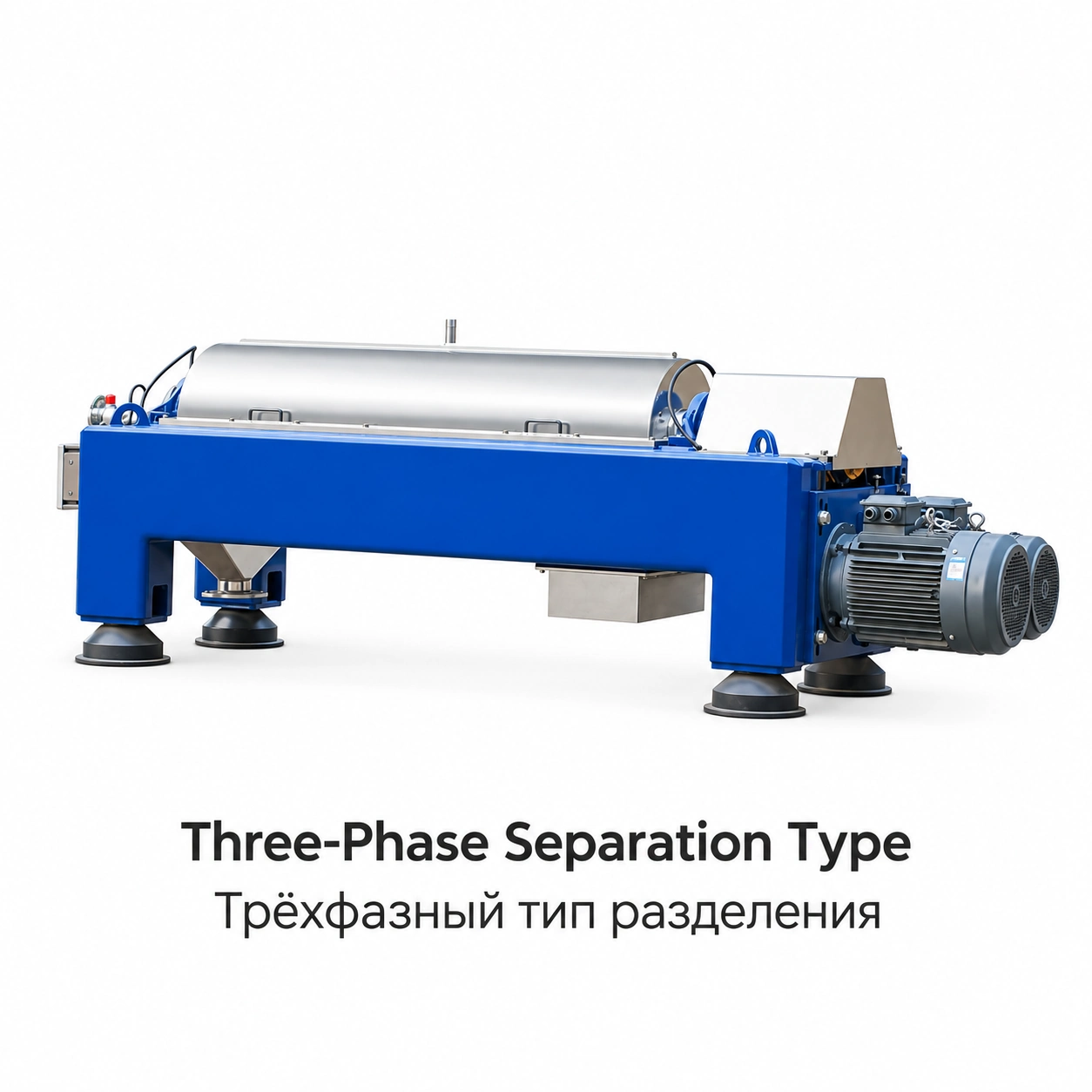
With the appropriate bowl and liquid-discharge configuration, the same density-separation principle can be applied to solid-liquid-liquid separation.
Performance Highlights
Final performance remains dependent on feed properties and engineering confirmation.
Continuous feeding, separation and solids discharge eliminate routine batch unloading and suit industrial production lines.
One platform can perform solid-liquid separation, dewatering, clarification, concentration and particle classification.
The scroll transports sediment from the cylindrical section through the conical dewatering zone for uninterrupted solids removal.
Changing bowl-to-scroll differential speed controls conveying rate, solids residence time, throughput and cake dryness.
The series covers wastewater, sludge, mineral slurry, starch, protein, fermentation broth and oil-processing duties after material evaluation.
This page covers solid–liquid separation. Three-phase duties require a separately specified machine.
Sedimentation, conveying and dewatering occur in one enclosed continuous machine.
Speed, differential, pond depth and discharge arrangements can be optimized for changing feed and product requirements.
System Configuration
Core equipment and auxiliary systems are selected around the process duty.
The cylindrical section provides clarification and sedimentation area, while the conical section lifts and dewaters the conveyed solids.
A controlled speed difference between bowl and scroll determines solids residence time, conveying rate, torque and discharge consistency.
The hydraulic differential housing rotates with the bowl while its splined rotor drives the scroll. A connected hydraulic power unit varies oil flow to adjust differential speed during operation.
Differential-speed control can optimize solids residence time, discharge rate, throughput and final cake dryness as feed conditions change.
Clarified liquid can leave through large-end overflow ports or an optional paring-disc pump; specialized configurations can support three-phase separation.
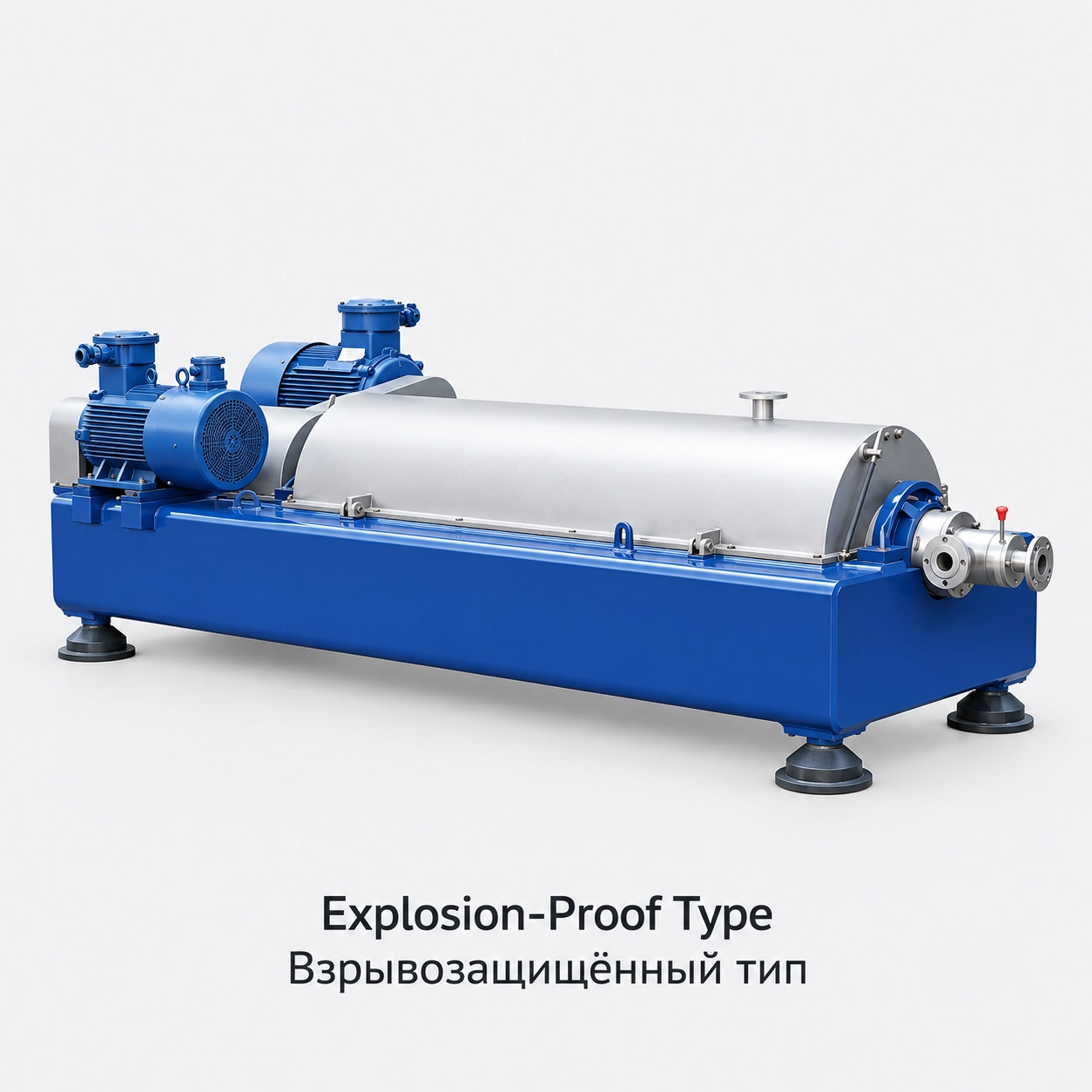
Feed-zone, scroll and solids-outlet protection, together with vibration, temperature, speed and torque monitoring, are selected for the actual duty.
Selection Support
Share the following process information for an efficient preliminary review.