
Chemical and pharmaceutical processing
Continuous clarification, concentration and dewatering of process suspensions, intermediates and hygiene-sensitive products.
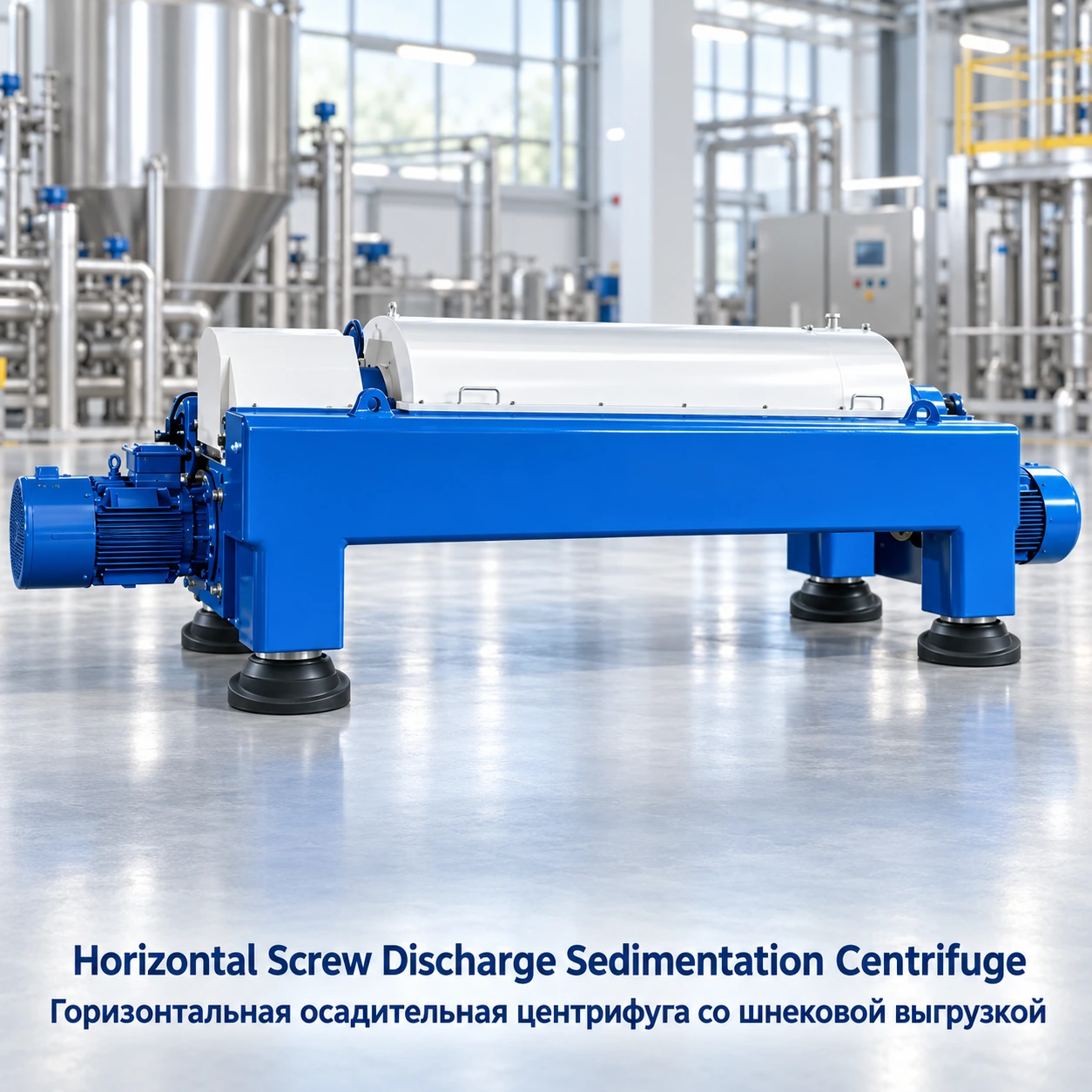
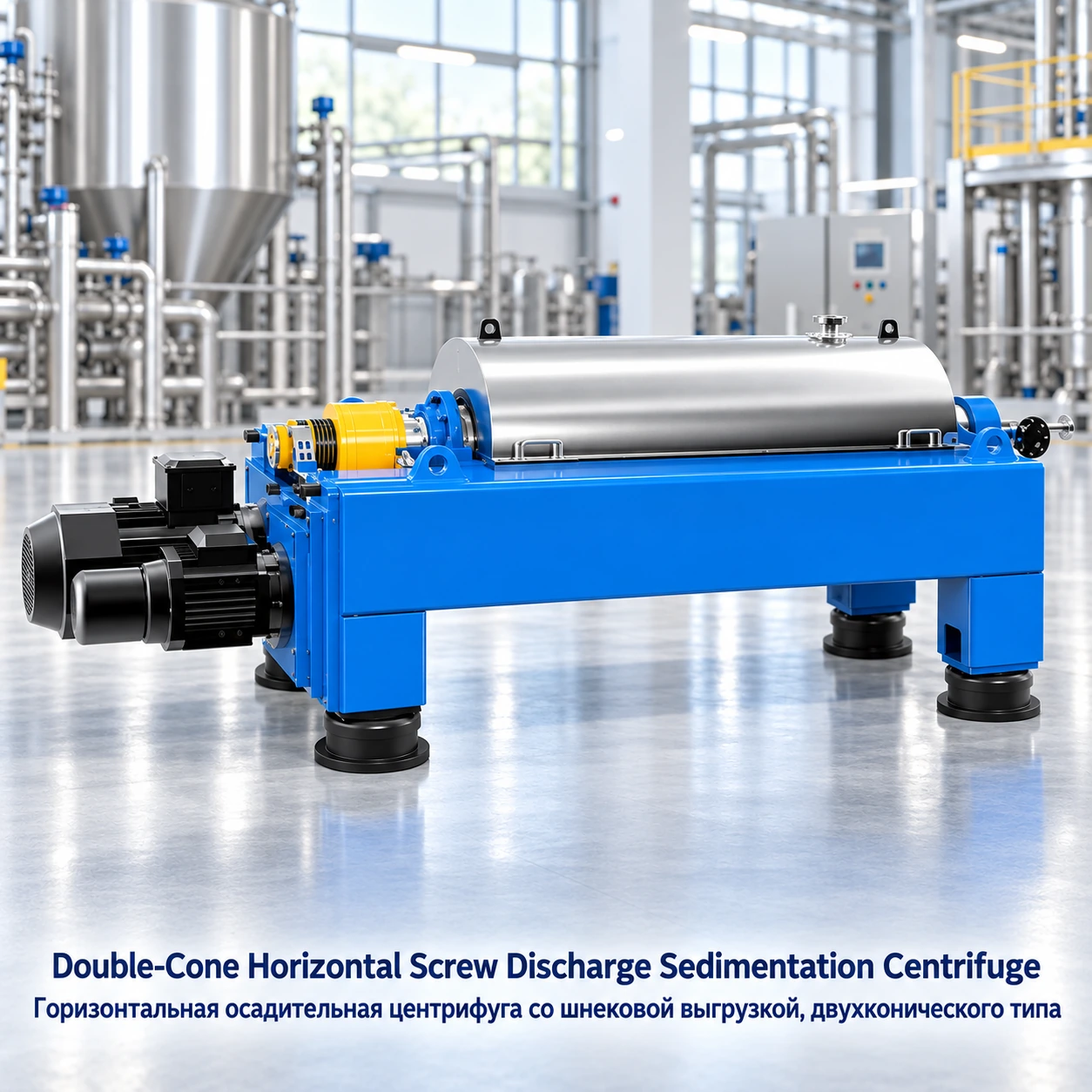
Centripetal-pump horizontal decanter
Continuous solid-liquid clarification and dewatering with pressurized centripetal-pump liquid discharge and independently controlled bowl and scroll drives. Designed and manufactured for chemical and pharmaceutical processing and environmental and resource processing. Review the working principle, performance features and available configuration details below when specifying your industrial project.
Product Essentials
Select a topic from the directory. The content stays in one focused workspace for faster comparison.
Decanter Centrifuge with Centripetal Pump Discharge Technical Data
Reference performance values for the four decanter centrifuge configurations with centripetal pump discharge. Confirm material conditions and final configuration before selection.
| Model | Bowl diameter (mm) | L/D | Bowl speed (r/min) | Separation factor | Main motor power (kW) | Machine weight (kg) | Overall dimensions (mm) |
|---|---|---|---|---|---|---|---|
| Model 1 | 350 | 4.17 | 4000 | 3130 | 22–30 | 2250 | 3450 × 1010 × 1030 |
| Model 2 | 420 | 4 | 3600 | 3050 | 30–37 | 4000 | 3500 × 1450 × 1300 |
| Model 3 | 530 | 4 | 3200 | 3040 | 45–55 | 5500 | 4100 × 1600 × 1450 |
| Model 4 | 720 | 4 | 2000 | 1610 | 110 | 11000 | 5300 × 2050 × 1750 |
Source reference values. Final centripetal-pump arrangement, dimensions, materials and performance are confirmed during engineering.
Applications
Applications include chemical and pharmaceutical processing and environmental and resource processing. Confirm material properties and process conditions before selecting the equipment configuration.
Continuous clarification, concentration and dewatering of process suspensions, intermediates and hygiene-sensitive products.
Wastewater, sludge, mineral and energy-industry streams requiring continuous solids removal.
Food-process liquids and other applications requiring high recovery, low clarified-liquid solids and separated phase discharge.
High-throughput, continuous processes requiring flexible differential-speed control, robust wear resistance and low solids carryover.
Working Principle
The process route is selected around the material and product targets.
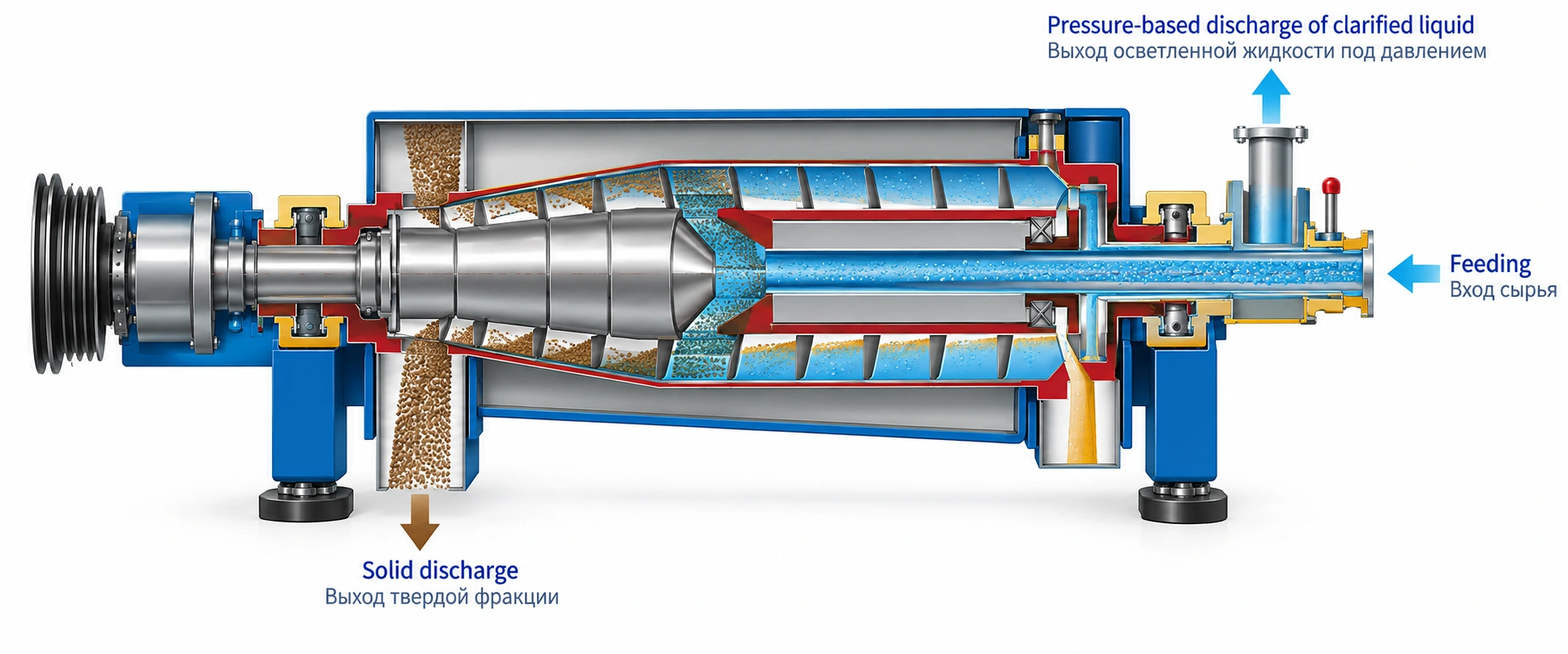
Feed enters continuously through the feed pipe and is accelerated and distributed into the rotating bowl.
The density difference drives solids to the bowl wall, where they form a sediment layer beneath the inner liquid pond.
The scroll rotates at a controlled differential speed and conveys settled solids toward the conical section.
Solids are further dewatered on the cone and continuously discharged through the solids ports.
Clarified liquid flows to the large-diameter end and is discharged under pressure by the centripetal pump.
Performance Highlights
Final performance remains dependent on feed properties and engineering confirmation.
The operating range is selected for the material and confirmed for the quoted configuration.
The operating range is selected for the material and confirmed for the quoted configuration.
The centripetal pump provides pressurized mother-liquor discharge, while separated liquid and solids chambers support cleaner product handling.
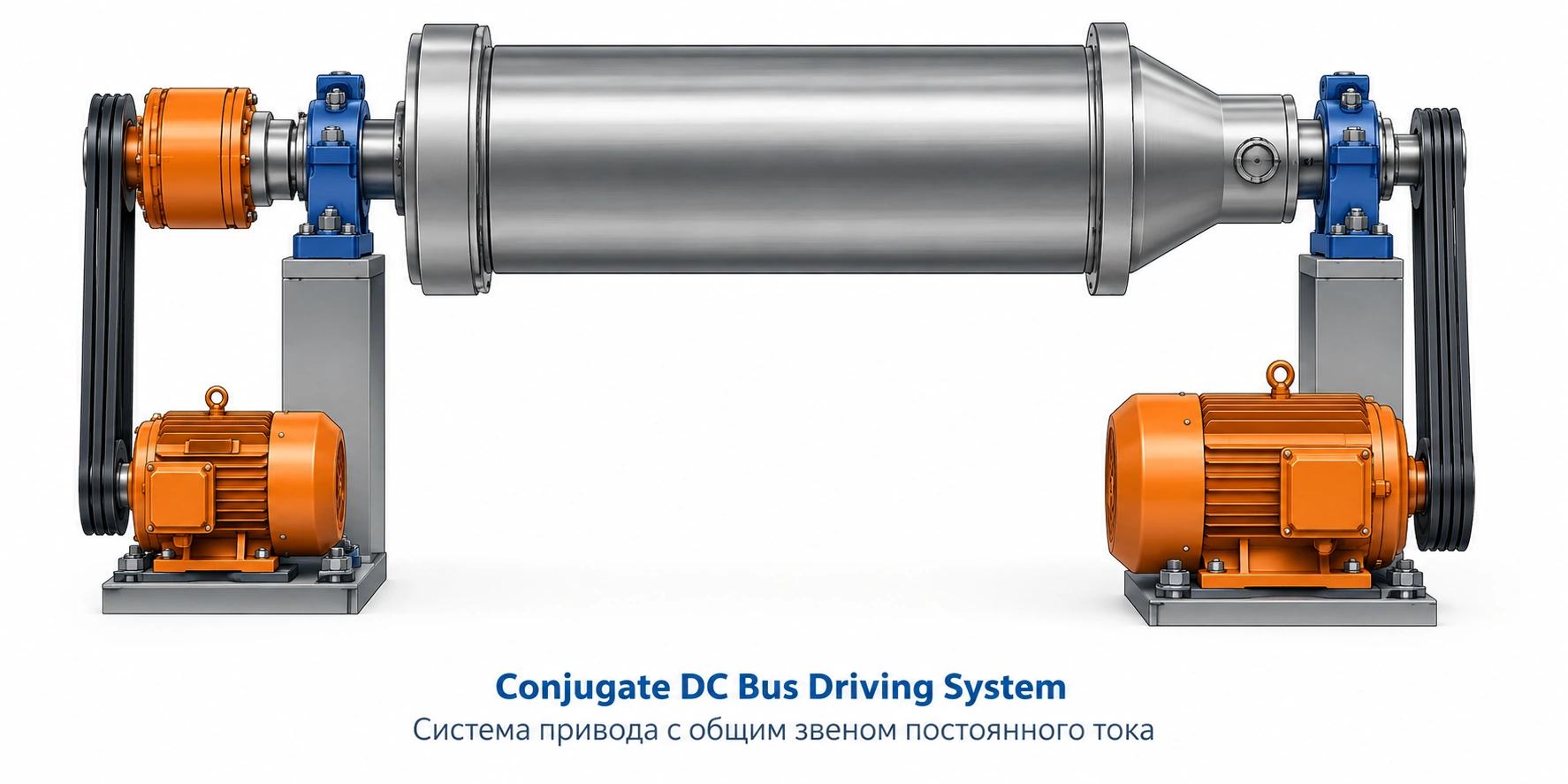
Independent bowl and scroll drives permit online differential-speed adjustment to stabilize clarification, dewatering and solids discharge.
The common-DC-bus drive can recover usable energy and reduce overall electrical demand.
Replaceable wear components protect the scroll flights, solids outlets and other erosion-prone areas, reducing lifecycle maintenance.
System Configuration
Core equipment and auxiliary systems are selected around the process duty.
The centripetal pump discharges clarified liquid under pressure and may reduce or eliminate a downstream transfer pump, depending on system pressure requirements.
Liquid and solids leave through separate chambers, reducing the centrifuge of mother-liquor droplets recontacting discharged solids.
Separate drives for the bowl and scroll provide responsive differential-speed adjustment as feed conditions change.
An optional common-DC-bus regenerative drive recovers part of the energy generated during differential or braking operation.
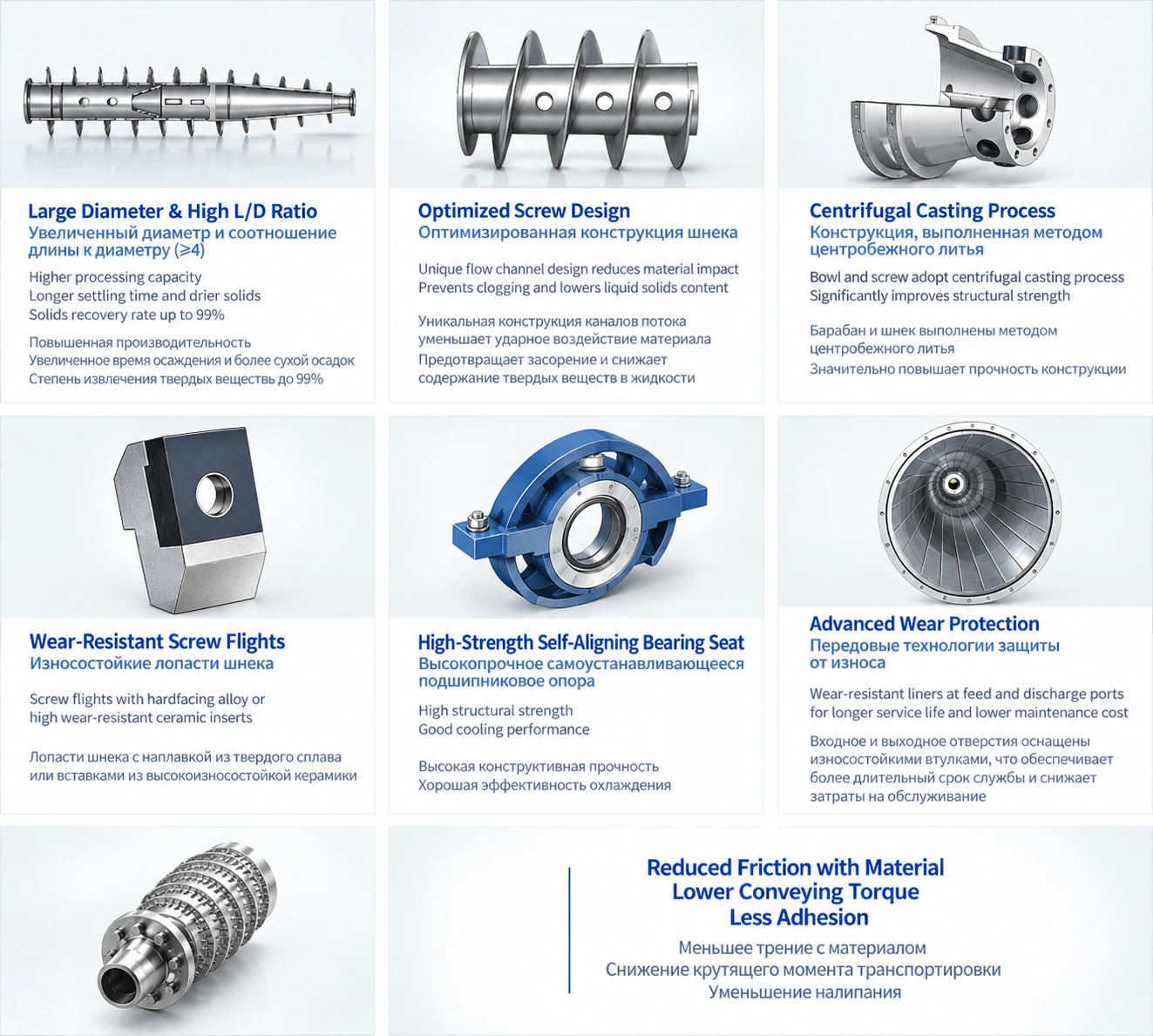
A streamlined flow path reduces feed impact, buildup and blockage while supporting stable solids transport and lower clarified-liquid solids.
Centrifugally cast critical rotating components provide strength, reliability and stable long-term operation at high speed.
Scroll flights and high-wear zones can use carbide, embedded carbide blocks, wear-resistant ceramics and replaceable liners or outlet sleeves.
A high-rigidity, self-cooling bearing housing supports bearing heat dissipation and reliable continuous operation.
The conveying geometry is optimized to reduce friction, scroll torque and adhesion of sticky solids.
Selection Support
Share the following process information for an efficient preliminary review.