
Oil–water–solids separation
Continuous treatment of mixtures containing solids and two immiscible liquids with a sufficient density difference.
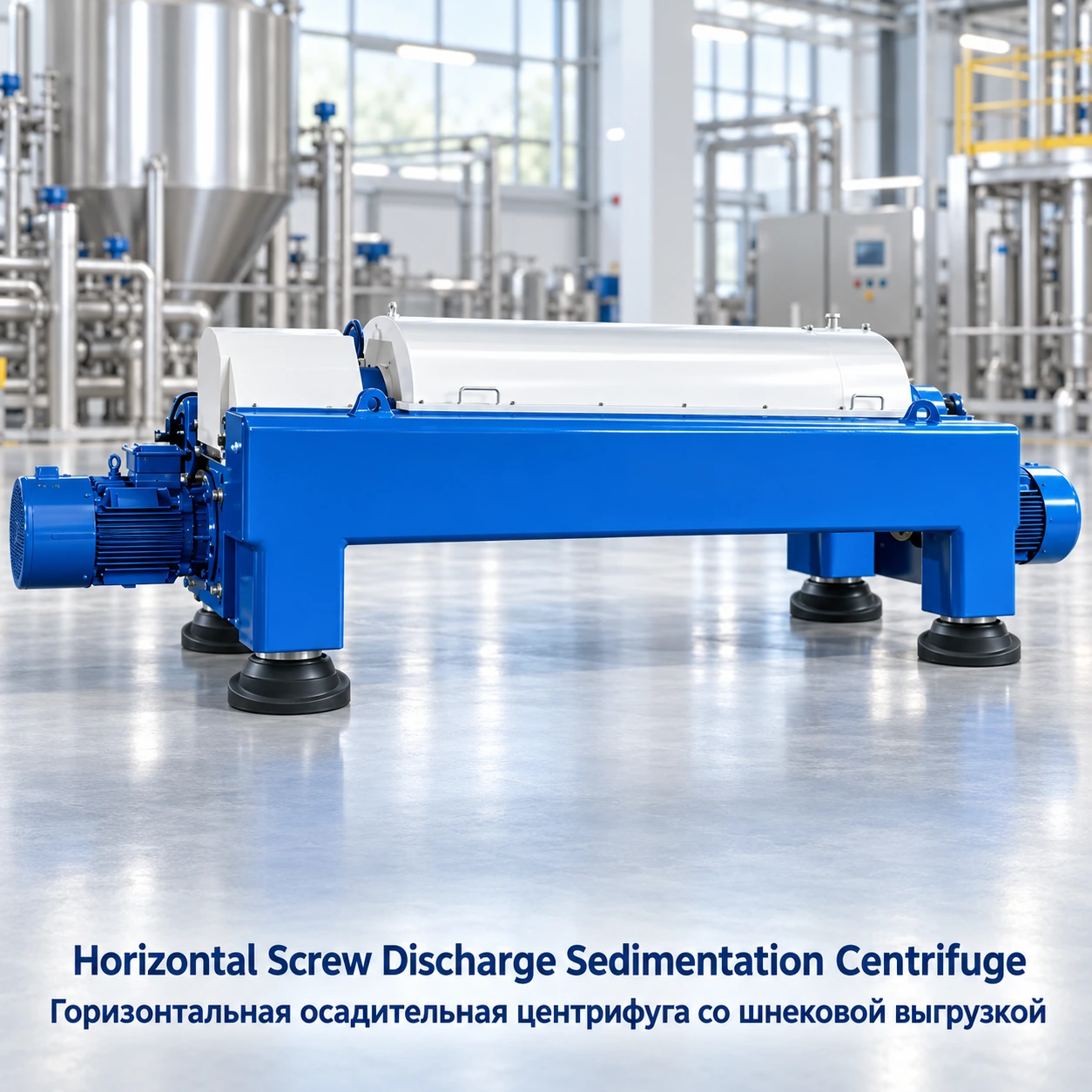
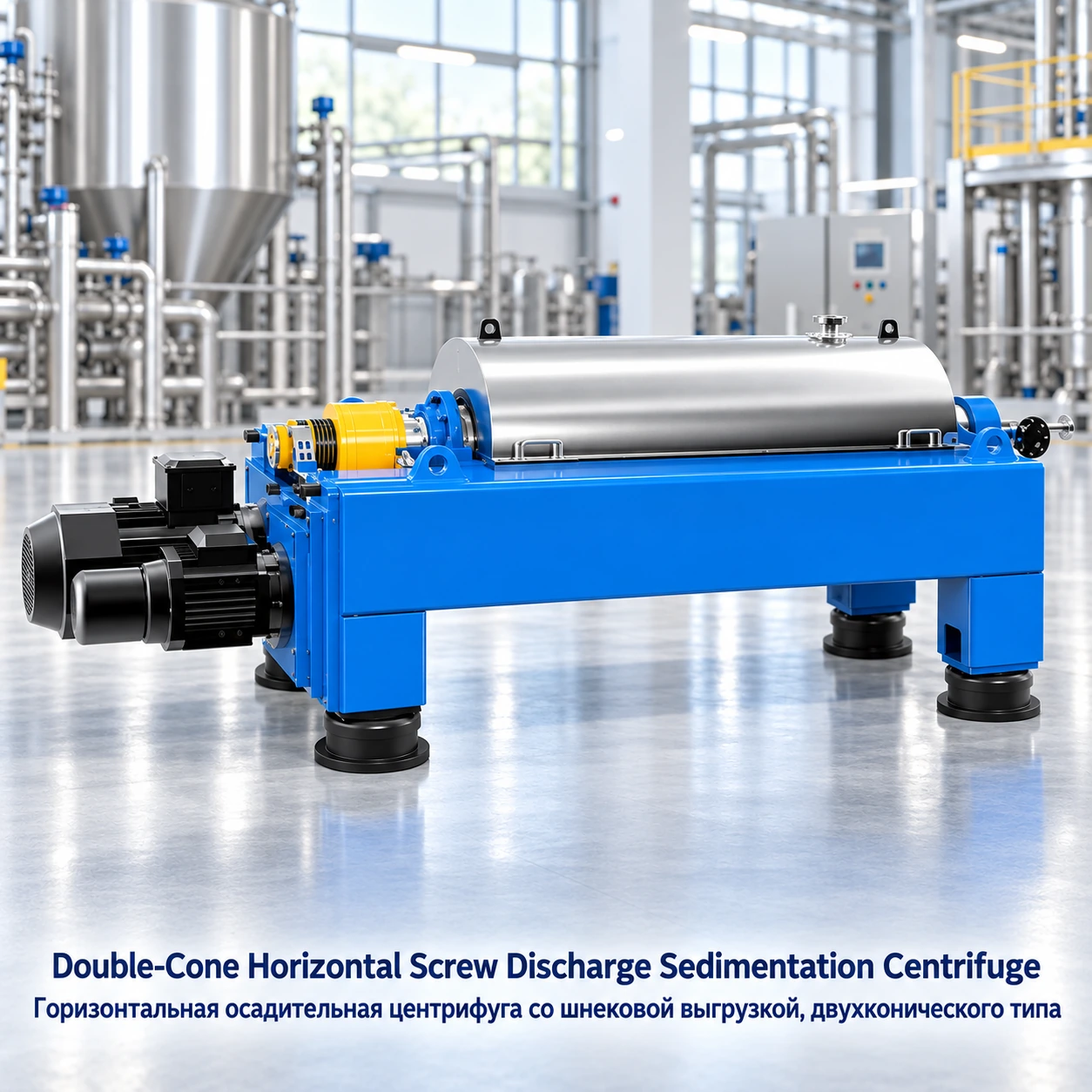
Three-phase horizontal decanter
Continuous solid–liquid–liquid separation of one solid phase and two immiscible liquid phases, with scroll solids discharge and independent liquid outlets. Designed and manufactured for oil–water–solids separation and chemical and extraction processes. Review the working principle, performance features and available configuration details below when specifying your industrial project.
Product Essentials
Select a topic from the directory. The content stays in one focused workspace for faster comparison.
Three-Phase Decanter Centrifuge Technical Data
Reference performance values for the four three-phase decanter centrifuge configurations. Confirm material conditions and final configuration before selection.
| Model | Bowl diameter (mm) | L/D | Bowl speed (r/min) | Separation factor | Main motor power (kW) | Machine weight (kg) | Overall dimensions (mm) |
|---|---|---|---|---|---|---|---|
| Model 1 | 350 | 4.17 | 4000 | 3130 | 22–30 | 2250 | 3450 × 1010 × 1030 |
| Model 2 | 420 | 4 | 3600 | 3050 | 30–37 | 4000 | 3500 × 1450 × 1300 |
| Model 3 | 530 | 4 | 3200 | 3040 | 45–55 | 5500 | 4100 × 1600 × 1450 |
| Model 4 | 720 | 4 | 2000 | 1610 | 110 | 11000 | 5300 × 2050 × 1750 |
Source reference values. Final three-phase separation arrangement, dimensions, materials and performance are confirmed during engineering.
Applications
Applications include oil–water–solids separation and chemical and extraction processes. Confirm material properties and process conditions before selecting the equipment configuration.
Continuous treatment of mixtures containing solids and two immiscible liquids with a sufficient density difference.
Extraction-liquor separation and other three-phase chemical process streams.
Oily sludge and related wastewater streams requiring simultaneous solids removal and liquid-phase separation.
Pharmaceutical and food duties that benefit from separate phase outlets and reduced remixing.
Chemical, pharmaceutical, food, environmental, mining and energy applications.
Working Principle
The process route is selected around the material and product targets.
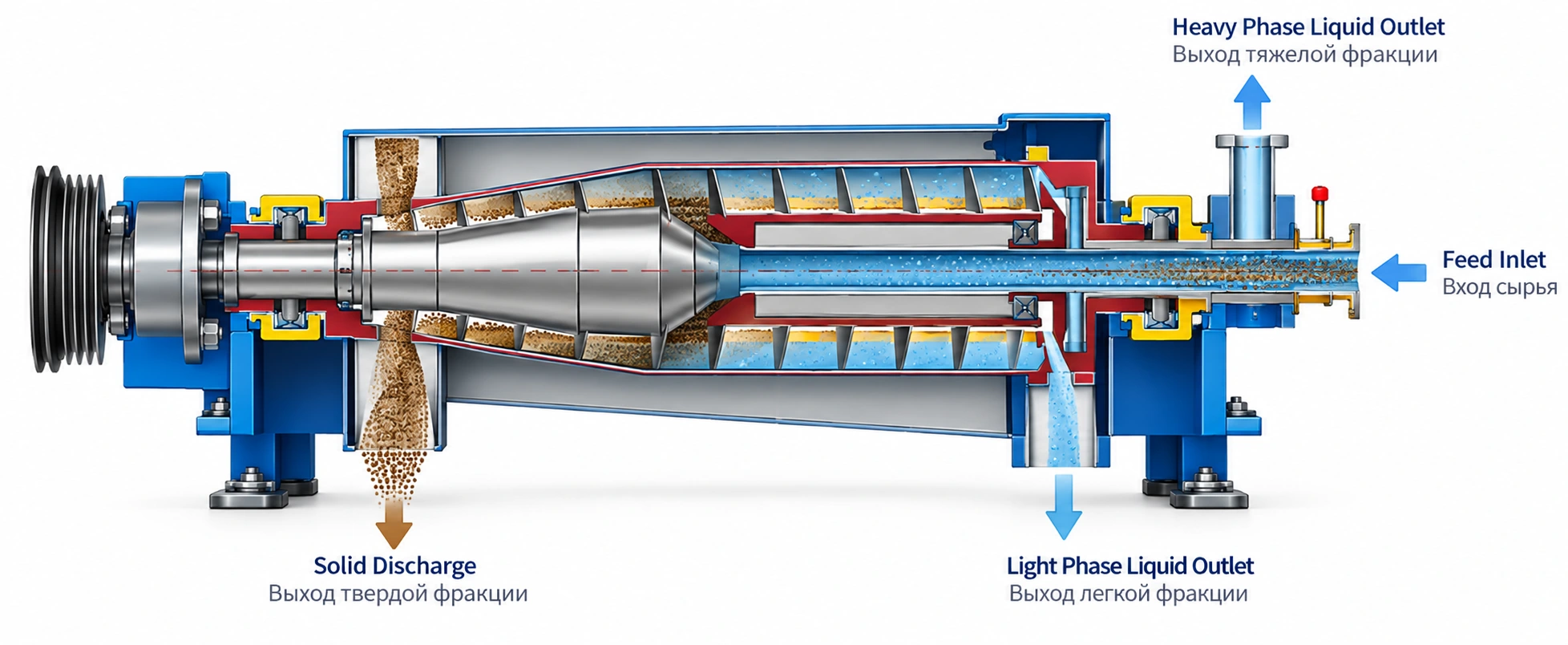
Feed enters through the feed pipe and is accelerated and distributed into the rotating bowl.
The highest-density solids settle rapidly against the bowl wall and form a stable sediment layer.
The two liquids form separate heavy- and light-phase layers, creating a solids–heavy liquid–light liquid arrangement from the bowl wall toward the axis.
The scroll rotates at a controlled differential speed and continuously conveys settled solids to the conical end for discharge.
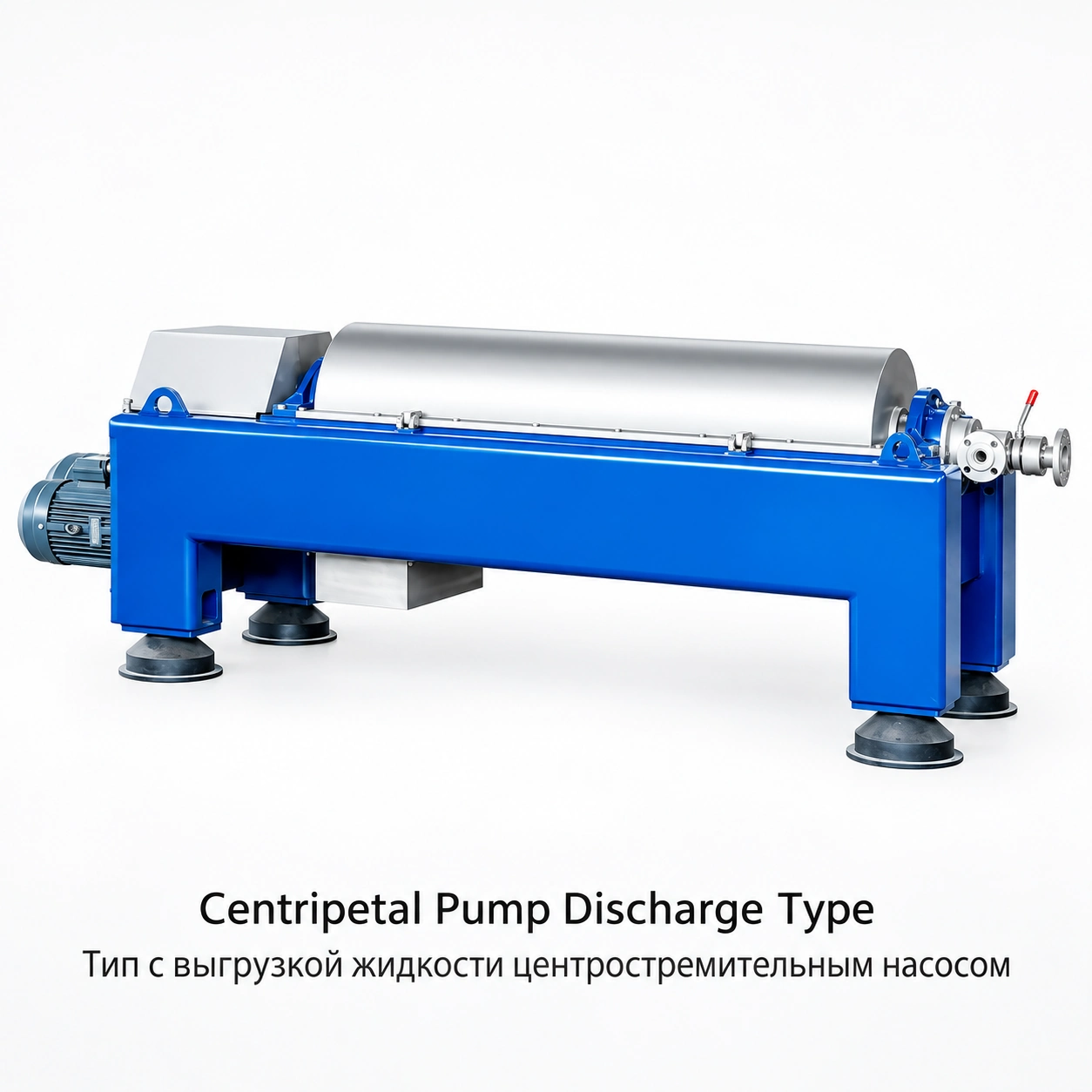
The light phase overflows at the large-diameter end, while the heavy phase is discharged under pressure by a centripetal pump through a separate outlet.
Performance Highlights
Final performance remains dependent on feed properties and engineering confirmation.
One solid and two liquid phases are separated and discharged continuously without routine shutdown for solids removal.
The operating range is selected for the material and confirmed for the quoted configuration.
The operating range is selected for the material and confirmed for the quoted configuration.
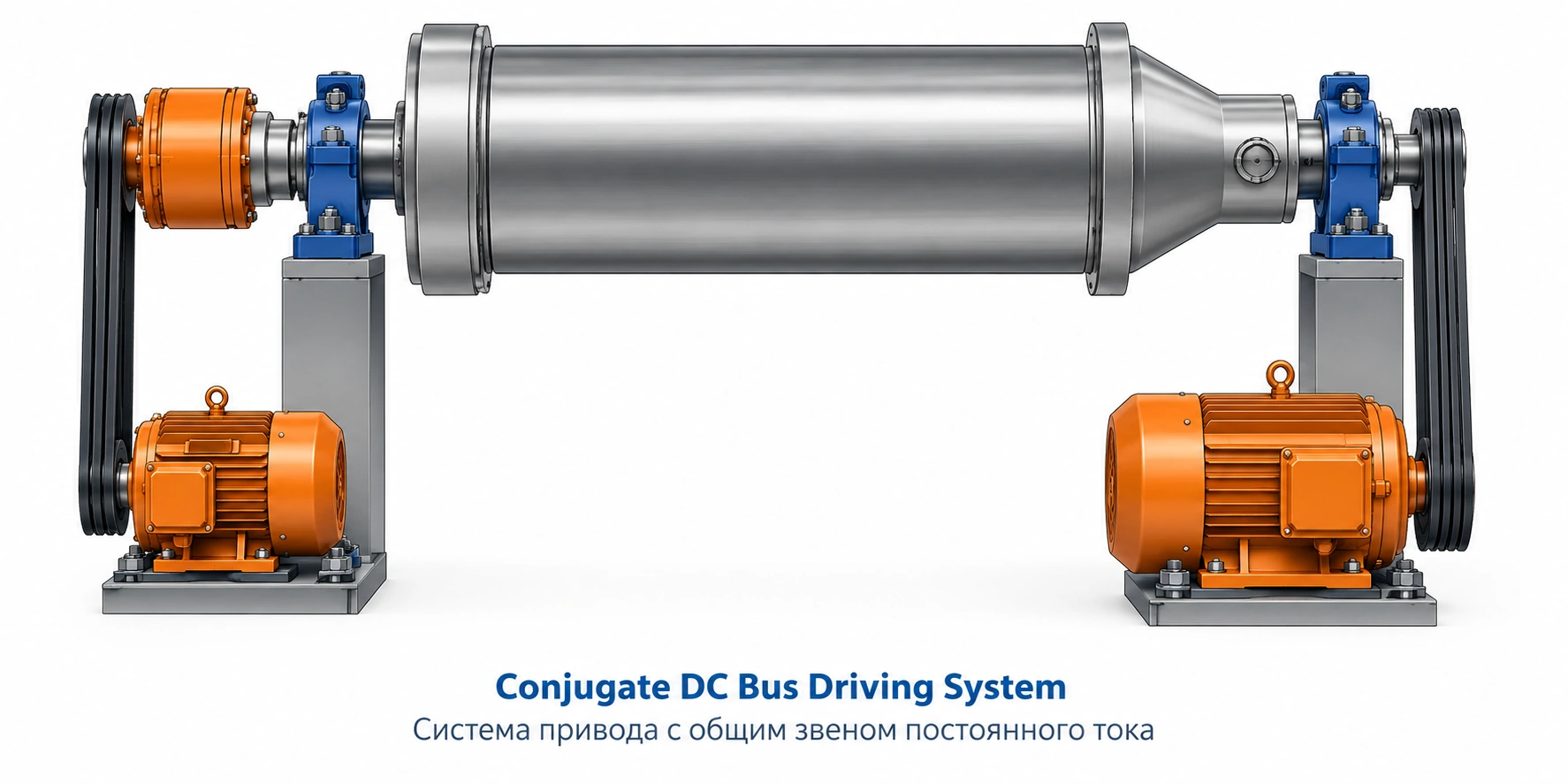
Dual-motor, dual-VFD control enables online adjustment of solids residence time and scroll discharge rate.
The centripetal pump provides useful discharge pressure while independent liquid paths support stable phase separation.
A common-DC-bus regenerative system can recover usable energy and reduce overall electrical demand.
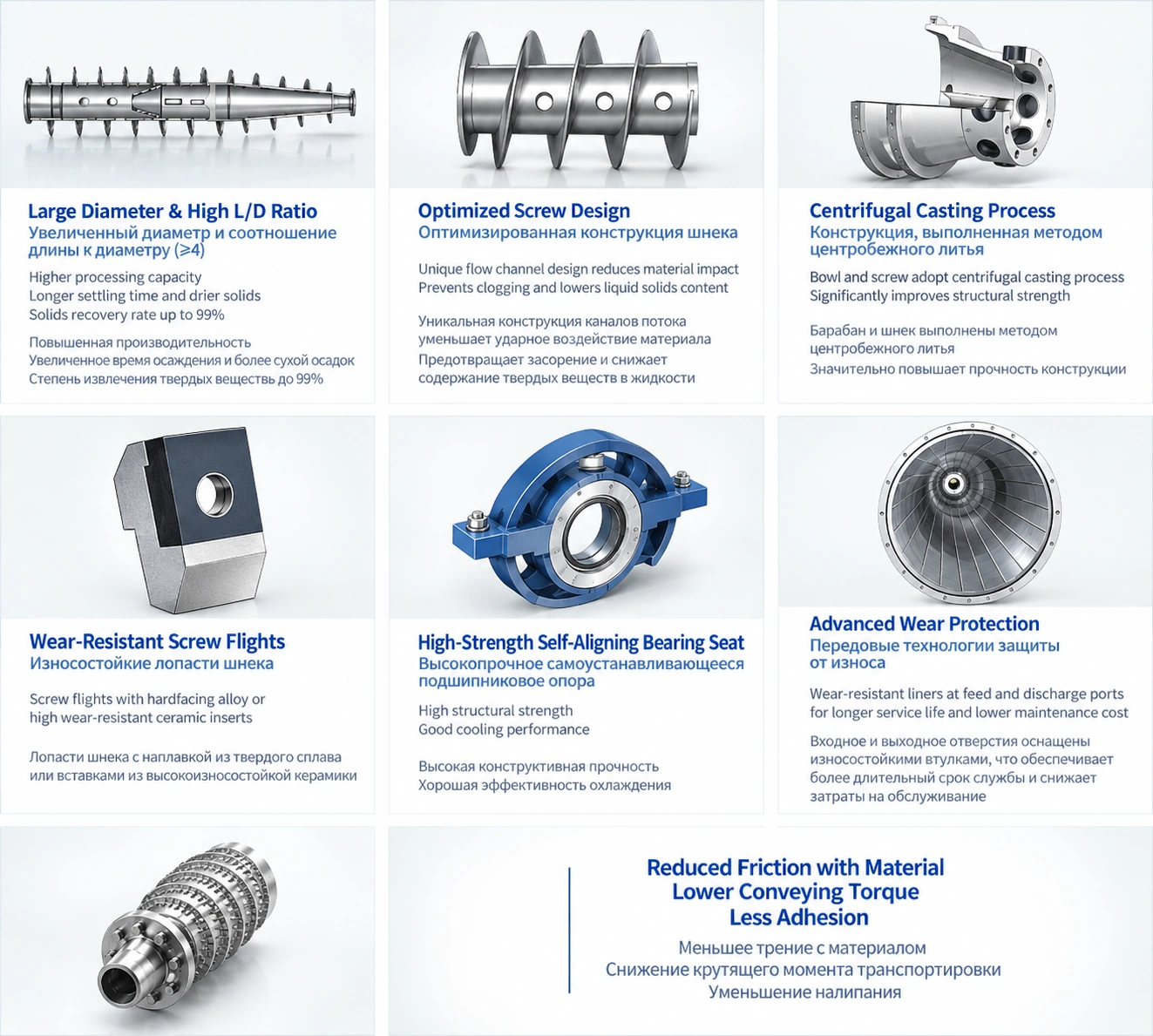
Optimized conveying geometry reduces friction, torque and adhesion of sticky solids.
Replaceable wear components protect the bowl, scroll flights, feed zone and solids outlets in abrasive service.
System Configuration
Core equipment and auxiliary systems are selected around the process duty.
The bowl establishes separate solids, heavy-liquid and light-liquid zones for simultaneous continuous separation.
The centripetal pump discharges the heavy liquid under pressure and may reduce or eliminate a downstream transfer pump, depending on system pressure requirements.
Liquid discharge zones and the solids outlet are isolated to reduce phase remixing, droplet recontact and cross-contamination risk.
Separate bowl and scroll drives provide responsive differential-speed control as feed and solids-loading conditions change.
An optional common-DC-bus regenerative drive recovers part of the energy generated during differential or braking operation.
The flow path reduces feed impact, material buildup, blockage, friction and conveying torque while supporting low solids carryover.
Critical bowl and scroll-shaft components use centrifugal casting for material integrity, strength and reliable high-speed operation.
Depending on abrasiveness, scroll flights can use hardfaced carbide, embedded carbide blocks or wear-resistant ceramic tiles.
Axial wear ribs, protected feed and solids-discharge zones, and replaceable outlet liners extend service life and simplify maintenance.
A rigid, self-cooling bearing-housing design supports heat dissipation and stable continuous operation.
Selection Support
Share the following process information for an efficient preliminary review.