
Pharmaceuticals and intermediates
Active pharmaceutical ingredients and intermediates requiring hygienic, contained solid-liquid separation and repeatable automated washing.
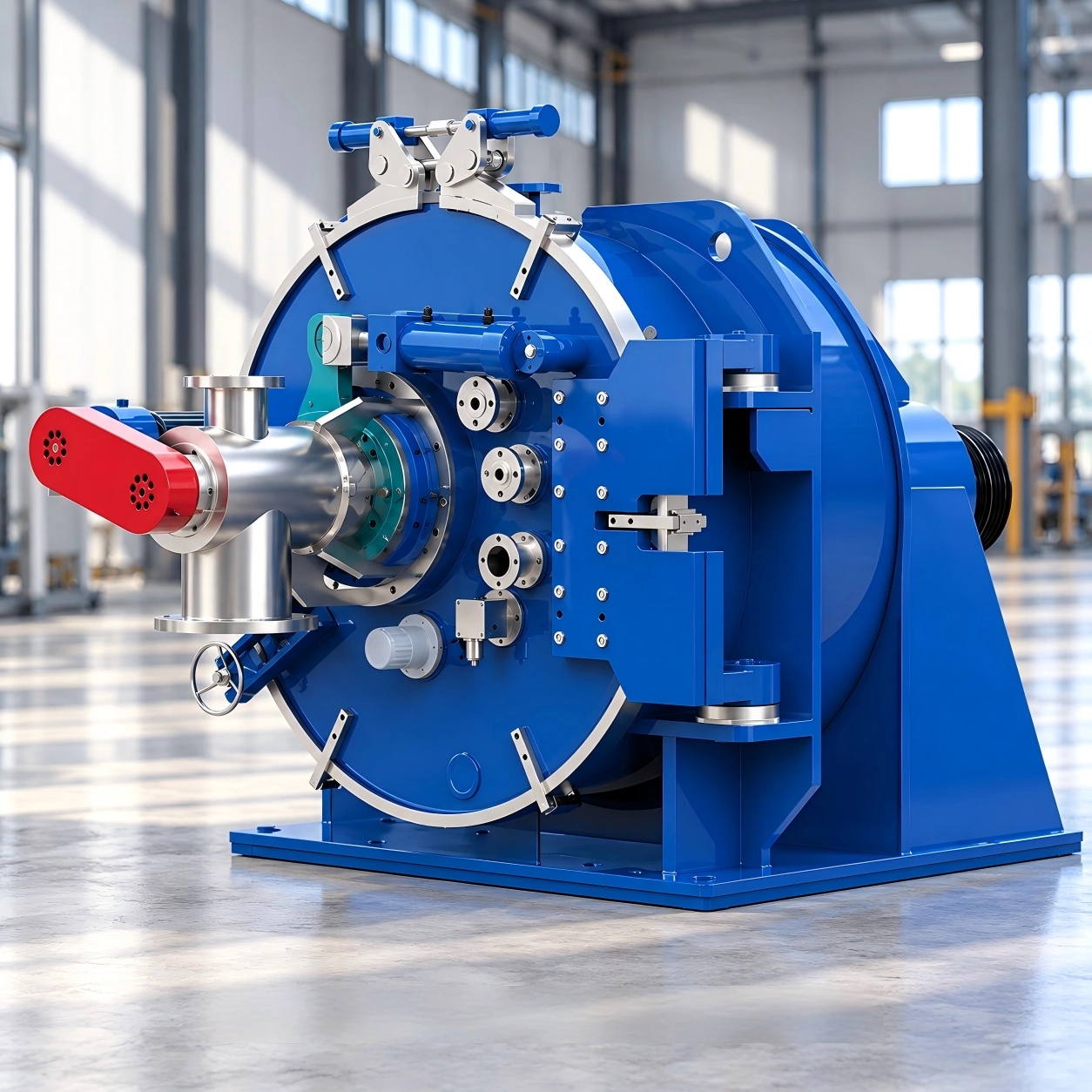
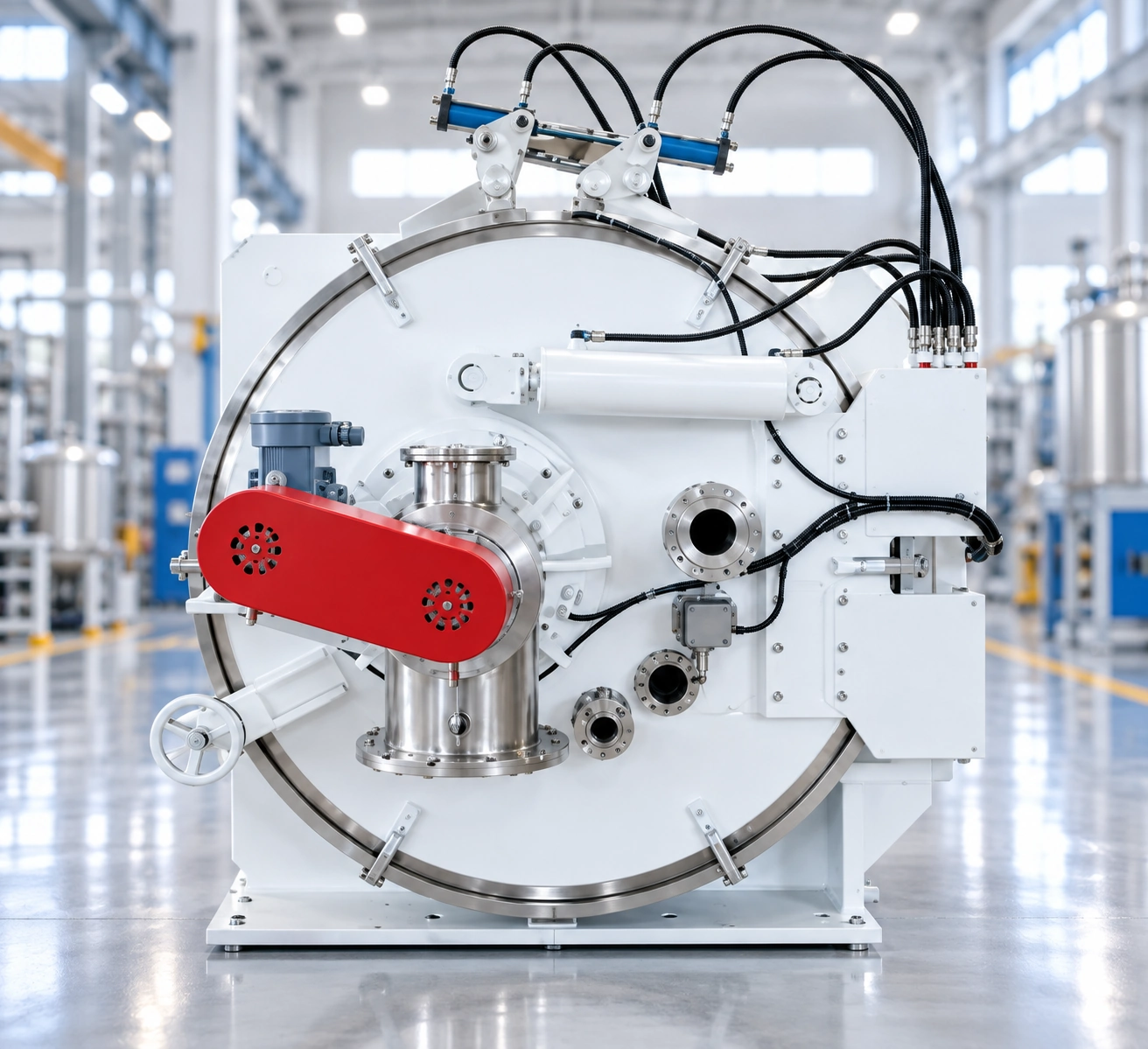
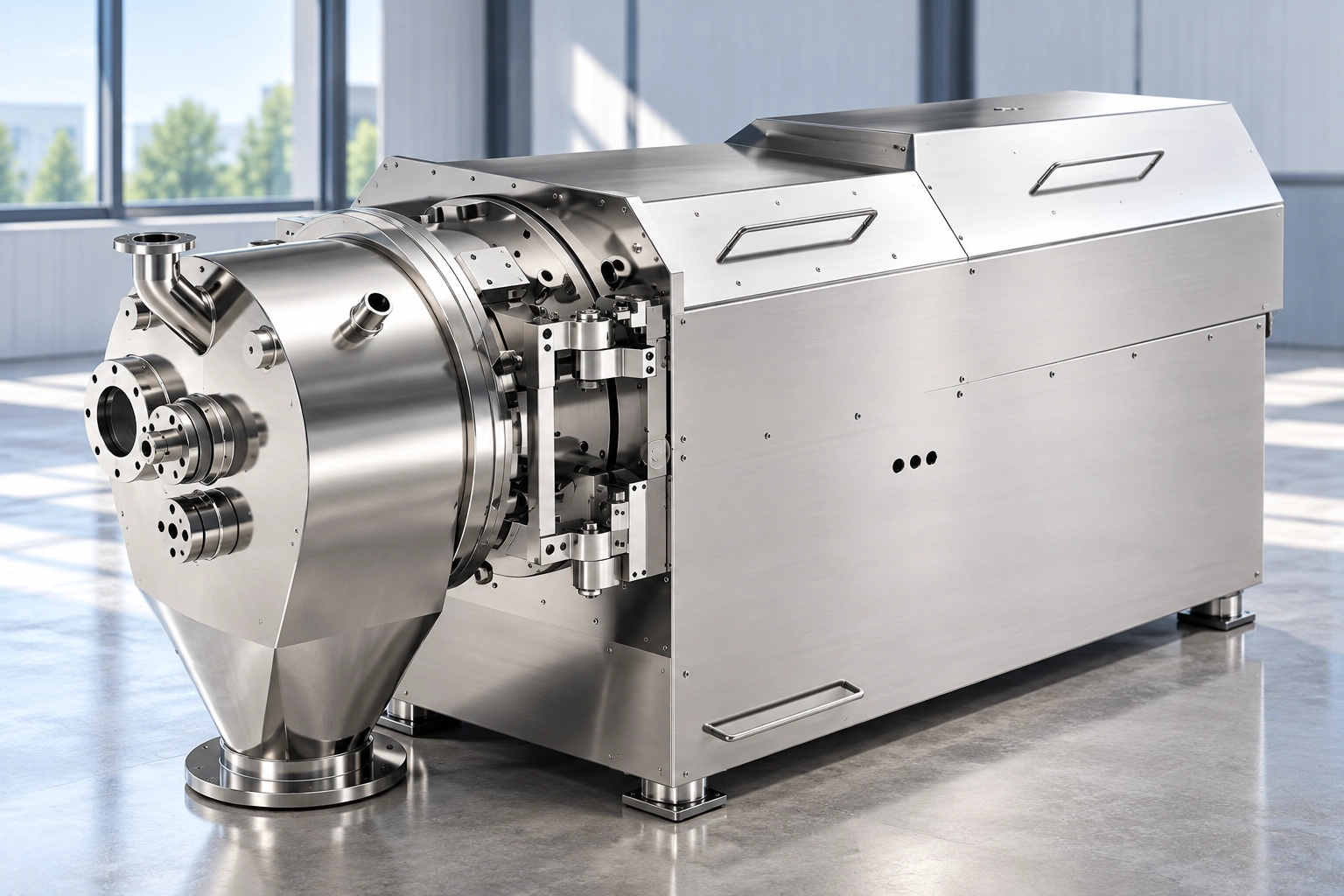
Hygienic through-wall scraper discharge
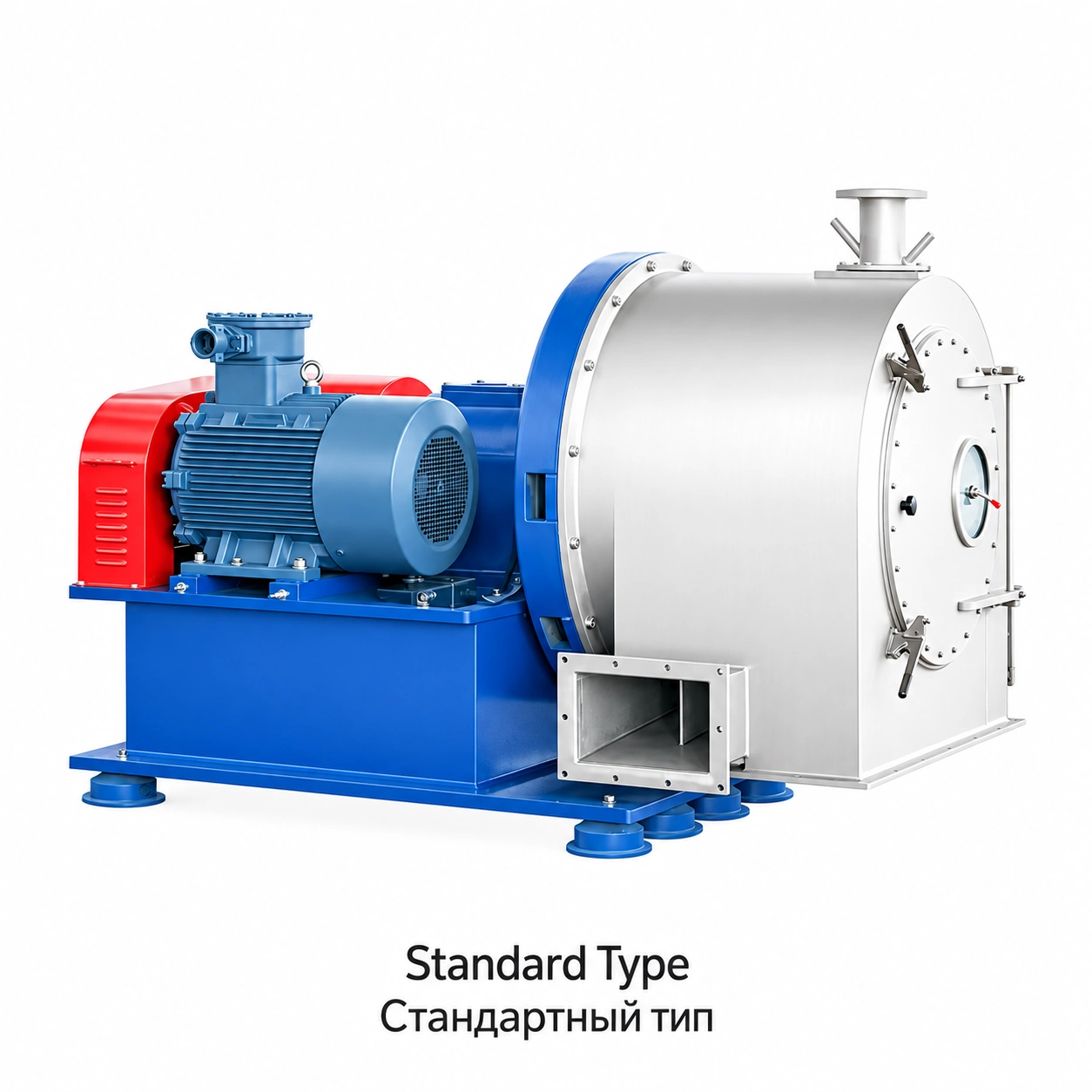
A fully automatic through-wall filter centrifuge that physically separates the drive zone from the clean production area. Designed and manufactured for pharmaceuticals and intermediates and food processing. Review the working principle, performance features and available configuration details below when specifying your industrial project.
Product Essentials
Select a topic from the directory. The content stays in one focused workspace for faster comparison.
Hygienic Through-Wall Horizontal Scraper Centrifuge Technical Data
Reference performance values and equipment dimensions for the eight hygienic through-wall horizontal scraper centrifuge configurations. Confirm material conditions and final configuration before selection.
| Parameter | Model 1 | Model 2 | Model 3 | Model 4 | Model 5 | Model 6 | Model 7 | Model 8 |
|---|---|---|---|---|---|---|---|---|
| Basket diameter (mm) | 600 | 800 | 1000 | 1050 | 1250 | 1350 | 1600 | 1800 |
| Basket length (mm) | 325 | 400 | 500 | 500 | 600 | 680 | 800 | 1000 |
| Filter area (m²) | 0.61 | 1 | 1.57 | 1.65 | 2.36 | 2.88 | 4 | 5.65 |
| Basket volume (L) | 45 | 88 | 165 | 205 | 355 | 465 | 700 | 1100 |
| Maximum load (kg) | 60 | 120 | 225 | 275 | 450 | 600 | 930 | 1500 |
| Basket speed (r/min) | 2400 | 1600 | 1400 | 1350 | 1200 | 1200 | 950 | 800 |
| Separation factor | 1930 | 1146 | 1098 | 1070 | 1008 | 1088 | 808 | 645 |
| Main motor power (kW) | 22 | 30 | 37 | 37 | 55/75 | 55/75 | 90 | 132 |
| Overall dimensions — main body (mm) | 2400 × 1390 × 1700 | 2850 × 1600 × 1950 | 3250 × 1800 × 2200 | 3420 × 2000 × 2400 | 3950 × 2150 × 2600 | 4350 × 2150 × 2700 | 5100 × 2500 × 3100 | 5800 × 2800 × 3600 |
| Overall dimensions — installation (mm) | 3100 × 1900 × 1700 | 3600 × 2400 × 1950 | 4100 × 2900 × 2200 | 4300 × 3000 × 2400 | 5000 × 3300 × 2600 | 5200 × 3600 × 2700 | 6400 × 4400 × 3100 | 7500 × 4800 × 3600 |
| Machine weight (kg) | 3500 | 5500 | 9000 | 10000 | 16000 | 18000 | 25000 | 36000 |
Source reference values. Final clean-area construction, platform arrangement, dimensions, weight and performance are confirmed during engineering.
Applications
Applications include pharmaceuticals and intermediates and food processing. Confirm material properties and process conditions before selecting the equipment configuration.
Active pharmaceutical ingredients and intermediates requiring hygienic, contained solid-liquid separation and repeatable automated washing.
Low-viscosity food and ingredient suspensions requiring cleanable product-contact surfaces and controlled batch operation.
High-value chemical products requiring low cake moisture, effective washing and separation from the mechanical drive area.
Selected toxic, harmful, flammable or explosive suspensions after material compatibility review and project-specific hazardous-area engineering.
Working Principle
The process route is selected around the material and product targets.
Purge the enclosed process chamber with nitrogen or another approved inert gas. Once the permissive conditions are satisfied, the machine accelerates automatically.
At feed speed, the inlet valve opens and cake-level detection starts. Liquid passes through the filter medium and basket perforations while solids form a cake inside the basket.
When the preset cake thickness is reached, the level controller closes the feed valve to prevent overfilling and maintain repeatable batch loading.
The centrifuge adjusts to the programmed washing speed and opens the wash valve until the specified wash volume has been delivered.
After washing, the basket accelerates to the selected dewatering speed until the required cake-moisture target is achieved.
At discharge speed, the scraper progressively enters the cake and transfers solids into the screw-conveyor hopper. The screw removes the product, the scraper retracts and the next cycle can begin.
Performance Highlights
Final performance remains dependent on feed properties and engineering confirmation.
Physical separation of the drive zone and production zone reduces the risk of mechanical contaminants entering the clean room.
PLC sequencing coordinates inerting, acceleration, feeding, washing, dewatering, scraper discharge and return to the next cycle.
Multiple mechanical, electrical and hydraulic interlocks monitor speed, vibration, cover position, motor load, scraper position, bearings and lubrication.
Positive-pressure inerting, optional online oxygen monitoring and fully enclosed construction support suitably engineered flammable or explosive duties.
Strategically positioned spray devices provide multi-directional internal washing and help minimize hygienic dead zones and cross-contamination risk.
Steam-sterilization components can be added for SIP and sterile-product applications.
Stepless VFD speed control matches each process stage, while regenerative braking can recover energy where appropriate.
The hygienic architecture is intended for validated facilities working toward GMP and applicable FDA, COS or TGA expectations; final compliance depends on the complete project and qualification scope.
System Configuration
Core equipment and auxiliary systems are selected around the process duty.
The process housing faces the clean production room while the drive and service components remain in the technical area, reducing contamination transfer from mechanical systems.
Automatic inert-gas pressure monitoring and optional online oxygen analysis help maintain the enclosed process chamber within the approved operating envelope.
Multiple spray balls and directional nozzles can wash the basket, chamber and product-contact areas in place while reducing inaccessible hygienic zones.
Optional steam-sterilization components support sanitization or SIP cycles for sterile API and other high-hygiene applications.
Speed, vibration, cover-open, motor overload, hydraulic cover lock, scraper position, main-bearing temperature and lubrication protection can be integrated into the control system.
VFD control provides stepless recipe speeds, with dynamic or regenerative braking selected according to the project.
The controlled scraper cuts the cake into the screw-conveyor hopper for enclosed, repeatable solids removal.
Selection Support
Share the following process information for an efficient preliminary review.