
Typical process applications
- Organic-solvent-based slurry drying
- Oxidation-sensitive material drying
- Solvent recovery processes
- Flammable or potentially hazardous solvent systems
- Powder production under an inert atmosphere
Product Overview
Closed-loop centrifugal spray drying with inert-gas circulation and solvent recovery for organic-solvent-based and oxidation-sensitive feeds. Designed and manufactured for typical process applications and typical industries. Review the working principle, performance features and available configuration details below when specifying your industrial project.
The system operates in a closed circuit using nitrogen or another suitable inert gas as the drying medium. Liquid feed is atomized by a high-speed centrifugal atomizer and dried inside the drying chamber.
The evaporated solvent is subsequently condensed and recovered, while the inert gas is reheated and continuously recirculated through the system.
Compared with conventional open-cycle spray drying, the closed-loop process reduces material exposure to oxygen and allows organic solvents to be recovered rather than continuously discharged with the exhaust gas.
Product Essentials
Select a topic from the directory. The content stays in one focused workspace for faster comparison.
Interactive Equipment View
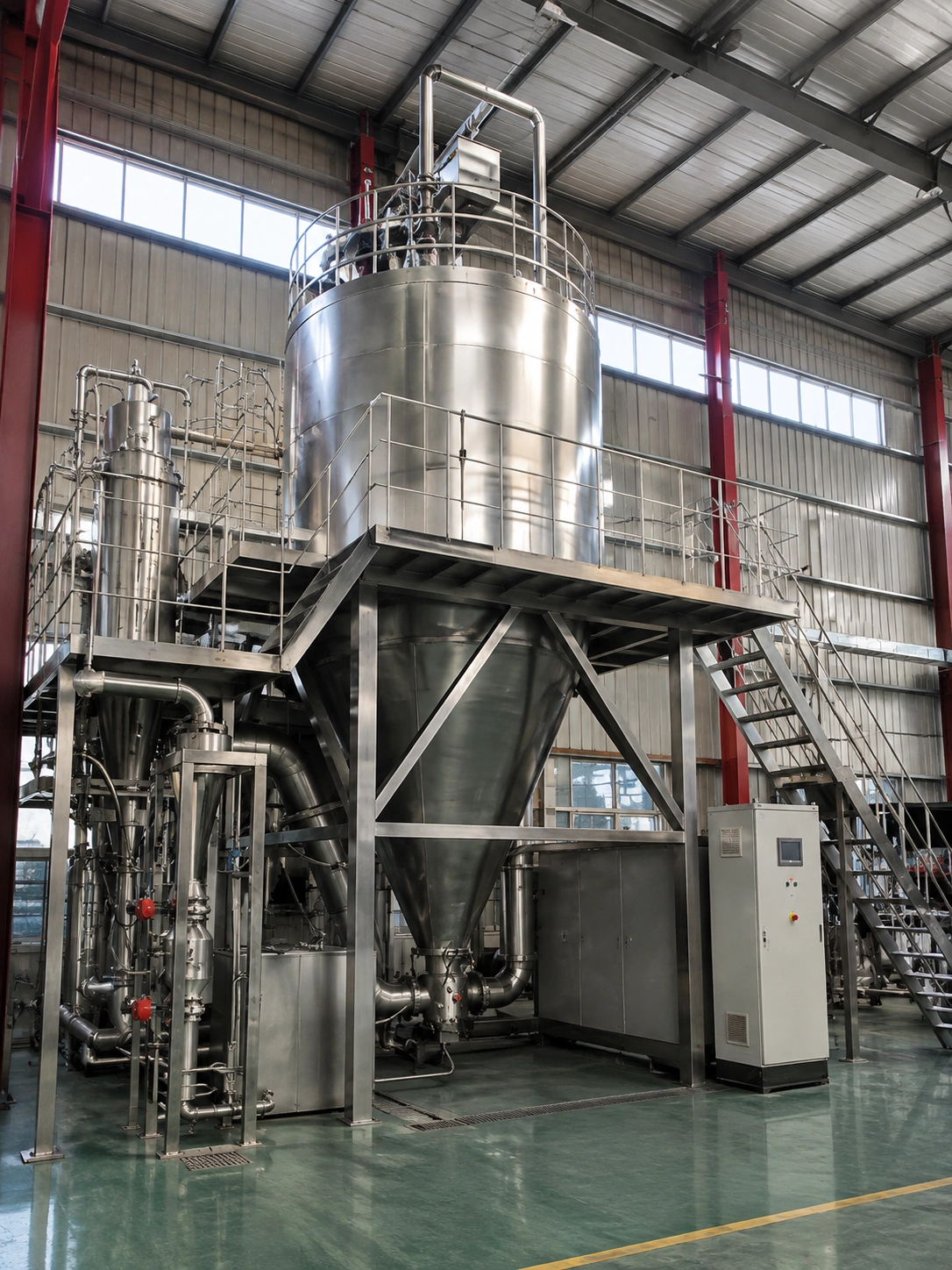
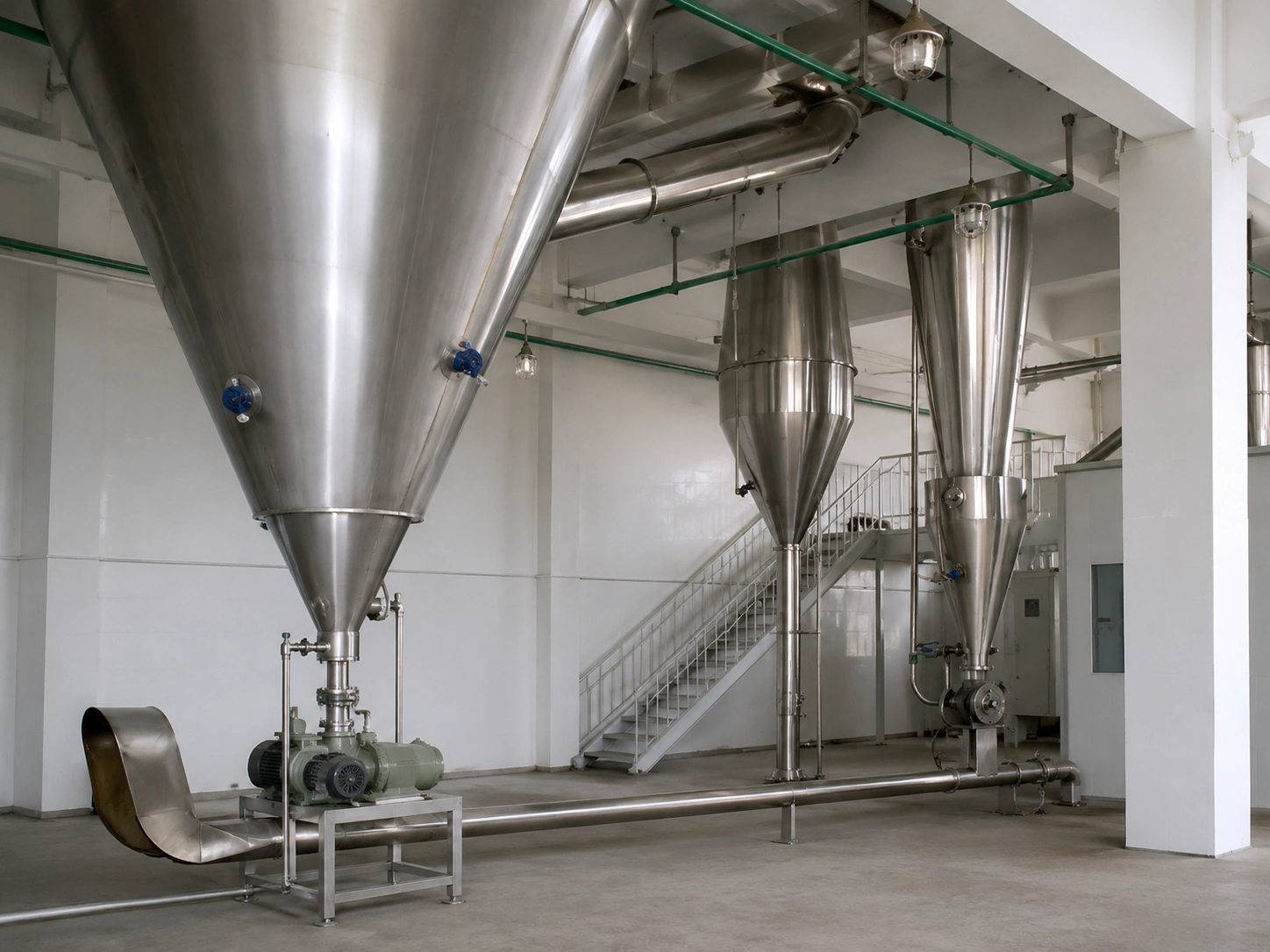
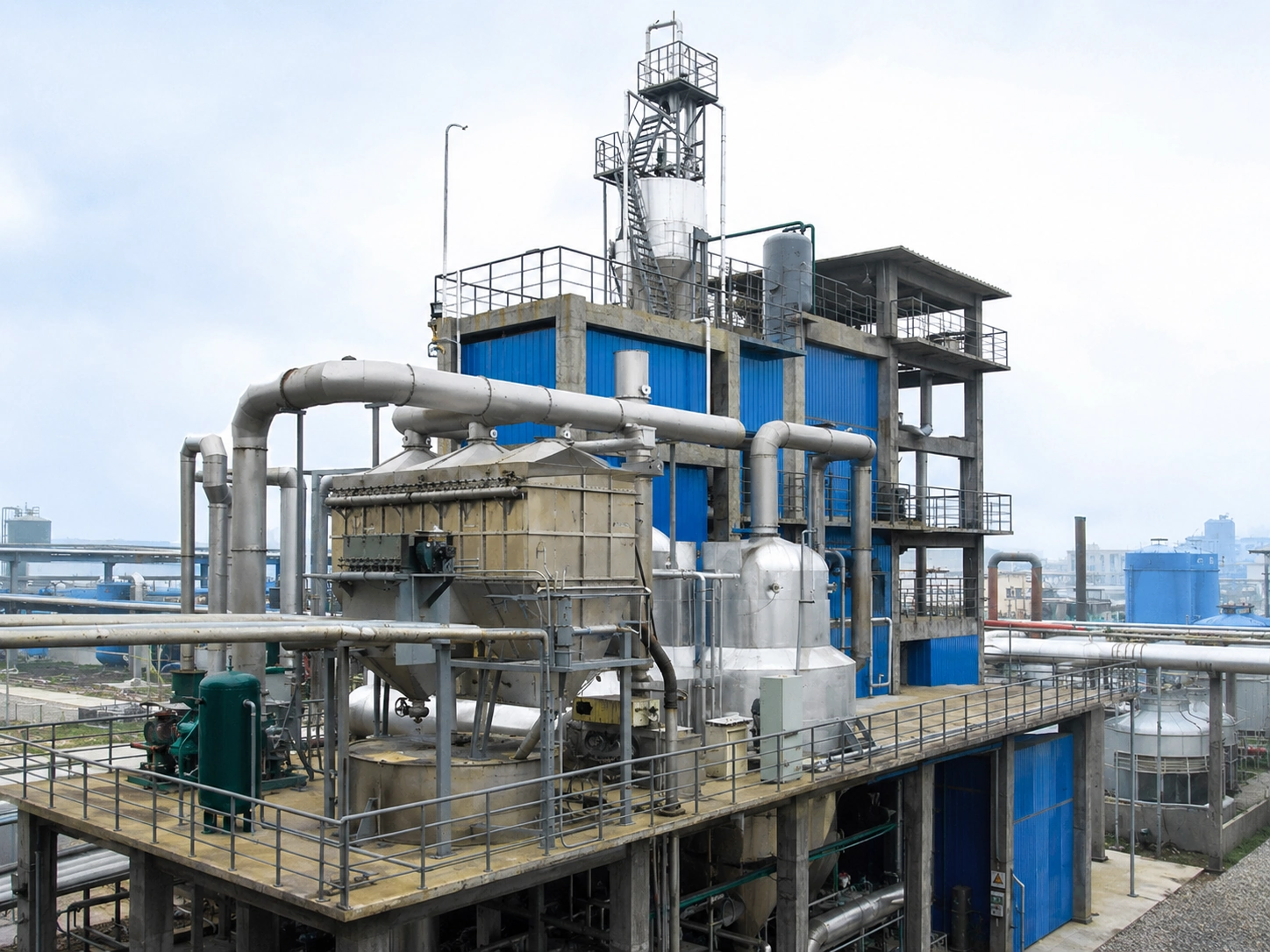
Drag the 3D model to rotate and use the equipment photographs for a quick real-world reference.
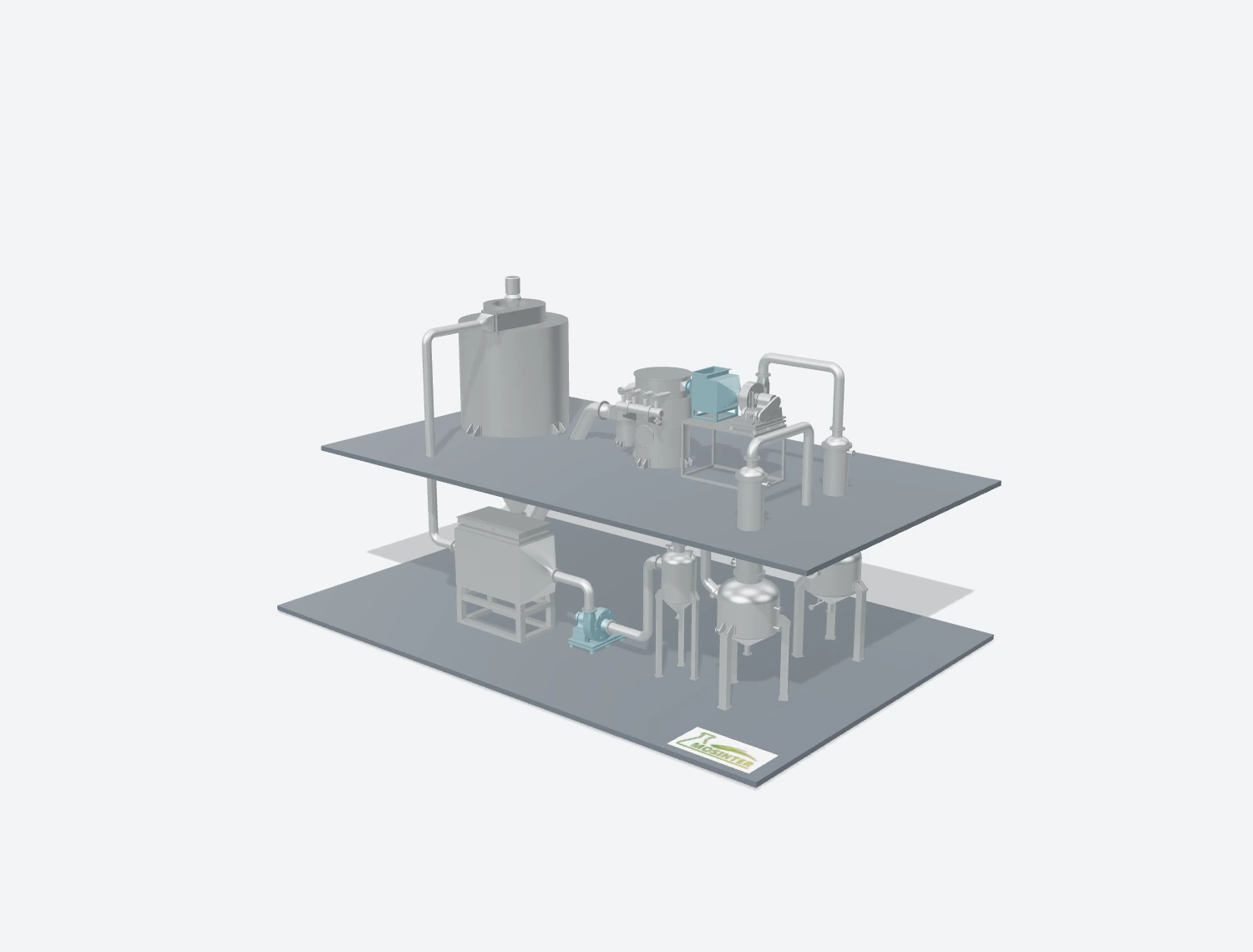
Interactive preview unavailable. Please contact us for equipment details.
Drag to rotate · Scroll or pinch to zoom
Applications
The system is particularly suitable for liquid feeds containing organic solvents or materials that require protection from oxidation during drying. Final suitability must be confirmed from material, solvent and hazard data.
Working Principle
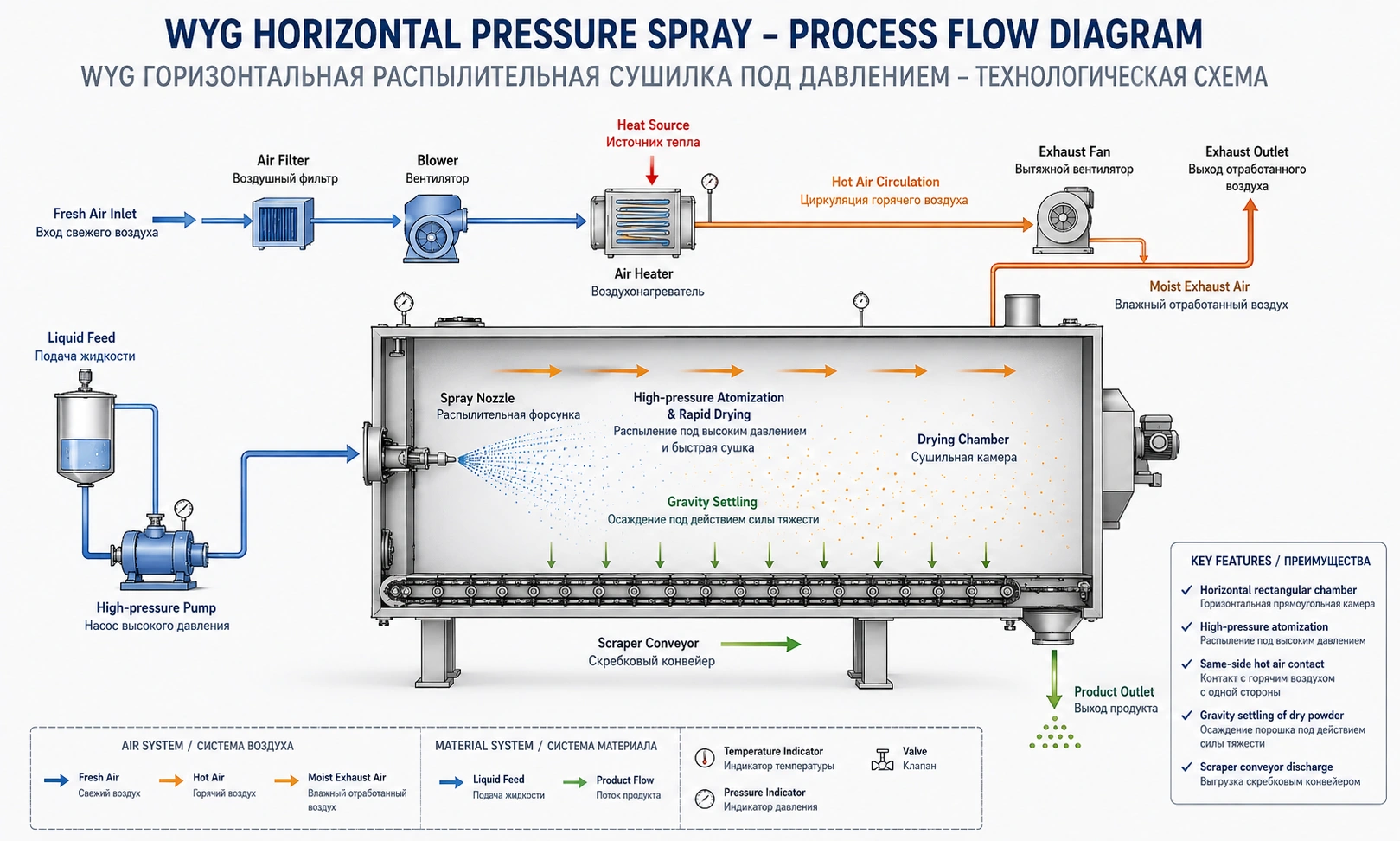
The drying process takes place in a sealed system using nitrogen or another suitable inert gas as the circulating drying medium.
The inert gas is heated and introduced into the drying chamber. Liquid feed is transferred by a feed pump to the centrifugal atomizer, where it is dispersed into fine droplets.
The droplets contact the heated circulating gas inside the chamber for rapid heat and mass transfer. After drying, the powder is discharged from the lower section of the chamber.
The circulating gas carrying evaporated solvent and entrained fine particles passes through powder separation and dust removal. Solvent vapor is then condensed into liquid and recovered.
The remaining non-condensable inert gas is reheated and returned to the drying chamber, completing the closed circulation loop.
The system operates under controlled positive pressure. When internal pressure falls below the required level, nitrogen supply is automatically adjusted to maintain the pressure balance.
Transfer the prepared liquid or slurry to the atomization system.
Disperse the feed into fine droplets at high rotational speed.
Dry the droplets in the heated inert-gas stream.
Separate and discharge dried powder from the gas stream.
Remove entrained fine particles before condensation.
Condense evaporated solvent into liquid.
Collect the condensed solvent for downstream handling.
Reheat the non-condensable inert gas.
Return the conditioned gas to the drying chamber.
Key Features
Final operating conditions, protection measures and performance are confirmed from the feed, solvent and project requirements.
Nitrogen or another suitable inert gas is continuously circulated through the system, helping protect oxygen-sensitive materials during processing.
Evaporated solvent is condensed into liquid after drying, allowing recovery while reducing direct solvent discharge.
The atomizer converts liquid feed into fine droplets, providing a large surface area for rapid heat and mass transfer.
Nitrogen replenishment is used to maintain the required pressure balance in the closed drying system.
The inert-gas circulation system is designed to maintain a low-oxygen environment for solvent-containing and oxidation-sensitive materials.
Powder separation and downstream dust-removal stages recover entrained particles before solvent condensation.
Electrical and process safety measures are incorporated for applications involving flammable organic solvents.
System Configuration
The final equipment scope is selected according to the material, solvent, capacity, recovery target and explosion-protection requirements.
| System Section | Function |
|---|---|
| Feed System | Transfers liquid feed to the atomizer |
| Centrifugal Atomizer | Atomizes liquid feed into fine droplets |
| Gas Heating System | Heats the circulating inert gas |
| Drying Chamber | Provides the main heat and mass transfer zone |
| Powder Collection | Collects dried powder |
| Cyclone Separator | Separates entrained powder from process gas |
| Scrubbing / Dust Removal System | Further removes fine particles |
| Condensation System | Condenses evaporated organic solvent |
| Solvent Recovery System | Collects recovered liquid solvent |
| Circulation Fan | Maintains circulating gas flow |
| Nitrogen Supply System | Maintains the required inert atmosphere |
| Pressure Control System | Maintains system pressure balance |
| Control & Monitoring System | Monitors and controls operating conditions |
Technical Specifications
Listed values apply to the identified configuration. Confirm material conditions, utilities and optional equipment before selection.
| Parameter | Specification |
|---|---|
| Equipment Type | Closed-Loop Centrifugal Spray Dryer |
| Drying Medium | Nitrogen / Inert Gas |
| Operating Mode | Closed-Loop Circulation |
| Atomization | Centrifugal Atomization |
| System Pressure | Positive Pressure |
| Dry Powder Recovery | ≥95% |
| Residual Solvent in Product | ≤2% |
| System Oxygen Content | ≤500 ppm |
| Electrical Explosion Protection | Ex d IIB T4 |
| Solvent Recovery | Condensation Recovery |
Technical parameters are based on the reference system configuration. Actual performance and explosion-protection requirements shall be confirmed according to the material, solvent, capacity and project conditions.
Selection Support
Provide the following data for preliminary process, safety and equipment configuration review.