
Chemical Industry
Dyes and pigments, dye intermediates, catalysts, amino acids, silica, compound fertilizers, and inorganic or specialty chemicals.
Product Overview
High-speed centrifugal atomization for rapid continuous drying of pumpable liquid and paste-like feeds. Designed and manufactured for typical materials processed by the available configurations across chemical, food, polymer, resin and mineral industries. Review the working principle, performance features and available configuration details below when specifying your industrial project.
Product Essentials
Select a topic from the directory. The content stays in one focused workspace for faster comparison.
Interactive Equipment View
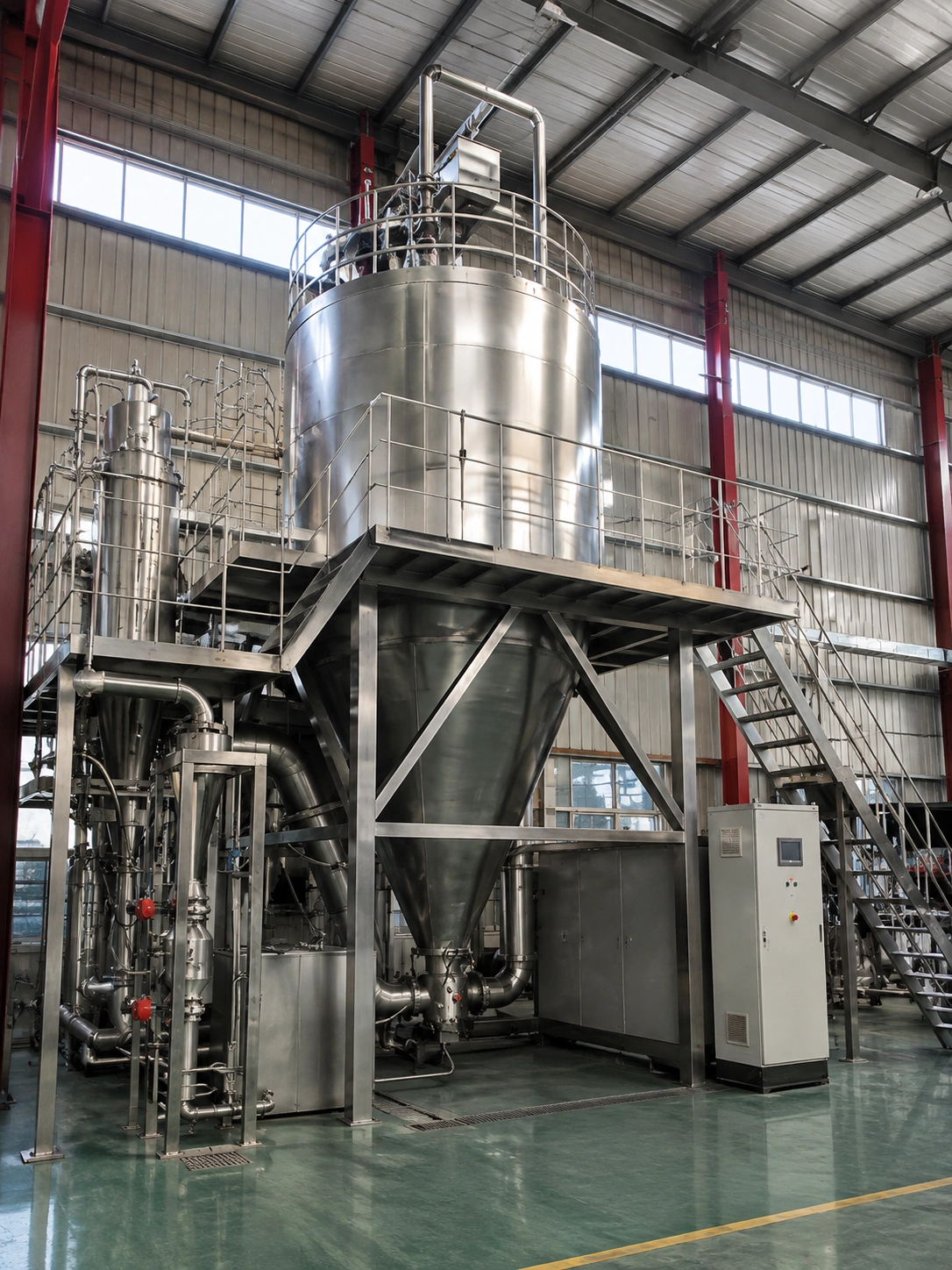
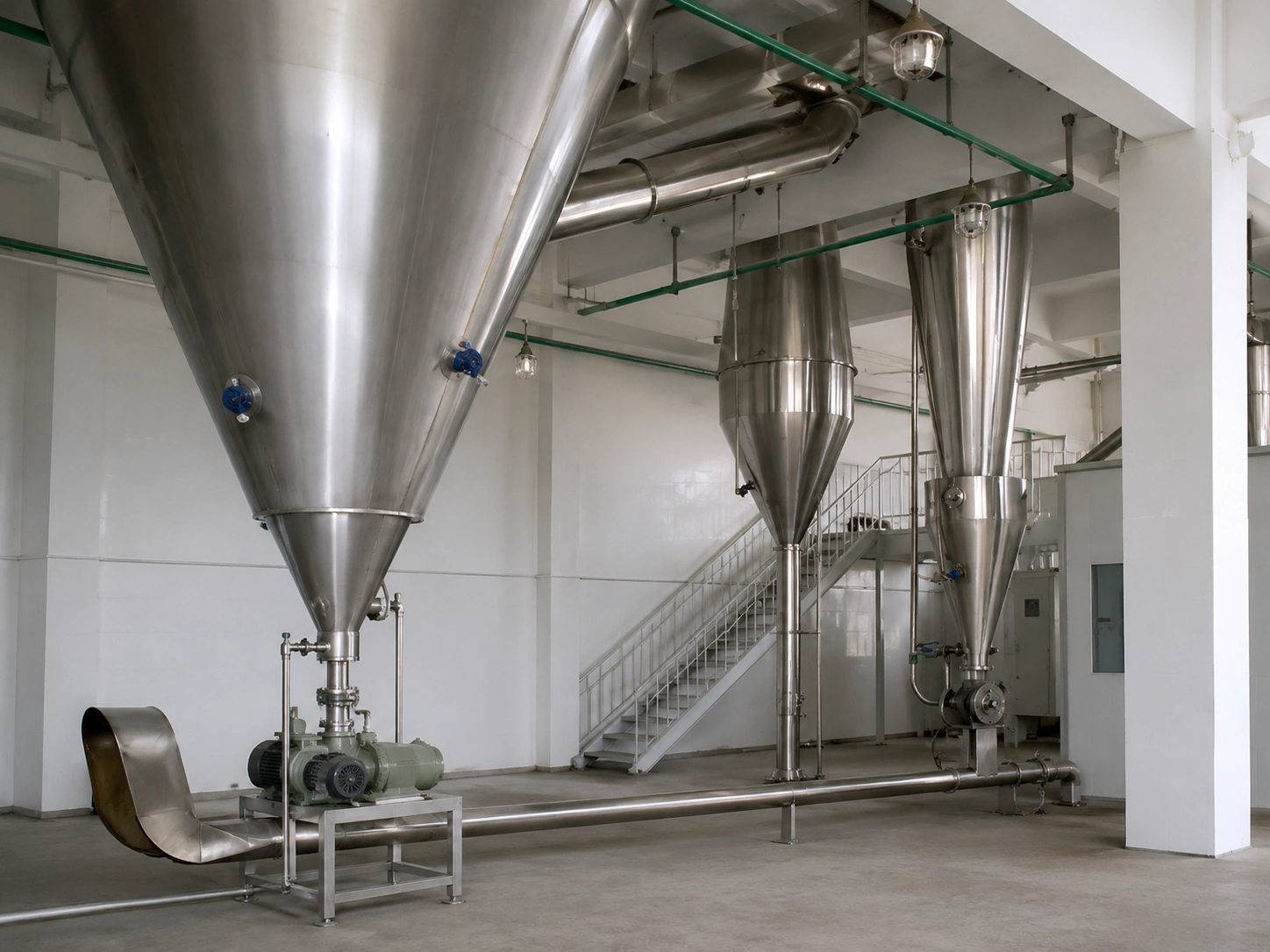
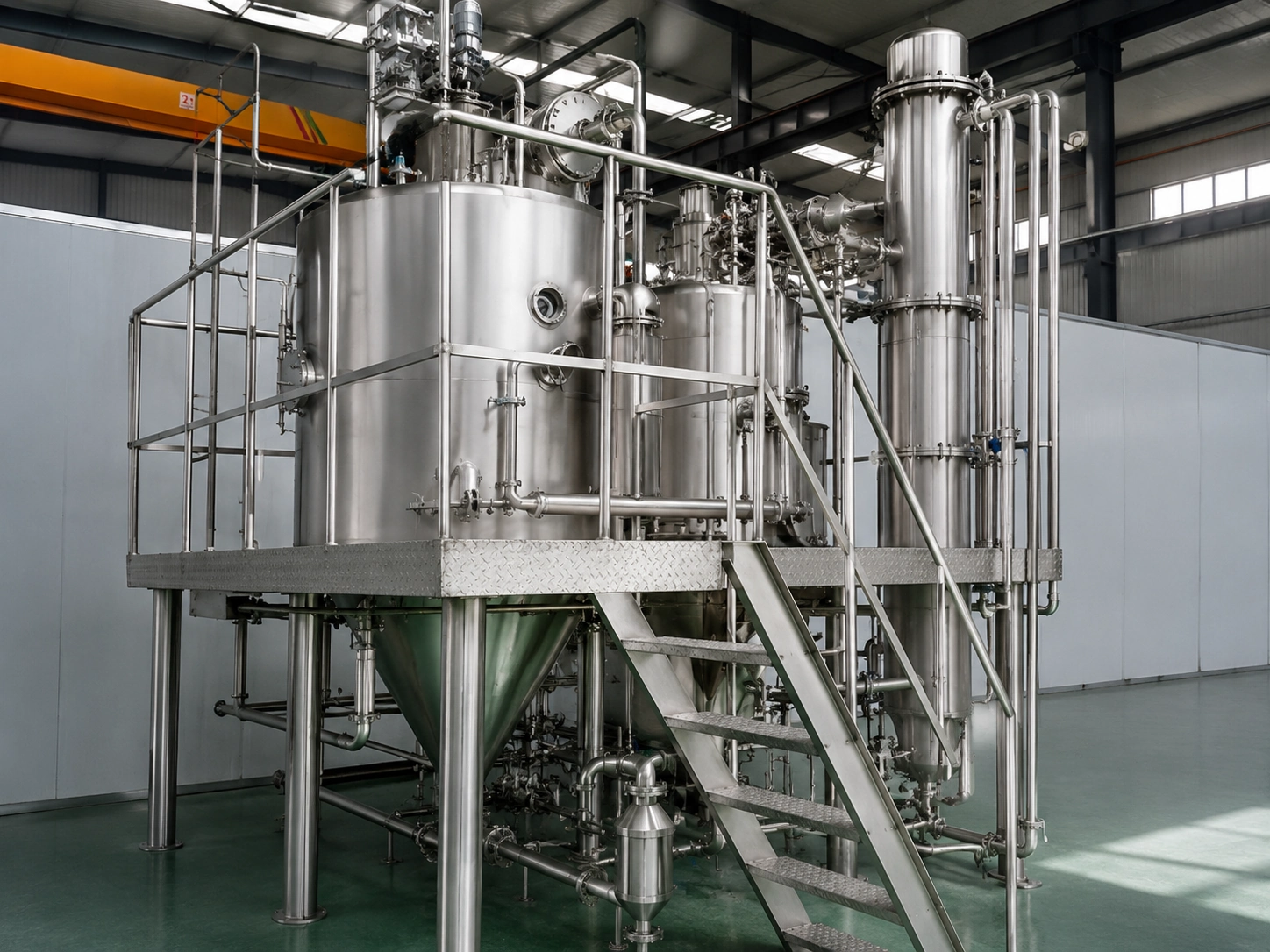
Drag the 3D model to rotate and use the equipment photographs for a quick real-world reference.
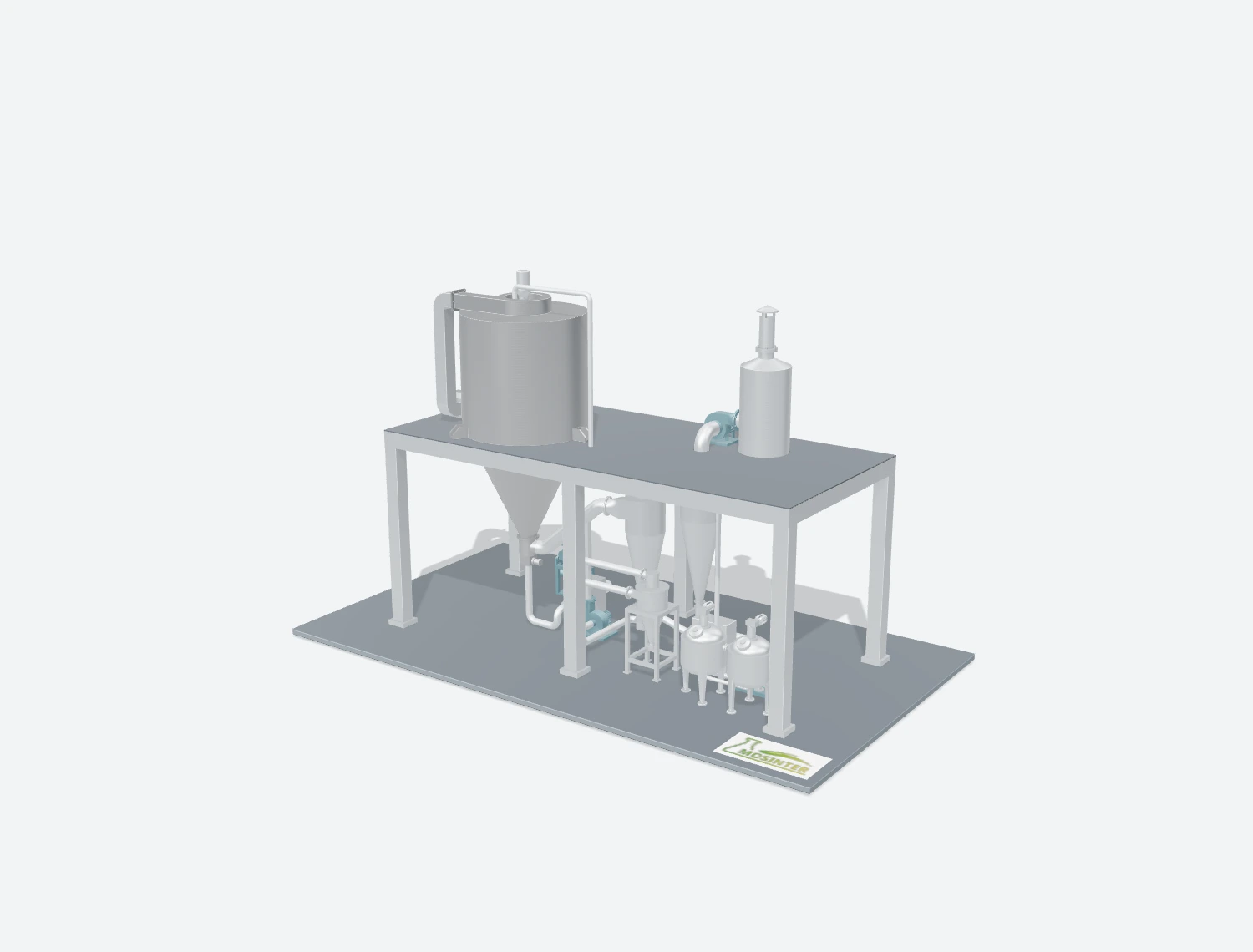
Interactive preview unavailable. Please contact us for equipment details.
Drag to rotate · Scroll or pinch to zoom
Technical Specifications
Listed values apply to the identified configuration. Confirm material conditions, utilities and optional equipment before selection.
| Parameter | Specification |
|---|---|
| Equipment Type | High-Speed Centrifugal Spray Dryer |
| Drying Medium | Air |
| Operation | Continuous |
| Feed Forms | Solution, emulsion, suspension or pumpable paste |
| Atomization | High-speed centrifugal atomization |
| Air / Product Flow | Co-current |
| Inlet Air Temperature | 140–350°C, automatic control |
| Outlet Air Temperature | Approximately 80–90°C |
| Reference Water Evaporation Capacity | 5–2000 kg/h, depending on the selected model |
| Atomizer Speed | Approximately 8,000–25,000 rpm, depending on the selected model |
| Dry Powder Recovery | ≥95% |
| Heat Source | Electricity, steam + electricity, fuel, gas or hot-air system, depending on configuration |
| Product Discharge | Drying chamber and cyclone separator |
Actual capacity, power consumption, atomizer specification, dimensions and heating configuration depend on the selected model, material properties and project requirements.
Applications
Applications include typical materials processed by the available configurations across chemical, food, polymer, resin and mineral industries. Confirm material properties and process conditions before selecting the equipment configuration.
Dyes and pigments, dye intermediates, catalysts, amino acids, silica, compound fertilizers, and inorganic or specialty chemicals.
ABS emulsions, urea-formaldehyde resins, phenolic resins, polyethylene and polyvinyl chloride.
Milk powders, protein products, coffee, instant tea, plant extracts, starch, glucose, maltose and pectin.
Alumina, magnesium oxide, ceramic materials and talc-based materials.
Working Principle
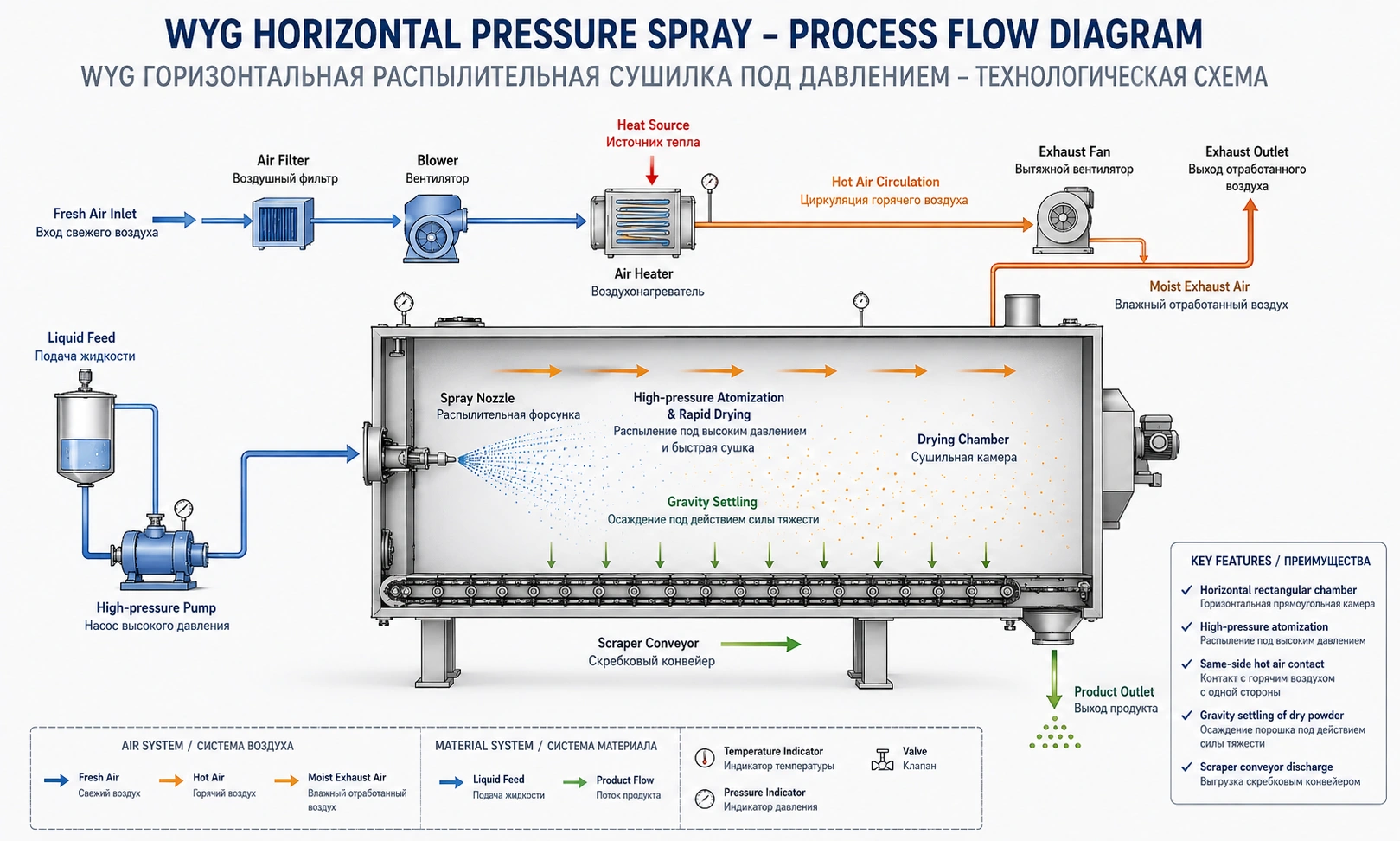
Filtered and heated air enters uniformly through the top distributor while liquid feed is atomized into fine droplets for rapid heat and mass transfer.
Prepared solution, emulsion, suspension or pumpable paste is delivered continuously to the atomizer.
The high-speed centrifugal atomizer converts the liquid into fine droplets.
Droplets meet uniformly distributed heated air in a co-current flow.
The increased droplet surface area supports rapid heat and mass transfer within a short residence time.
Dry powder or granular product forms as the droplets move through the drying chamber.
Dried solids are separated from the process air in the drying chamber and cyclone.
Product is discharged continuously while exhaust air leaves through the induced-draft system.
Key Features
Performance depends on material properties, operating conditions and the selected equipment configuration.
Centrifugal atomization increases the liquid surface area. Under suitable conditions, approximately 95–98% of the moisture can be evaporated rapidly and drying is completed within seconds.
The short drying residence time supports processing of many heat-sensitive materials.
Suitable feeds can be converted directly into powder or granules, reducing or eliminating subsequent crushing and screening.
The process can provide uniformity, flowability and solubility appropriate to the material and operating conditions.
Particle size, bulk density and residual moisture can be adjusted within the available process range.
Feeding, atomization, drying, powder collection and discharge are carried out continuously.
The system can process solutions, emulsions, suspensions and pumpable paste-type materials.
Selection Support
Provide the following material, product and utility data for accurate process evaluation and preliminary equipment sizing.